GitHub Releases Copilot Model Policy REST API
New GET and PATCH endpoints give administrative structures advanced flexibility to retrieve and update Copilot model policies across multiple hierarchical levels.
 Radwan AbdulhadiEditor and technology writer
Introduction to the New Copilot Model Policy API
Administrators and engineering leaders managing large-scale software development environments have gained a powerful new tool for overseeing artificial intelligence integration. According to the official [GitHub Changelog](https://github.blog/changelog/2026-10-19-copilot-model-policy-api-for-enterprise-orgs-and-teams/), teams can now utilize a dedicated REST API to seamlessly retrieve and update Copilot model policies.
This release directly addresses the growing demand for programmatic control over artificial intelligence assistants in corporate and enterprise settings. As organizations scale their adoption of generative tools, managing which specific underlying models are accessible to different groups of developers becomes critical for compliance, security, and operational consistency. The newly introduced endpoints offer a structured way to handle these administrative workflows programmatically rather than relying solely on manual user-interface configurations.
By incorporating these capabilities into existing automation scripts and internal administration platforms, IT and security departments can ensure that model policy updates happen rapidly and accurately across entire corporate hierarchies. This reduces administrative overhead while maintaining strict oversight of AI resource allocation.
Available Endpoints Across Four Administrative Levels
The newly released infrastructure provides granular visibility and control by supporting GET and PATCH endpoints across four distinct operational levels. This hierarchical approach ensures that policies can be tailored precisely to the needs of broad corporate entities, specific functional teams, integrated applications, or independent organizational units.
At the highest level, enterprise administrators can target the enterprise scope directly using the designated enterprise route. For operational groupings underneath that umbrella, the API supports targeted access for specific internal collectives. Furthermore, automated systems and integrations can be managed via designated application endpoints, while standard business units operate through organization-level paths.
Together, this collection of endpoints provides a comprehensive framework for governing how AI models are distributed and restricted. Administrators can query current configurations to audit compliance or execute PATCH requests to modify availability in response to changing organizational requirements or security updates.
Delegation Modes and Hierarchical Control
One of the most powerful aspects of the new policy API is its support for flexible delegation structures. Enterprise-level policies are not forced to dictate every minor operational detail; instead, they can be configured to distribute authority effectively down the chain of command.
Specifically, enterprise policies possess the capability to delegate model control directly to organizations when operating in organization mode. Alternatively, when structured under enterprise teams mode, authority can be passed down to individual teams and specialized enterprise applications. This dual-mode approach allows large enterprises to balance centralized governance with localized autonomy, ensuring that individual development groups can utilize the exact tools they need without violating corporate guardrails.
Such flexibility is vital for multi-departmental enterprises where security requirements vary between business units. For instance, a financial technology division might require strict limitations on available models, while a general software prototyping unit might benefit from broader access to experimental architectures.
Implementation and Getting Started Resources
To help development and administrative teams integrate these new capabilities into their existing pipelines, comprehensive technical documentation has been made available. Organizations can review the official [REST API documentation](https://docs.github.com/enterprise-cloud@latest/rest/enterprise-admin/ai-controls) for detailed technical specifications, request payloads, response structures, and authentication requirements.
Additionally, administrators looking for conceptual guidance on structuring their governance models can consult the detailed guide on [managing availability of models in your enterprise](https://docs.github.com/enterprise-cloud@latest/copilot/how-tos/administer-copilot/manage-for-enterprise/manage-availability-of-default-models). These resources outline best practices for establishing initial policies, handling delegation modes, and maintaining compliance across complex deployment topologies.
By leveraging these guides alongside the new GET and PATCH endpoints, technical leaders can build robust internal dashboards and automated compliance pipelines that keep pace with rapid advancements in software development technology.
Broader Ecosystem Context and Future Administration
The introduction of the model policy REST API arrives alongside several other updates across the developer tools ecosystem. Modern software engineering environments are increasingly shifting toward automated governance, where security controls and configuration management are handled programmatically rather than manually.
As enterprises continue to adopt diverse artificial intelligence capabilities, the ability to programmatically manage model lifecycles and permissions will become an indispensable competency. This release positions technical administrators to better handle upcoming changes in model availability, policy enforcement, and multi-team collaboration structures without introducing unnecessary friction into the daily workflows of software engineers.
Teams are encouraged to review their current governance setups, explore the newly documented endpoints, and begin planning how automated policy management can be integrated into their broader enterprise administration strategies moving forward.
Sources
- GitHub ChangelogCopilot model policy API for enterprise, orgs, and teams
Continue chronologically


Related entity coverage
Related stories
GitHub Unveils Copilot App Updates and New Projects Feature
GitHub has announced major updates to the GitHub Copilot app, introducing Copilot Projects in public preview, computer use capabilities, and more.
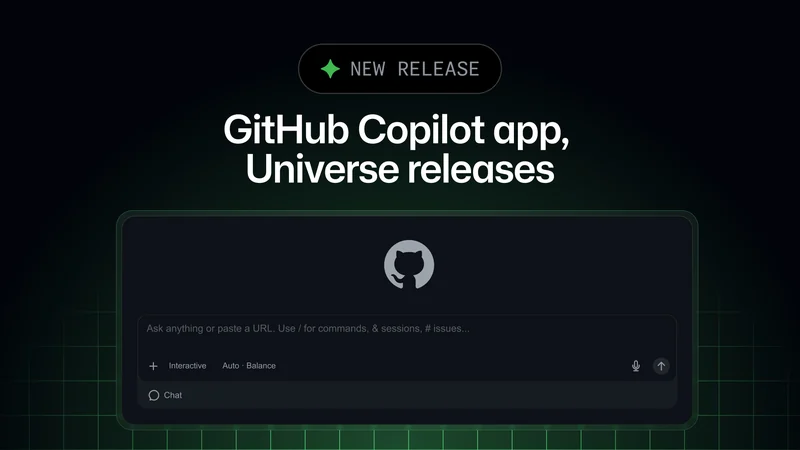
Global Default Policy for GitHub Copilot Features Rolls Out
GitHub begins gradually rolling out enforcement of its global default policy for Copilot Business and Copilot Enterprise plans through October 26.
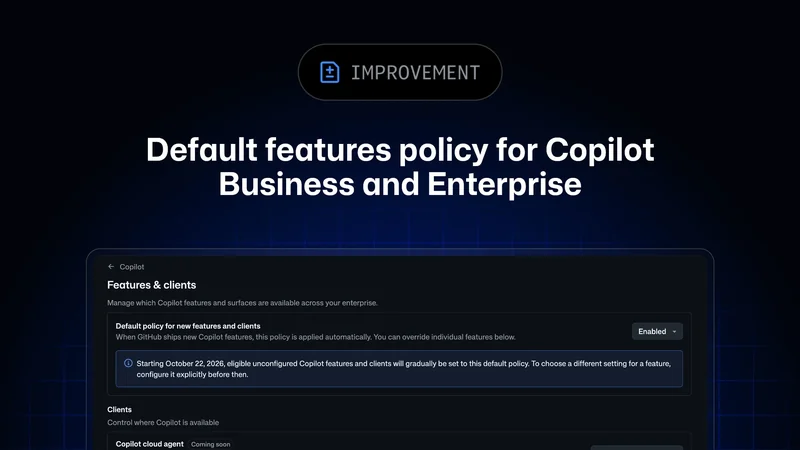
GitHub Copilot App Introduces Local Sandboxing in Preview
GitHub has announced local sandboxing for the GitHub Copilot app in public preview, helping to reduce the potential impact of unintended commands.
GitHub Adds Feature Engagement to Copilot Dashboard
GitHub’s Copilot impact dashboard now shows regular feature use, while enterprise and organization reports add 28-day engagement data.