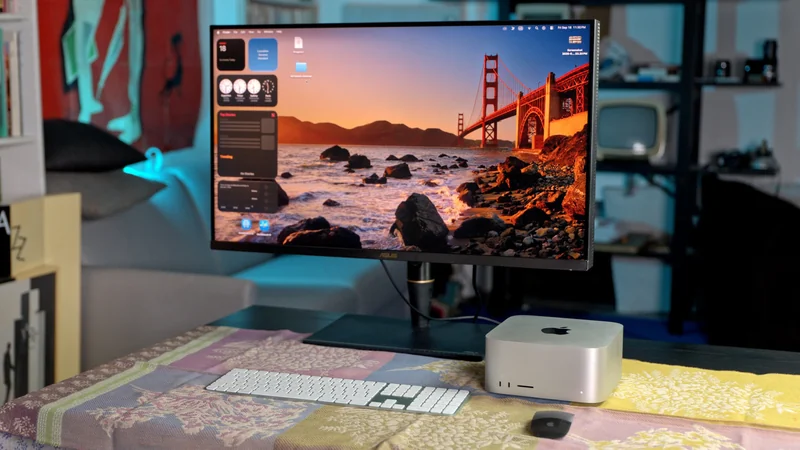
Apple refreshes Mac desktops for the local-AI era
Apple's latest Mac desktop lineup is increasingly shaped by local AI, with the M6 Mac Mini offering the broadest appeal and the M5 Mac Studio targeting demanding workloads. The M4 iMac remains available, but its older hardware and fixed design limit its appeal.
 Radwan AbdulhadiEditor and technology writer

Mac desktops return to the spotlight
Apple's Mac desktops are seeing renewed interest as buyers look for systems that can run AI locally. WIRED's latest assessment of the lineup points to new chips in the Mac Mini and Mac Studio, alongside a growing interest in always-on computers that can support agentic AI without depending entirely on the cloud.
The shift comes after several years in which MacBooks took much of the attention from desktop Macs. Improvements in mobile performance and battery life made laptops more practical for many buyers, but the desktop format has an advantage for users who want a machine that remains in one place and can be accessed remotely from another Apple device.
M6 Mac Mini is the broad recommendation
The Mac Mini is now available with either Apple's new M6 chip or an M5 Pro chip. The M6 version is the model most people should consider, according to the review, combining strong performance with a small desktop design that works well for general use and creative applications.
The M6 chip brings a notable improvement in GPU performance, making the base configuration suitable for users beginning to edit video or work in design applications. The Mac Mini is more expensive than earlier versions, however, and the review notes that it costs only a few hundred dollars less than a similarly configured MacBook Air. That price gap can make a laptop the more versatile purchase for people who need portability.
For local-AI enthusiasts, the Mac Mini's fixed desktop location can instead be an advantage. With additional memory, it can serve as an always-on AI computer that is controlled remotely from a MacBook or iPhone. The review says comparable Windows or Linux systems with similar performance and memory are difficult to find, particularly as memory prices rise across the industry.
The M6 Mac Mini is also more readily available than the higher-end configurations. Buyers can reportedly purchase one and collect it from an Apple Store the same day, while M5 Pro models may take as long as four weeks to ship.
M5 Pro targets demanding creative work
The M5 Pro Mac Mini is distinguished mainly by its enhanced graphics capabilities. It can be configured with as many as 20 GPU cores, which can help with gaming, 3D modeling, and video rendering. The review does not recommend the more expensive model for casual users, but identifies it as a better fit for professionals who spend much of their time in applications such as Final Cut Pro or DaVinci Resolve.
For hobbyists and occasional creators, the M6 model is expected to provide enough performance. That distinction reflects the broader split in Apple's desktop lineup: the standard Mac Mini is aimed at everyday users and developing creators, while the Pro configurations are intended for sustained, graphics-heavy workloads.
The comparison is similar to the choice between chips in Apple's <a>MacBook Pro</a>, where the principal upgrade is also graphics performance. The Mac Studio starts with the M5 Max, offering a significant step up from the M5 Pro Mac Mini and supporting as much as 128 GB of unified memory for users running larger local AI models.
Mac Studio delivers extreme local AI power
The M5 Max Mac Studio is aimed at buyers who need more graphics performance and memory than the Mac Mini can provide. Adding 128 GB or more of memory pushes the price above $5,000 quickly, but that capacity can matter for running demanding AI models directly on the computer.
At the top of the range, the M5 Ultra combines two M5 Max dies. Testing described in the source found that it could sometimes deliver roughly double the performance, including in GPU workloads. A tested configuration with 256 GB of memory cost more than $11,000, making it a specialized purchase rather than a general recommendation.
The performance enables the M5 Ultra to run some of the largest AI models tested entirely on-device, without a cloud connection. Simple agentic tests that took minutes on the M5 Ultra took five times as long on an M5 Max MacBook Pro. The system also delivered unexpectedly smooth performance in games including Cyberpunk 2077, although gaming is not its intended primary use.
Availability remains a concern. Mac Studio models with at least 128 GB of memory may take up to a month and a half to ship, while M5 Ultra configurations may require as long as four months.
The iMac remains simple but dated
The iMac continues to offer a different proposition by combining the computer, display, stand, and accessories in one package. Its 23.5-inch screen is described as brilliant, and its performance remains solid, but the machine has not been updated since 2024 and still uses the M4 chip.
The entry model costs $1,499 and includes 16 GB of RAM, 256 GB of storage, an M4 chip with an eight-core GPU, two Thunderbolt 4 ports, and a 4.5K IPS display. A second configuration with a 10-core GPU and four Thunderbolt 4 ports starts at $1,699.
The iMac's main limitation is its size and lack of upgrade flexibility. The 23.5-inch screen may be smaller than many buyers want, and it is the only desktop-size Mac in the lineup that does not offer at least 5K resolution. While the all-in-one design is easier than selecting a separate monitor and peripherals, it also locks buyers into a single configuration.
The iMac remains the only Mac desktop offered in seven colors, which gives it a clear appeal for buyers who prioritize simplicity and appearance. For most users focused on performance and local AI, however, the newer Mac Mini and Mac Studio models are the more relevant choices. Apple also continues to offer broader comparisons through its guides to the <a>Best Desktops</a> and <a>Best All-In-One Desktops</a>.
Sources
- WIREDThe Best Mac Desktop to Buy (2026): Mac Mini, Mac Studio, or iMac?
Continue chronologically


Related entity coverage
Related stories
New Mac mini and Mac Studio Launch With M6 and M5 Chips
Apple has officially released the new Mac mini and Mac Studio, featuring powerful M6 and M5 silicon, advanced AI capabilities, and enhanced performance.
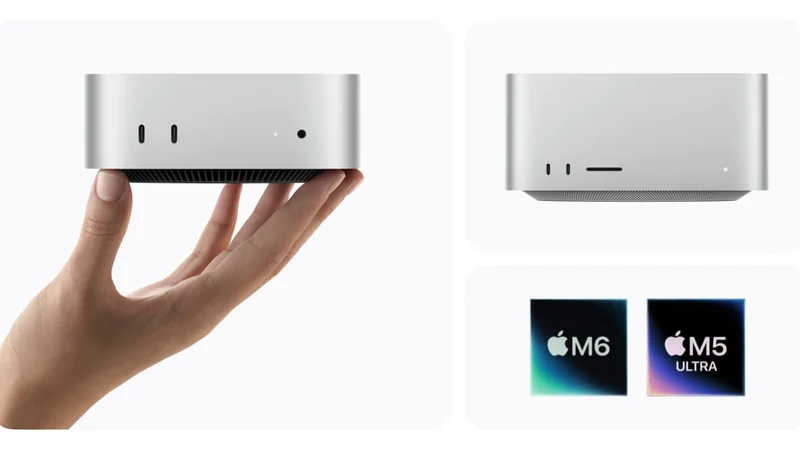
Evolution of Apple's Mac Studio from M1 to M5 Ultra
Explore how Apple's Mac Studio has evolved across four generations of silicon, tracking internal upgrades, performance gains, and recent price hikes.
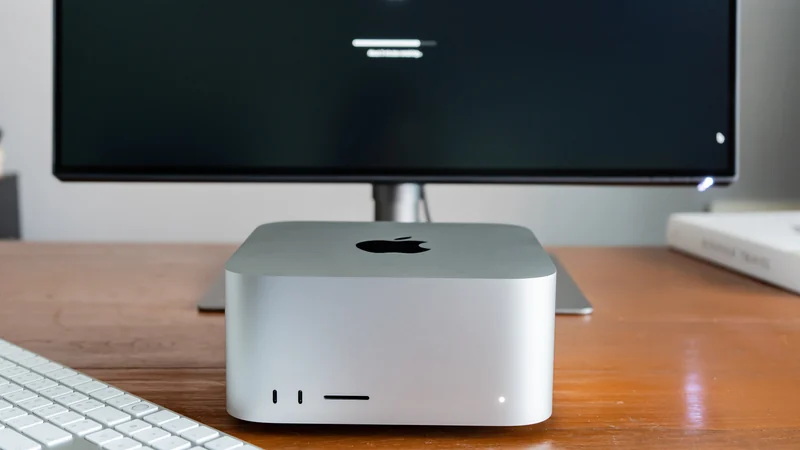
Apple Mac Studio With M5 Ultra Review: Local AI Powerhouse
The Apple Mac Studio with the M5 Ultra processor brings massive GPU performance and local AI capabilities to professionals and developers.
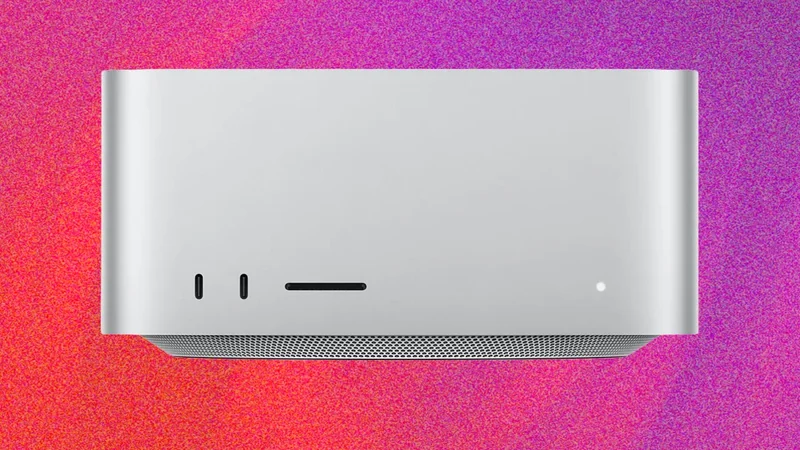
Apple Mac Studio M5 Ultra Offers Massive AI Performance
The new M5 Ultra-powered Mac Studio delivers elite AI and graphics performance, though its premium pricing targets exclusively power users.