Evolution of Apple's Mac Studio from M1 to M5 Ultra
An examination of how Apple's high-end desktop has transformed through four generations of silicon, from its 2022 inception to the latest fourth-generation systems.
 Radwan AbdulhadiEditor and technology writer
Design Continuity and Internal Evolution
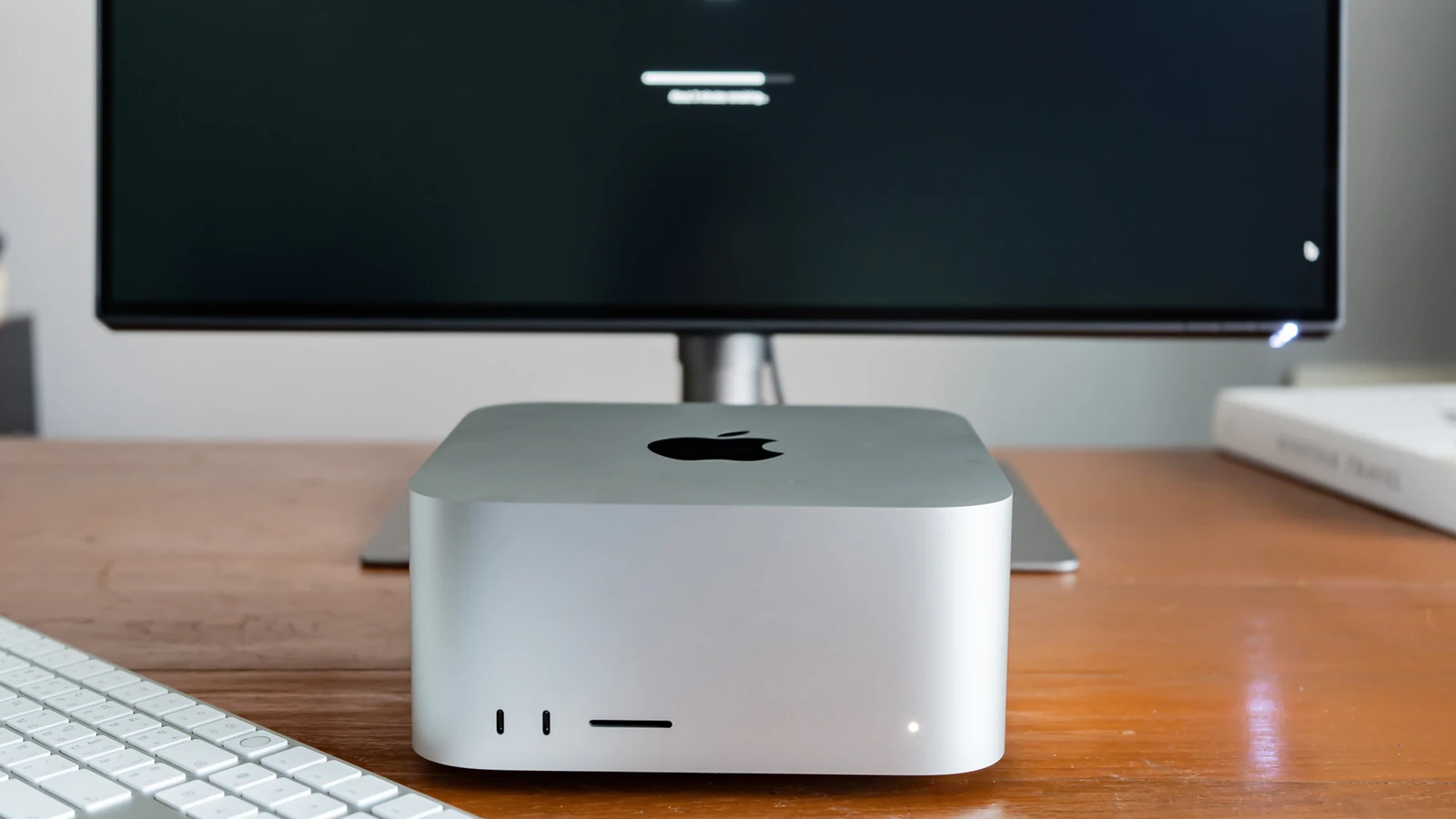
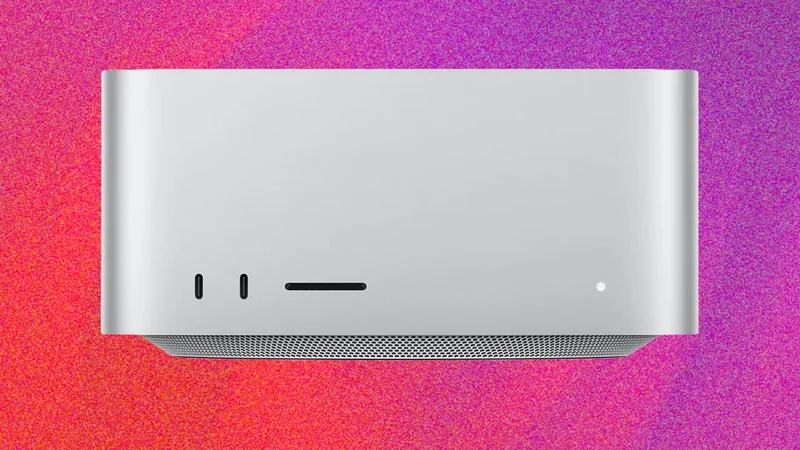
Put the first-generation Apple Mac Studio next to the newly released M5 Ultra, and you would struggle to tell them apart on looks alone. Apple has stuck with the same 7.7-inch square of aluminum, standing at 3.7 inches tall, for the fourth generation in a row. However, what sits inside the chassis has changed fundamentally since the Studio's initial launch.
The original M1 Ultra topped out at a comparatively paltry 128GB of memory versus the M5 Ultra's 512GB capacity, which also moves data at 1.2TB/s—nearly 50 percent higher than what the M3 Ultra managed. Apple skipped the M4 Ultra entirely due to hardware limitations.
The 2022 Launch and Early Generations
The original Mac Studio launched in March 2022 with Max and Ultra variants. The Ultra featured a distinct design approach where Apple glued two M1 Max dies together via an interconnect called "UltraFusion," selling the result as the M1 Ultra with 114 billion transistors behaving as one processor. The M1 Max included a 10-core CPU, 32GB of memory, and a 512GB SSD for $1,999.
Starting at $3,999, the M1 Ultra came with 20 cores and 64GB of memory, scaling up to 128GB. Around the back, the system featured four Thunderbolt ports, 10Gb Ethernet, HDMI, two USB-A ports, two USB-C ports, and an SD slot. Apple has retained this exact port layout across subsequent generations.
Apple announced the refreshed second-generation Mac Studio lineup at WWDC in June 2023 without altering a single port. The M2 Max launched with a 12-core CPU, up to a 38-core GPU, and 96GB of memory, while the M2 Ultra doubled those specifications to 24 cores, a 76-core GPU, and 192GB at 800GB/s memory bandwidth, powered by more than 134 billion transistors.
Mixed Generations and Market Shifts
After the M2 release, the Studio lineup remained untouched for nearly two years. When an update finally arrived in March 2025, it paired chips from two different generations of Apple silicon: an M4 Max as the newer chip and an M3 Ultra as the bigger option, featuring a 32-core CPU, an 80-core GPU, up to 512GB of unified memory, 16TB of storage, and Thunderbolt 5 support at 120Gb/s.
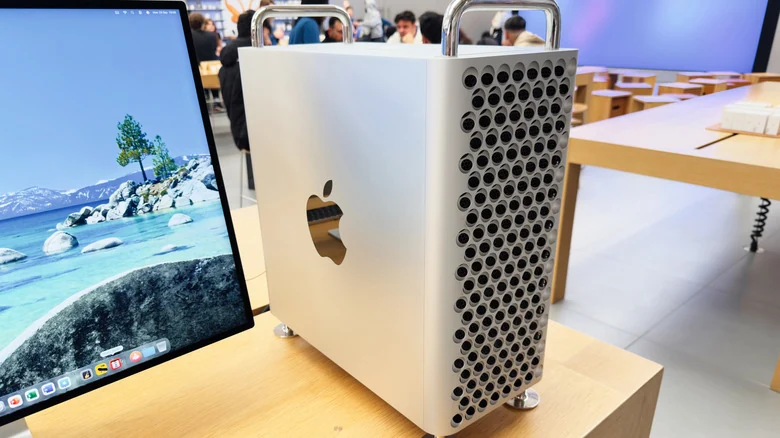
Twelve months later, Apple discontinued the Mac Pro and informed reporters that there were no plans for another model, leaving the compact desktop as the most capable Mac available. Soon after, component market pressures took effect.
An AI-fueled memory shortage impacted the hardware market, leading Apple hiked the prices for most of its hardware. The M4 Max pricing moved from $1,999 to $2,499, and the M3 Ultra rose from $3,999 to $5,299. Reports in the Wall Street Journal noted that component price rises of this magnitude were unprecedented in such a short timeframe.
The Fourth-Generation M5 Lineup
The fourth-generation Mac Studio arrived in August 2026. According to coverage from The Information, enterprise customers demanding more capable machines to run local AI models prompted Apple to accelerate the release outside standard product cycles.
For the first time since 2023, both the Max and Ultra share the same generation of Apple silicon. The M5 Max features an 18-core CPU, a 32- or 40-core GPU with a Neural Accelerator in every core, and up to 128GB of memory starting at $2,499. The M5 Ultra offers 36 CPU cores, an 80-core GPU, and up to 512GB of memory starting at $5,499.
Compared to the M3 Ultra, Apple positions the M5 Ultra as offering up to 4.3 times the AI performance, 1.8 times the graphics performance, 1.3 times the CPU performance, twice-as-fast storage, and Wi-Fi 7 integration powered by Apple's N1 networking chip. The internal architecture also shifts from the traditional performance-efficiency core split to include "super" cores alongside performance cores.
Sources
- EngadgetHow has Apple's Mac Studio changed over the years?
Continue chronologically


Related entity coverage
Related stories
Apple Mac Studio With M5 Ultra Review: Local AI Powerhouse
The Apple Mac Studio with the M5 Ultra processor brings massive GPU performance and local AI capabilities to professionals and developers.
Apple Mac Studio M5 Ultra Offers Massive AI Performance
The new M5 Ultra-powered Mac Studio delivers elite AI and graphics performance, though its premium pricing targets exclusively power users.
New Mac mini and Mac Studio Launch With M6 and M5 Chips
Apple has officially released the new Mac mini and Mac Studio, featuring powerful M6 and M5 silicon, advanced AI capabilities, and enhanced performance.

Apple CarPlay vs. CarPlay Ultra: Understanding the Key Differences
Discover the technical differences between standard Apple CarPlay and the advanced, highly customizable CarPlay Ultra experience for modern vehicles.