
Ringg AI agents resolve 65% of calls using OpenAI GPT-5.6
Ringg has integrated OpenAI’s GPT-5.6 models into its enterprise agent platform, significantly reducing operational costs while improving resolution rates for customer service interactions.
 Radwan AbdulhadiEditor and technology writer
Cost Efficiency Through Model Migration
Ringg, a voice and chat agent platform, has demonstrated significant cost efficiencies by adopting OpenAI’s newer model architecture. The company states that migrating suitable real-time workloads from GPT-4.1 to GPT-5.6 reduced model costs by approximately 90% while maintaining the necessary quality and latency standards for enterprise applications. This shift addresses the common challenge in customer service operations, where scaling typically requires adding personnel, thereby increasing the cost and complexity of every interaction. By leveraging high-efficiency models at its core, Ringg aims to provide a more sustainable solution for large consumer businesses facing rising call volumes. Further details are available from OpenAI News in the original source material.
Architecture for Multilingual Agents
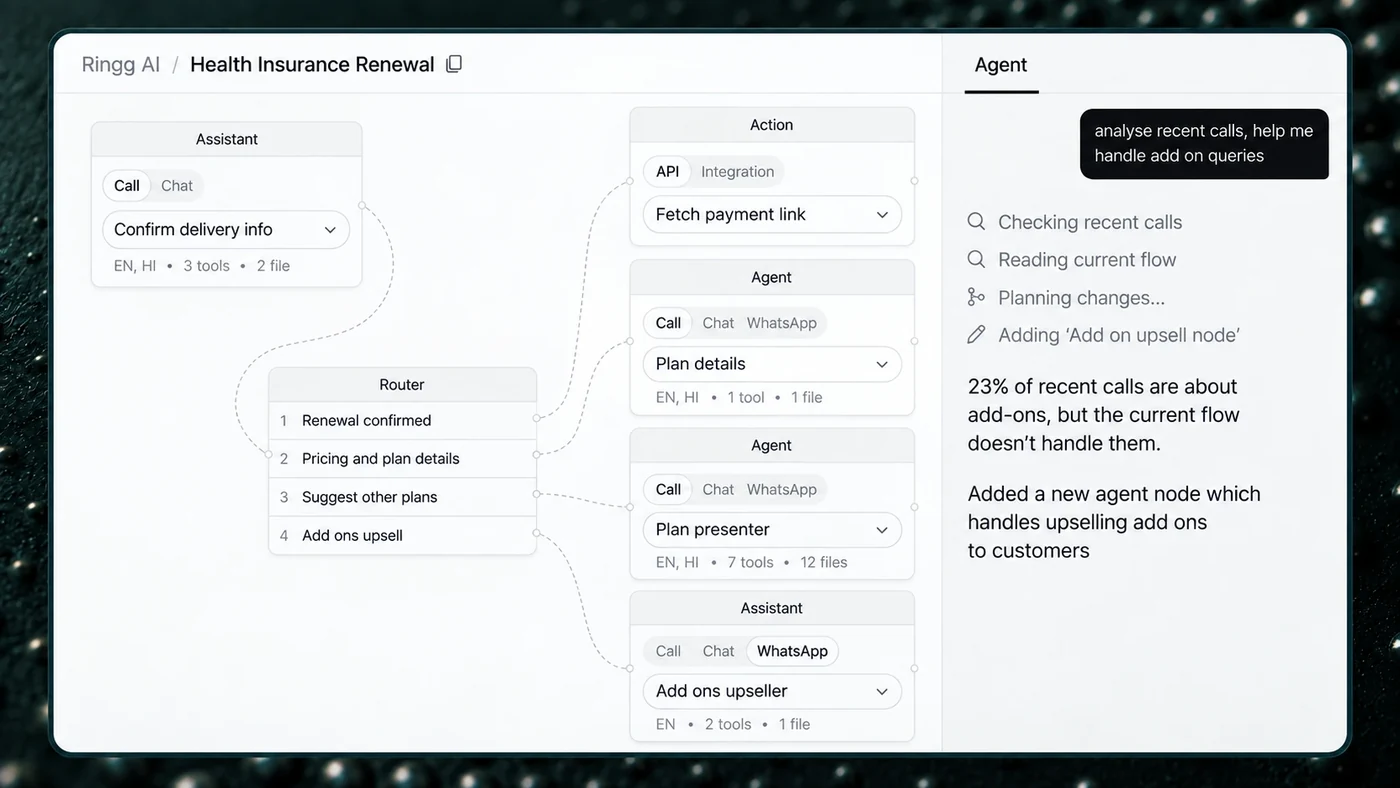
The platform is designed to handle complex customer requests that often require checking policies, retrieving account records, or updating CRM systems. Ringg uses GPT-5.6 Luna and other models to interpret requests and guide customers through multi-step workflows. An orchestration layer executes actions across various internal APIs, ticketing platforms, and payment systems. When a case requires human attention, the system escalates it with a complete conversation summary. This architecture supports multilingual interactions across voice, chat, WhatsApp, and web channels, ensuring a consistent customer experience regardless of the entry point.
Strategic Model Routing
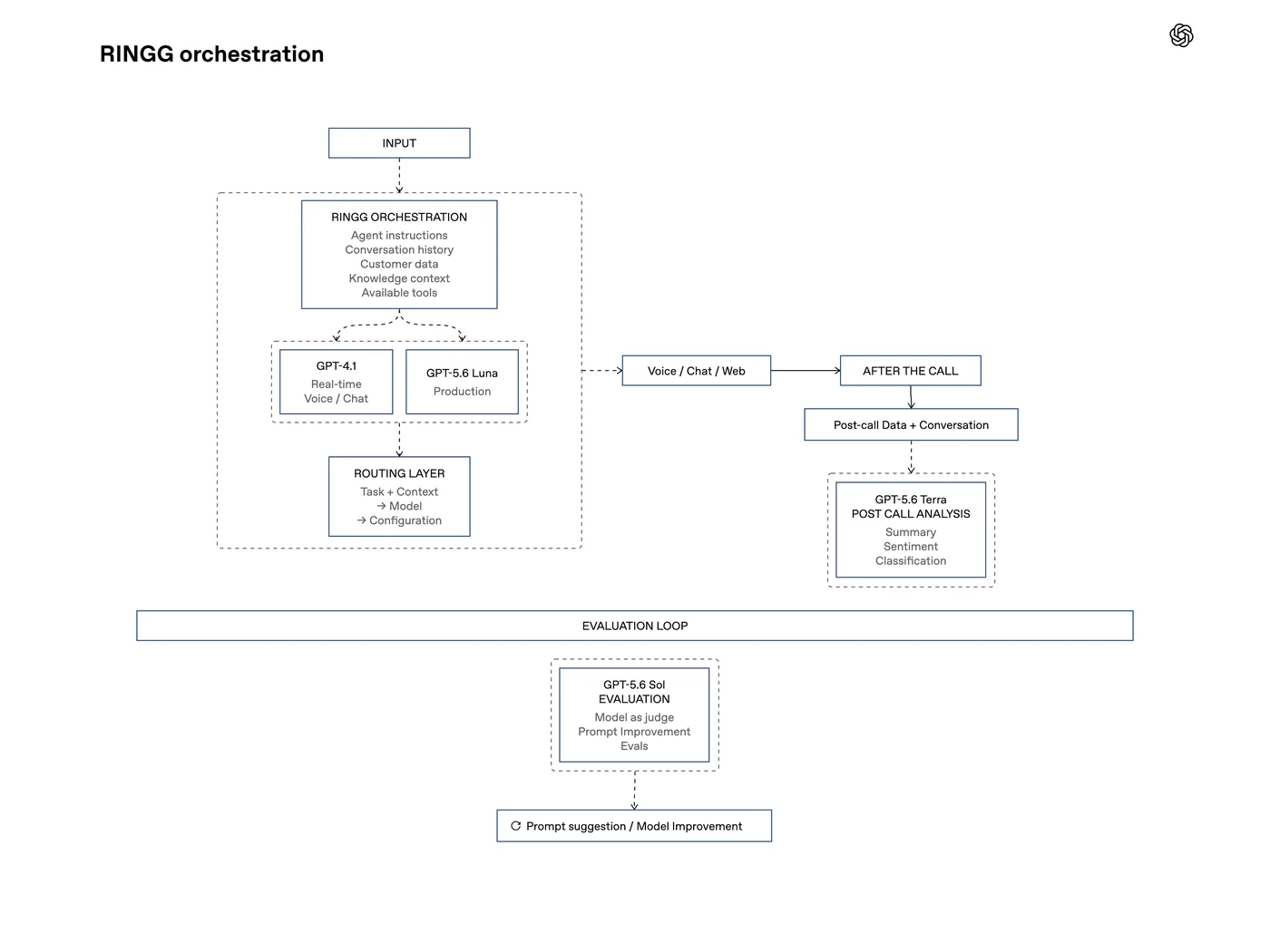
Ringg employs a dynamic routing layer that selects the appropriate OpenAI model based on specific task requirements. While GPT-4.1 handles the majority of real-time voice and chat traffic, GPT-5.6 Luna is deployed when its performance or price-performance profile is better suited to the request. For post-call analysis, including summaries and sentiment classification, the company utilizes GPT-5.6 Terra. Additionally, GPT-5.6 Sol supports evaluation and prompt improvement workflows. This granular approach allows Ringg to optimize both cost and performance, ensuring that each interaction is processed by the most effective model available.
Performance in Regional Markets
In markets where customers frequently switch between languages or combine English with local phrases, model consistency is critical. Ringg tested GPT-5.6 Terra against alternatives such as Gemini 2.5 Flash for post-call analysis and found that Terra outperformed the competitor. The model achieved up to 97% accuracy on common regional languages, making it a superior fit for agents serving diverse customer bases. This capability is particularly relevant for Ringg’s operations in India, where multilingual support is essential for maintaining high customer satisfaction scores.
Industry-Specific Results
Several major enterprises have reported measurable improvements after deploying Ringg’s agents. Policybazaar, an online insurance platform, uses the system to connect over 57,000 customer requests, with 67% of calls handled without human intervention. This deployment reduced average response times from 8–12 minutes to under 60 seconds. Similarly, Practo, a healthcare platform, achieved an 85% first-call resolution rate and reduced operating costs by 70% compared to its previous human-led workflow. Ringg now completes more than 1,000 appointment bookings daily for Practo, demonstrating the scalability of the AI-driven approach.

Future Developments and Evaluation
Ringg continues to refine its platform through rigorous production evaluations and the development of new capabilities. The company is currently developing browser agents using OpenAI’s computer-use features to assist with platform onboarding, Know Your Customer processes, and IT troubleshooting. Additionally, a new context layer is being built to preserve information across channels, allowing customers to start a request on voice and finish it in a browser without repeating details. These advancements aim to further streamline operations and enhance the efficiency of enterprise customer service teams.
Sources
- OpenAI NewsRingg’s AI agents resolve up to 65% of customer calls with OpenAI