
Open TTS Leaderboard Launches for Scalable Evaluation
The Hugging Face community has introduced a scalable evaluation framework for text-to-speech and voice cloning models to address fragmentation in open-source assessment.
 Radwan AbdulhadiEditor and technology writer
The Growing Need for Scalable TTS Evaluation
The rapid proliferation of open-source text-to-speech technologies has created a unique evaluation challenge. On the Hugging Face Hub, there are currently more than 8K TTS models available for developers and researchers. Despite this massive volume of releases, evaluation methods have historically struggled to keep pace, remaining fragmented and unstandardized across the industry. Further details are available from Hugging Face Blog in the original source material.
Traditionally, the gold standard for assessing text-to-speech generation has relied on human preference scores such as Mean Opinion Score (MOS) or MUSHRA. While human perception is vital for capturing nuance, arena-style leaderboards cannot scale effectively to match the sheer velocity of modern model releases. This structural bottleneck helps explain why open-source models have often been underrepresented on traditional arena platforms, where commercial API models enjoy smoother integration pathways.
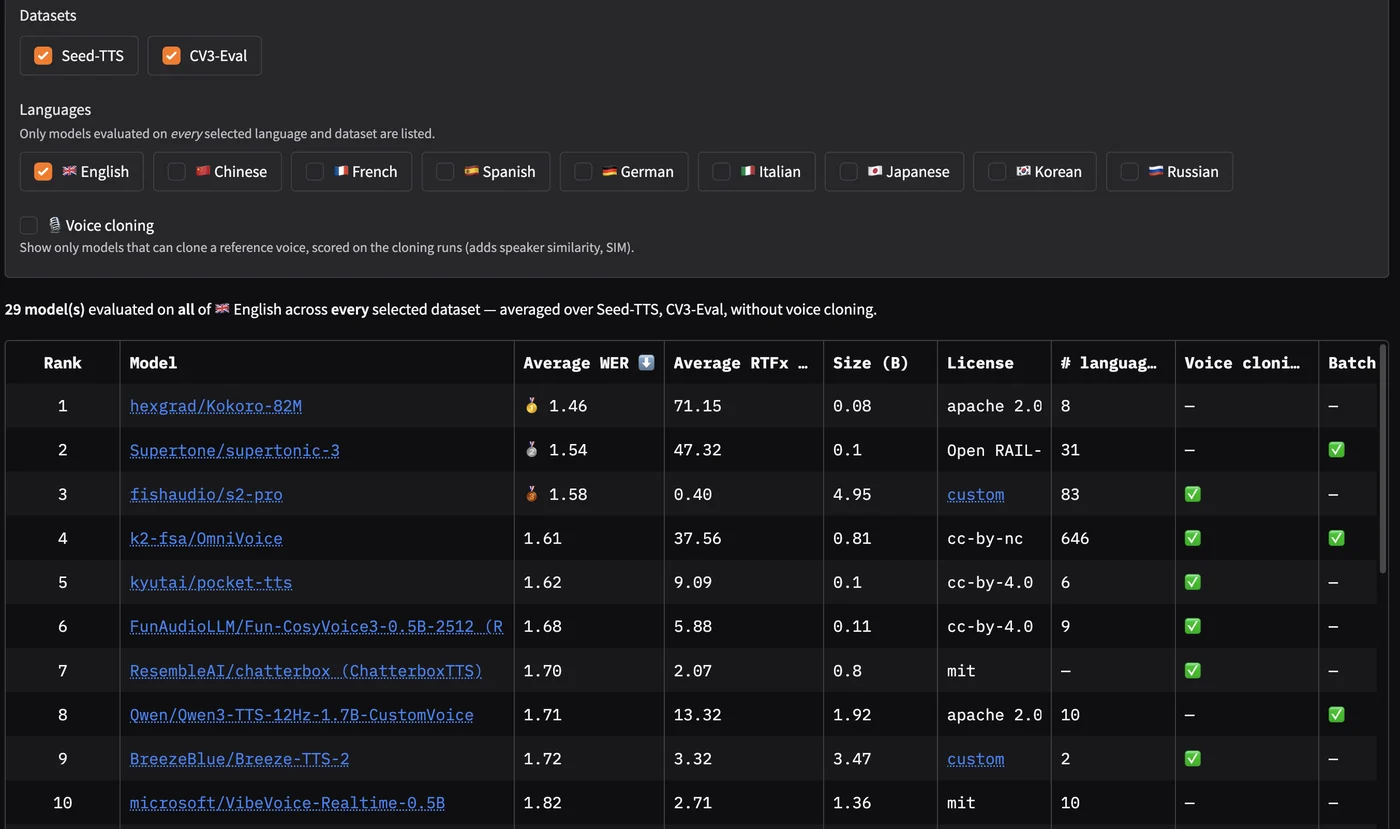
Introducing the Open TTS Leaderboard
To solve these scaling challenges, the community has introduced the Open TTS Leaderboard on Hugging Face. Rather than depending exclusively on slow human voting cycles, the new system leverages objective metrics to evaluate complementary aspects of model performance. By shifting toward automated, objective metrics, the time required to evaluate a model drops significantly from a couple of weeks to a mere couple of hours.
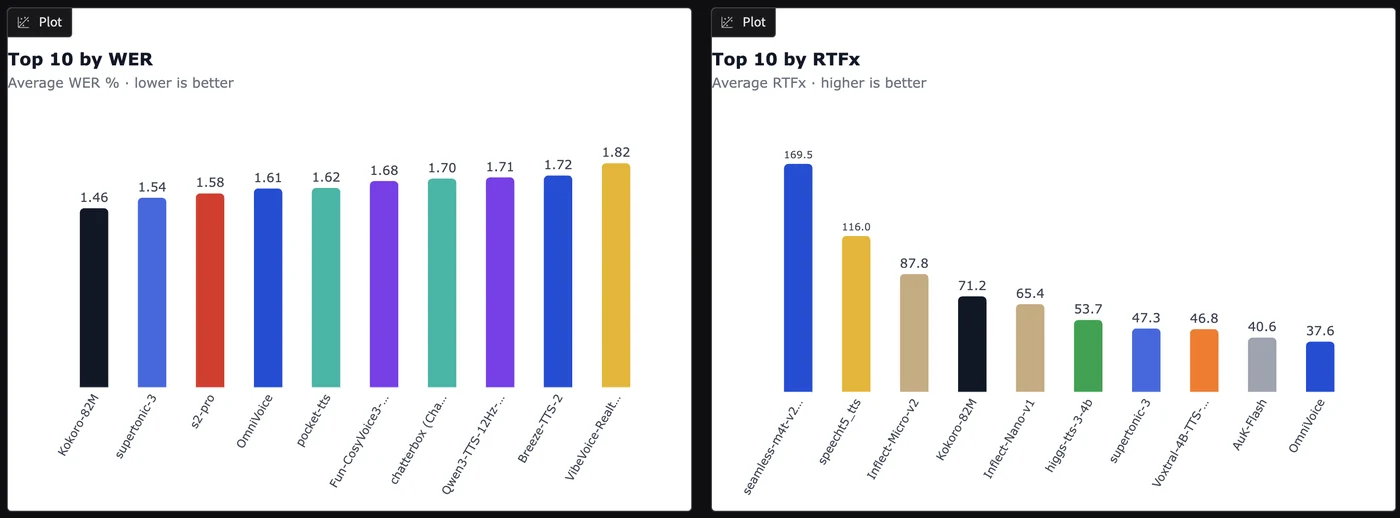
The core evaluation framework focuses on three primary pillars of performance: intelligibility, processing speed, and speaker similarity. Intelligibility is measured using word and character error rates between prompts and generated audio transcripts, leveraging advanced automatic speech recognition models. Speed is quantified using inverse real-time factors and time-to-first-audio latency benchmarks on high-performance hardware, while speaker similarity is evaluated through cosine similarity of WavLM speaker embeddings.
Analyzing English and Multilingual Performance
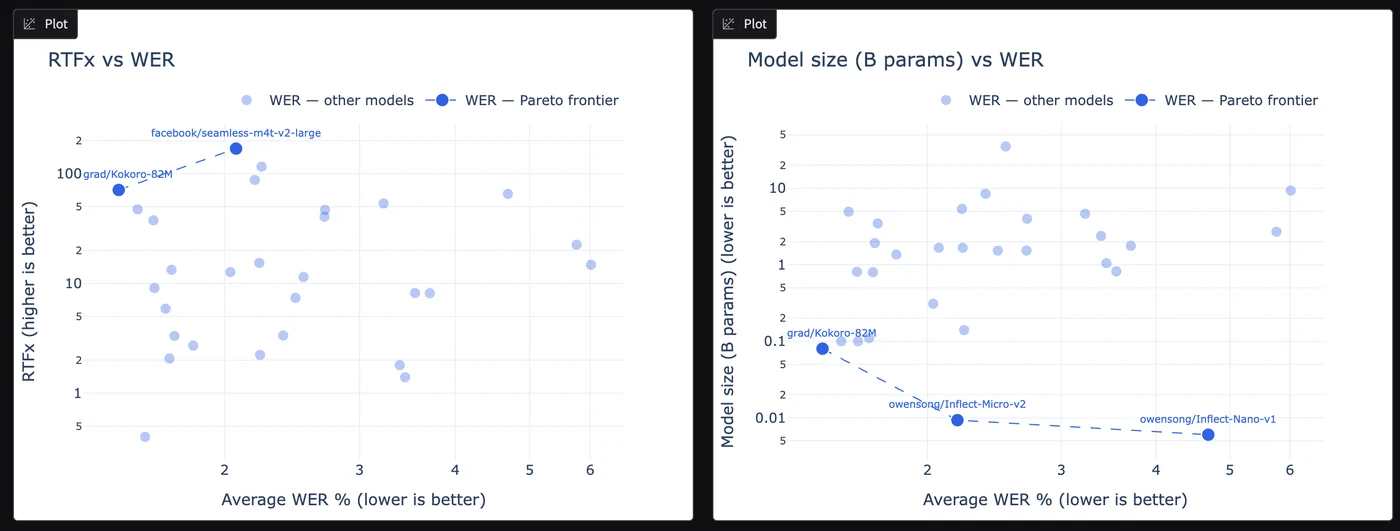
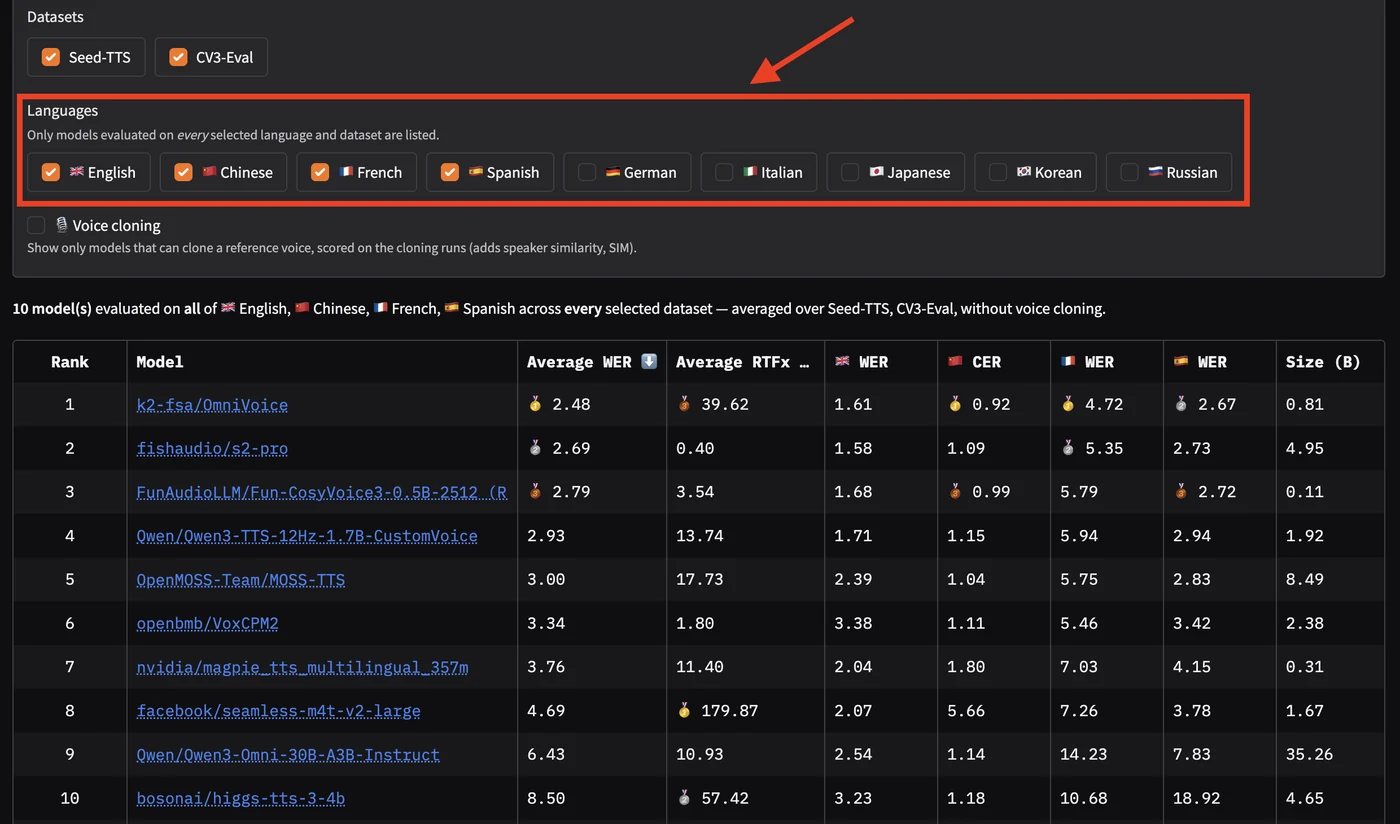
By default, the leaderboard ranks models according to their macro-average word error rate across specific English benchmark splits. Prominent models currently lead these English evaluations, demonstrating strong baseline intelligibility. However, developers behind the platform emphasize that strong performance in English does not automatically translate to multilingual capabilities.
To address global use cases, users can toggle between different languages to rank models on multilingual performance. Because languages like Chinese, Japanese, and Korean are character-based, the system reports character error rates accordingly, generating a comprehensive macro-average across multiple supported languages. Several specialized models consistently rank near the top for robust multilingual output.
Voice Cloning and Speaker Similarity
Voice cloning functionality represents another critical dimension tracked by the new platform. By enabling the voice cloning toggle, users can directly compare models that support customized speaker adaptation against reference audio clips. When a reference audio file is supplied, the evaluation table automatically incorporates a speaker similarity column alongside dedicated Pareto plots.
Interestingly, testing shows that certain architectures exhibit notable improvements in average word error rate when utilizing voice cloning features with reference audio. This highlights the practical benefit of evaluating models both in zero-shot settings and under reference-guided voice cloning workflows.
Exploring Model Outputs and Streaming Latency
Numbers alone cannot capture the complete listening experience. To bridge this gap, the platform features a dedicated listening tab that lets users explore raw generated audio outputs behind the benchmark metrics. Community members can listen to various models, evaluate specific datasets, and even submit feedback on the generated audio to help shape future updates.
Additionally, the streaming tab evaluates latency by measuring the time-to-first-audio metric across standardized prompts. This metric is essential for interactive voice agents and real-time applications where low latency dictates user experience. Performance data is currently provided across advanced GPU hardware configurations, with growing support for CPU-based evaluations as well.
Community-Driven Open Science
The overarching goal of the Open TTS Leaderboard is to democratize artificial intelligence evaluation by keeping pace with rapid open-source developments. Organizers intend for the platform to remain deeply collaborative, incorporating feedback from developers and researchers to ensure the metrics stay insightful and relevant over time.
To foster complete transparency, the project plans to open-source its underlying evaluation scripts in the near future. Contributors will be able to share suggestions, report issues, and submit pull requests directly, ensuring that the community actively shapes the future of text-to-speech benchmarking.
Sources
- Hugging Face BlogOpen TTS Leaderboard: Scalable Evaluation for Multilingual Text-to-Speech and Voice Cloning