Building Custom AI Models Using ML Intern
Developers are utilizing ML Intern to create, train, and publish specialized machine learning models efficiently through automated multi-step workflows.
 Radwan AbdulhadiEditor and technology writer
Introduction to Automated Model Creation
When specialized machine learning models are missing from public repositories, developers are increasingly turning to automated agent workflows to build them from scratch. According to insights shared on the Hugging Face Blog, a common challenge involves needing lightweight alternatives to resource-heavy foundation models that require extensive memory and token processing.
By interacting with an agent directly within conversational interfaces, engineers can specify precise architectural requirements and training objectives. This approach transforms a simple idea into a fully evaluated public asset without requiring manual intervention across every intermediate data-handling step.

Workflow Mechanics and Budget Enforcement
The operational framework relies on structured prompt engineering where developers outline project parameters, datasets, and base architectures. Crucially, instructions incorporate strict financial boundaries to prevent unexpected compute costs.
When utilizing the ML Intern agent, tasks begin with a zero-dollar budget, requiring explicit confirmation before executing paid jobs on cloud hardware. Additionally, prompts often mandate baseline zero-shot scoring and preliminary smoke tests to confirm that weights change correctly before committing to full training runs.
Developing Lightweight Prompt Rewriters
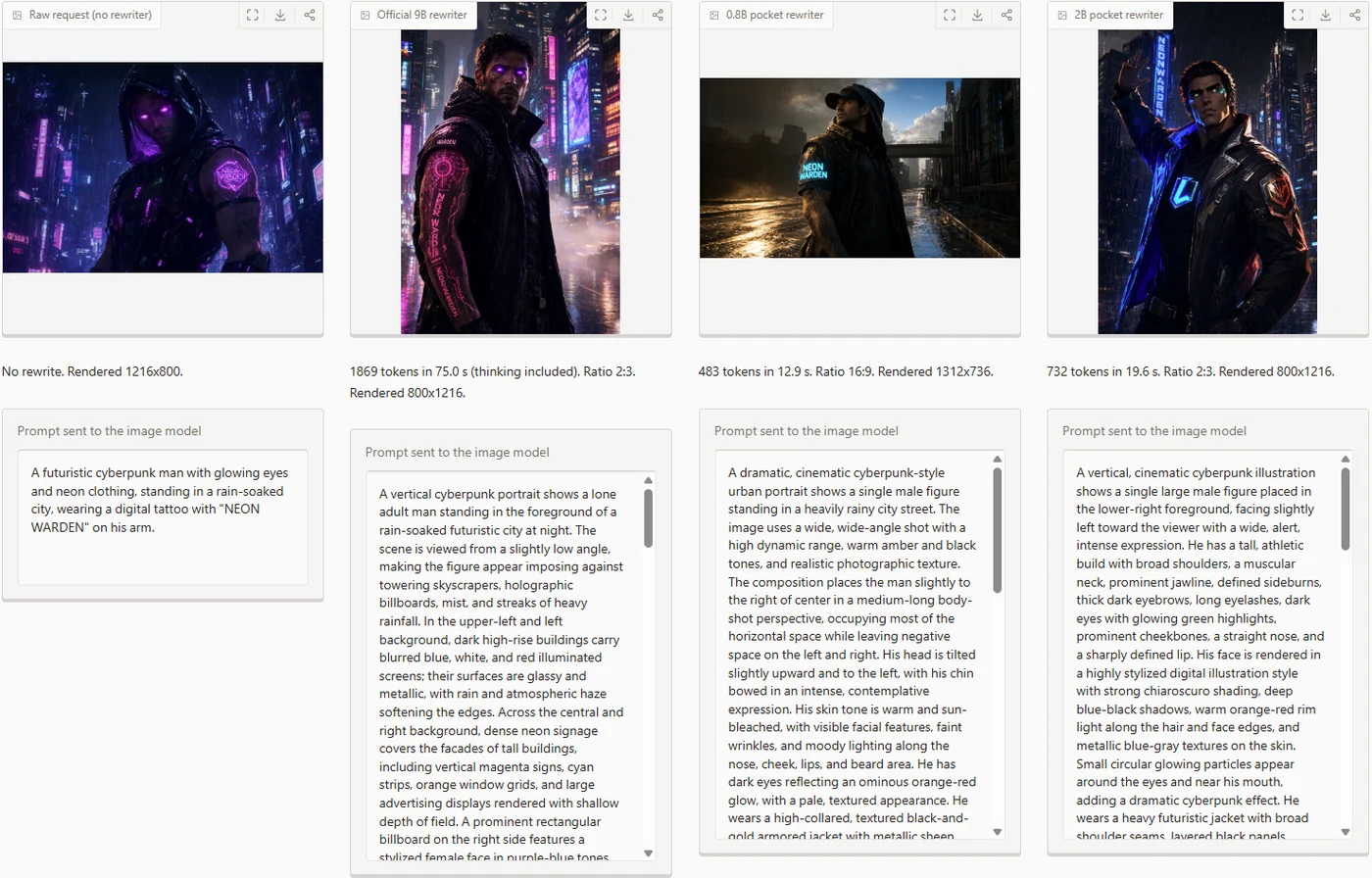
Standard vision-language pipelines often ship with massive prompt-rewriting components that demand substantial hardware resources. To solve this limitation, developers have successfully engineered compact alternatives that match specific performance thresholds.
For instance, a developer requested a streamlined substitute for a large proprietary rewriter, resulting in the creation of a 0.8B version that operates efficiently on standard CPU setups while maintaining high validity across generated outputs.
Specialized Vision Models for Agriculture
General-purpose vision models excel at broad visual descriptions but often struggle with diagnostic precision in niche domains such as botany and agriculture. Addressing this gap involved merging multiple datasets hosted on open repositories to train specialized classifiers.
Fine-tuning foundational models using curated datasets significantly improves diagnostic accuracy for identifying specific plant pests, nutritional deficiencies, and corresponding treatment options. Detailed results and metrics for these specialized visual language models are documented directly within their respective model repositories.
Custom LoRAs and Viewpoint Adaptation
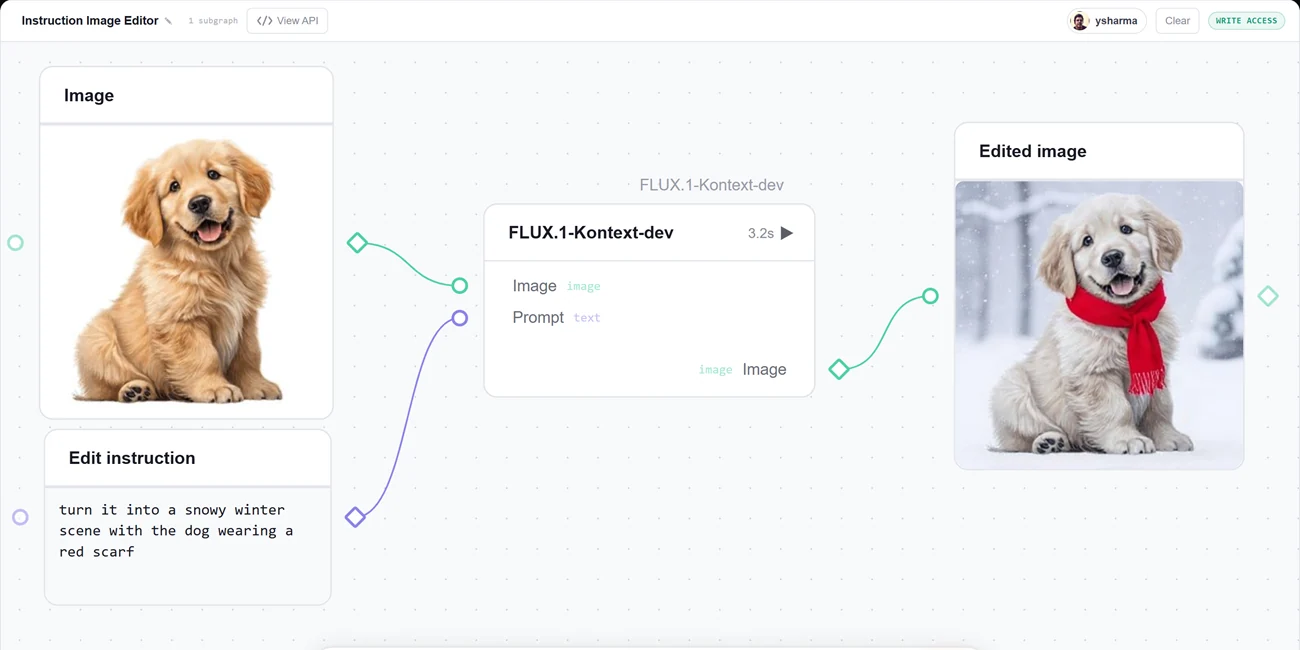
Beyond full model distillation, automated agents can generate custom Low-Rank Adaptation (LoRA) weights for generative image architectures. Projects of this nature frequently involve rendering thousands of transparent household objects across various camera angles to teach spatial awareness to underlying models.
By handling data preparation, training loops, checkpoint evaluation, and documentation automatically, agents drastically reduce the time required to bring community-requested features to open-source ecosystems.
Prompt Repositories and Future Iterations
To foster transparency and reproducibility, the entire set of initial prompts used to guide these automated projects has been made publicly available. Reviewing these instructions allows other engineers to understand how verified facts and rigorous testing constraints improve agent output quality over successive iterations.
Sources
- Hugging Face BlogThe model that didn't exist, so you made it yourself
Continue chronologically

Related entity coverage
Related stories
AI Engineer Compiles 32-Bit RISC-V CPU Into Qwen LLM Weights
An AI engineer has successfully compiled a 32-bit RISC-V CPU directly into the weights of the Qwen 3.5 4B large language model, enabling it to run C code and DOOM.

Hugging Face Crypto-Mining Malware Campaign Returns
A cryptomining and backdoor campaign abusing Hugging Face model repositories has quickly returned following an initial takedown.

Microsoft Details ThinkingBox RL Training for Agents
Microsoft shares how ThinkingBox turns database grading into reinforcement learning rewards to post-train AI agents for better reliability.
FairStress Benchmark Measures LLM Demographic Fairness
Discover FairStress, a new benchmark designed to evaluate demographic fairness and hidden asymmetries in large language model decision-making.