AI Scans Reveal Ordered Brain Activity Under Psilocybin
A new study reveals that brains transformed by psychedelics exhibit underlying organization over time when analyzed using machine learning.
 Radwan AbdulhadiEditor and technology writer
Challenging the Notion of Brain Chaos
For roughly a decade, mainstream neuroscience held that psychedelics induce a state of chaos within the human brain. Stable communication patterns handling vision, attention, and the sense of self typically loosen and interact simultaneously, resulting in noisier and more complex EEG traces. According to Devon Stoliker, a neuroscientist at Monash University, brain networks can be thought of as highways that break down into numerous directions under the influence of psychedelics.
However, a recent study published in Nature investigated whether these directions are truly random and chaotic. Stoliker noted that the traditional chaos model fails to fully explain why individuals experience meaningful insights, clarity, or positive psychological shifts during a trip. To explore alternative explanations, researchers designed an experiment known as PsiConnect, detailed further in the published findings available via a 10.1038/s41586-026-10910-z.
Designing for Ecological Validity
The research team gathered 62 participants who had never taken a psychedelic before, administering 19 milligrams of psilocybin—a common compound found in certain fungi. Volunteers experienced a four-part sequence both sober and while under the influence of the drug. This sequence featured eight minutes of resting, a guided meditation, an 11-minute curated music playlist, and six minutes of watching a video of clouds moving across the sky.
Rather than assigning routine cognitive tasks, researchers intentionally omitted them to maintain ecological validity. Stoliker explained that introducing tasks mid-trip can pull individuals out of the psychedelic state, a grounding phenomenon that interrupts the very metrics scientists seek to measure. Following the sessions, half of the participants ranked the experience among the most meaningful moments of their lives.
Shifts in Global Functional Connectivity
When analyzing brain scan data collected inside an MRI scanner roughly 80 minutes after dosing and via EEG about 150 minutes after, the team observed notable shifts in functional connectivity. Sensory regions lost influence while associative regions gained sway when participants closed their eyes. Stoliker suggested this dynamic gives associative faculties like imagination, beliefs, and the sense of self greater dominance over sensory areas.
Additionally, connections within individual brain networks weakened while connections between distinct networks strengthened. Modularity across neurons dropped throughout all four parts of the experimental sequence. Furthermore, the stark difference in activity between a sober brain at rest versus watching a movie nearly evaporated under psilocybin, shrinking by 85 percent in the visual network.
Uncovering Order With Machine Learning
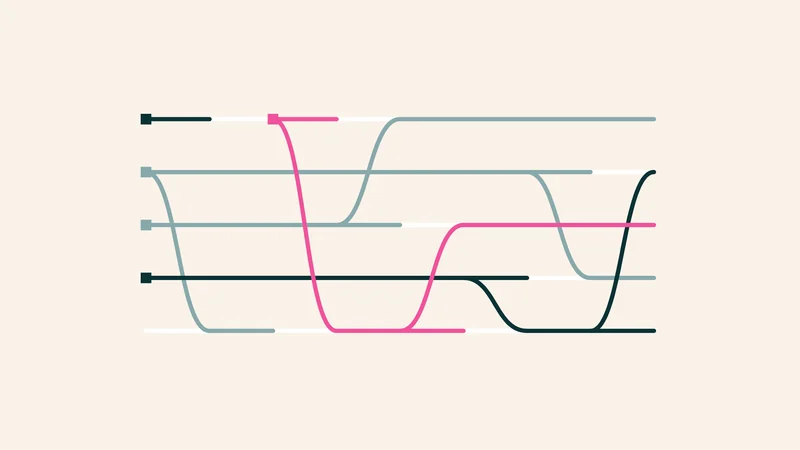
While initial observations aligned with the traditional view of brain chaos, the team discovered underlying order by modifying their data processing approach. Standard brain imaging studies typically average data across time and across multiple people to eliminate individual noise. However, this conventional method risks erasing transient ordered structures that appear briefly before dissolving.
To avoid losing these details, researchers fed moment-by-moment activity data from 332 brain regions into a machine-learning tool called CEBRA. This tool compressed the information while preserving event order, generating a unique trajectory through a three-dimensional space for each participant. Detailed coverage and discussions regarding these findings are documented on platforms like Ars Technica.
Context Differentiation and Network Contributions
The machine-learning analysis revealed that sober brain activity was less differentiated by context, whereas activity under psilocybin became structured over time and clearly separated into distinct clusters matching rest, meditation, music, and the movie sequence. A classifier could accurately determine which context a participant was experiencing simply by reading their brain activity data.
To determine which areas drove this effect, the team substituted network data with sober baseline versions. The default mode network—typically associated with the narrative self, daydreaming, and mind wandering—and the visual system each accounted for over 20 percent of the observed classification effect. Under psilocybin, these two systems became less differentiated, offering new structural insights into the altered state.
Sources
- Ars TechnicaOne with the world? A new look at brains transformed by psychedelics.
Continue chronologically


Related stories
Google Launches Polar Peaks AI Quest for Brain Mapping
Google Research and the Stanford Accelerator for Learning introduce Polar Peaks, an interactive AI quest teaching students human brain mapping and AI literacy.
CWE-bench v2 Launches With 100 Tasks to Test AI Cyber Capabilities
CWE-bench v2 has been released by Collinear AI, offering a public set of 100 tasks designed to evaluate frontier AI models on security workflows.

Amazon Quick Unifies Structured and Unstructured Data
Discover how Amazon Quick bridges structured metrics and unstructured documents into a single conversational AI experience for enterprise business intelligence.

StateBench Released to Test Long-Document State Tracking
A new benchmark evaluates how well language models track changing entity states across long documents, revealing limitations in current architectures.