
NVIDIA Transforms European Retail With Open Models and Robotics
Retail leaders and technology companies across Europe are deploying NVIDIA-accelerated open and frontier models to advance agentic commerce, digital product discovery, and physical operations.
 Radwan AbdulhadiEditor and technology writer
Advancing Agentic Commerce and Product Discovery
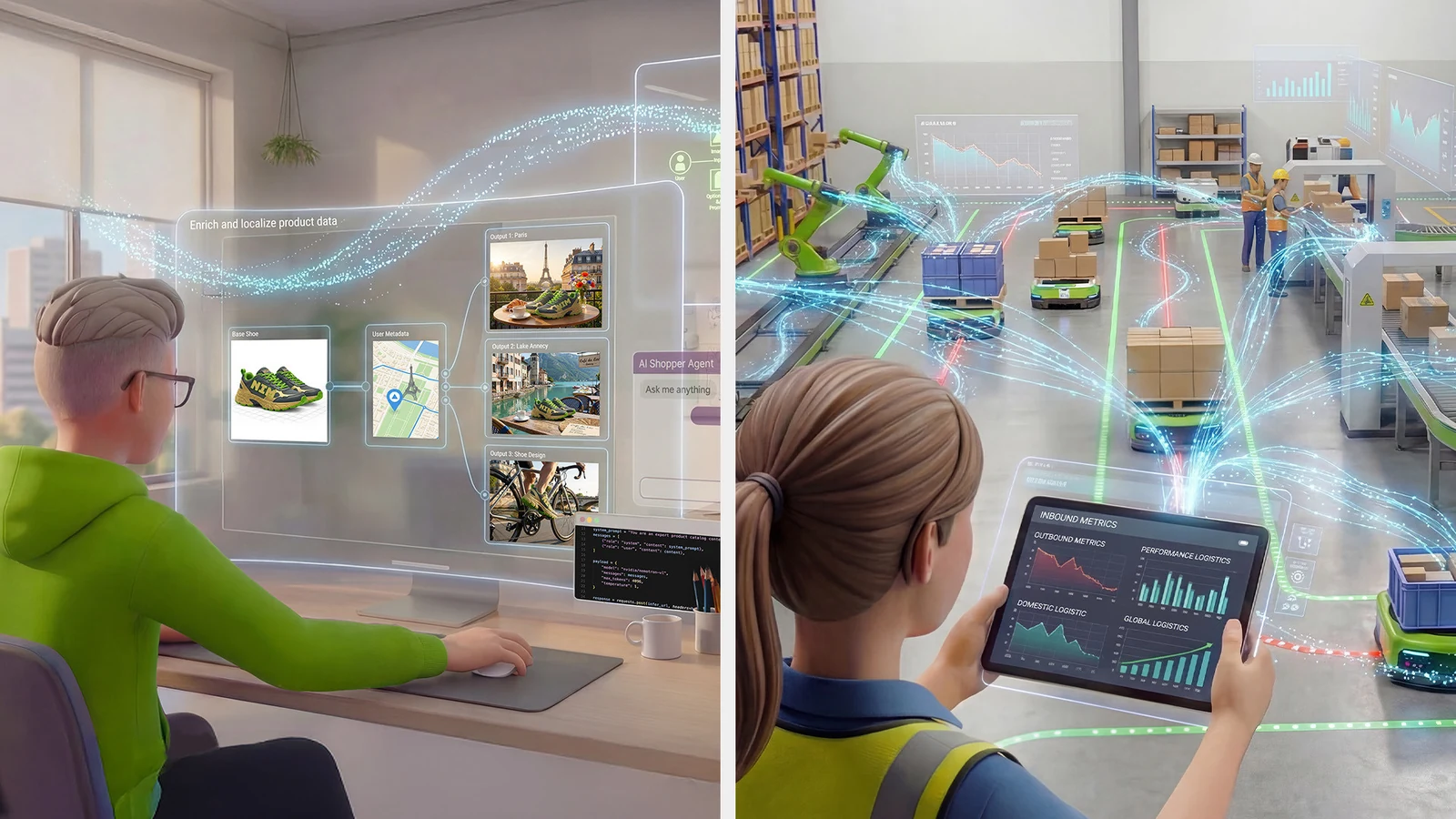
Retail leaders and technology companies across Europe are leveraging NVIDIA-accelerated open and frontier models to push the boundaries of agentic commerce, digital product discovery, and retail research and development. Shopify has utilized advanced libraries such as the NVIDIA Megatron Bridge to accelerate fine-tuning alongside NVIDIA NeMo RL for reinforcement learning processes.
Through this technical approach, Shopify post-trained the NVIDIA Nemotron 3.5 Lightning model for its GraphQL subagent integrated within Sidekick, its AI merchant assistant. Internal benchmarks show that this post-trained model outpaces a leading frontier model in accuracy while slashing serving expenses by 90% and delivering responses seven times faster.
Meanwhile, Europe's leading online pet retailer, Zooplus, collaborated with Infosys and NVIDIA to reconstruct its product discovery framework for the agentic era. Running inside an Amazon Web Services environment, a production-ready prototype achieved 86% search accuracy by implementing semantic search and utilizing the NVIDIA Blueprint for retail catalog enrichment to generate search-ready product attributes.
Enhancing Visual Assets and Creative Workflows
Visual and digital asset pipelines are also undergoing significant transformations across Europe. Photoroom deployed its Image Editing API with Vestiaire Collective to standardize tens of thousands of primary listing images daily across 70 countries. Listings processed through this pipeline achieved higher product liquidity and increased unique views per product page.
Similarly, Omi introduced ProductDrop, a workflow designed to anchor generated images to approved digital twins. This mechanism allows global brands to scale creative output across entire catalogs without introducing product errors.
Simulating Fulfillment and Physical Operations
Beyond digital interactions, physical intelligence and simulation technologies are streamlining warehouse operations and fulfillment centers. The Otto Group advanced its autonomous warehouse initiative—developed alongside Reply utilizing NVIDIA Omniverse libraries on Google Cloud—to its largest fulfillment center situated in Haldensleben, Germany.
These advanced capabilities enable logistics teams to design, test, and completely optimize their warehouse workflows within a virtual simulation before executing any physical implementations on the ground.
Additionally, companies like ALLSIDES introduced their 3D Digital Twin Factory, which serves as an automated pipeline capable of transforming physical objects into SimReady 3D digital twins in minutes with high geometric accuracy.
Showcasing New Solutions at GTC Berlin
At GTC Berlin, Nebius is highlighting multiple announcements from the broader ecosystem, including early-access availability for new retail blueprints running on accelerated NVIDIA infrastructure.
These implementations demonstrate how European enterprises maintain technological sovereignty, avoid vendor lock-in, and deploy scalable open models across various operational infrastructure sectors.
Sources
- NVIDIA BlogNVIDIA Transforms European Retail, From Digital Discovery to Physical Operations
Continue chronologically

Related entity coverage
Related stories
France’s Tech Ecosystem Deploys NVIDIA Agentic Computing
Discover how France's technology ecosystem is scaling agentic computing across space, finance, retail, and public sectors using NVIDIA infrastructure.

European Leaders Adopt NVIDIA Vera CPUs for Local AI Infrastructure
European cloud providers and global technology partners are adopting NVIDIA Vera CPUs to build local infrastructure and scale agentic computing workloads.
NVIDIA Cloud Partners Scale Across Europe for Sovereign AI
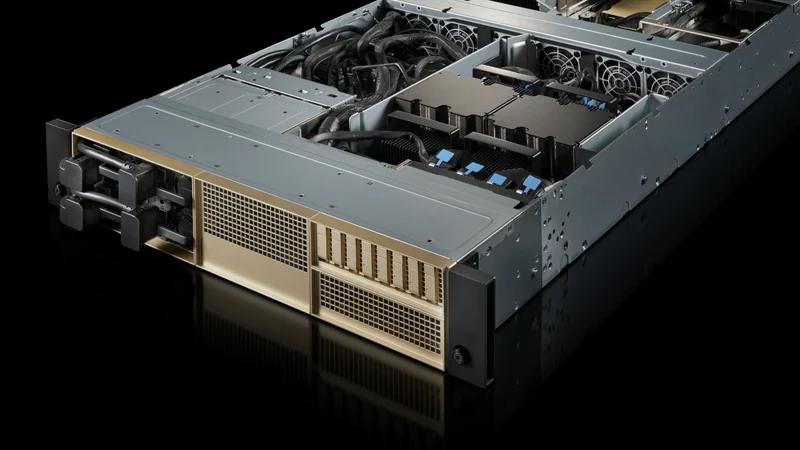
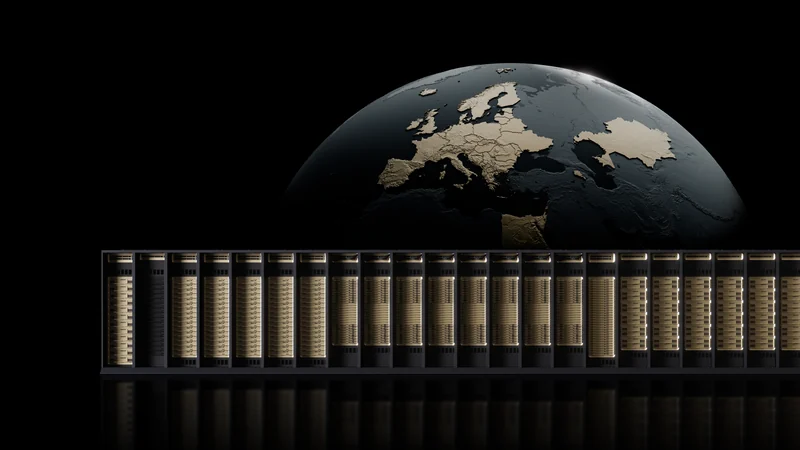
NVIDIA Cloud Partners are expanding regional compute capacity across Europe, the Nordics, Africa, and Central Asia to power sovereign AI infrastructure.
NVIDIA Open Models Power European Public Sector Projects
European public sector projects utilize NVIDIA open models to enhance public services while maintaining strict control over sensitive data and infrastructure.