NVIDIA Kumo Forecast Adds Retrieval to Time-Series AI
NVIDIA has introduced Kumo Forecast, a multivariate time-series model that combines pretrained representations with optional retrieval from historical data. The system also provides explanations for individual forecast horizons.
 Radwan AbdulhadiEditor and technology writer
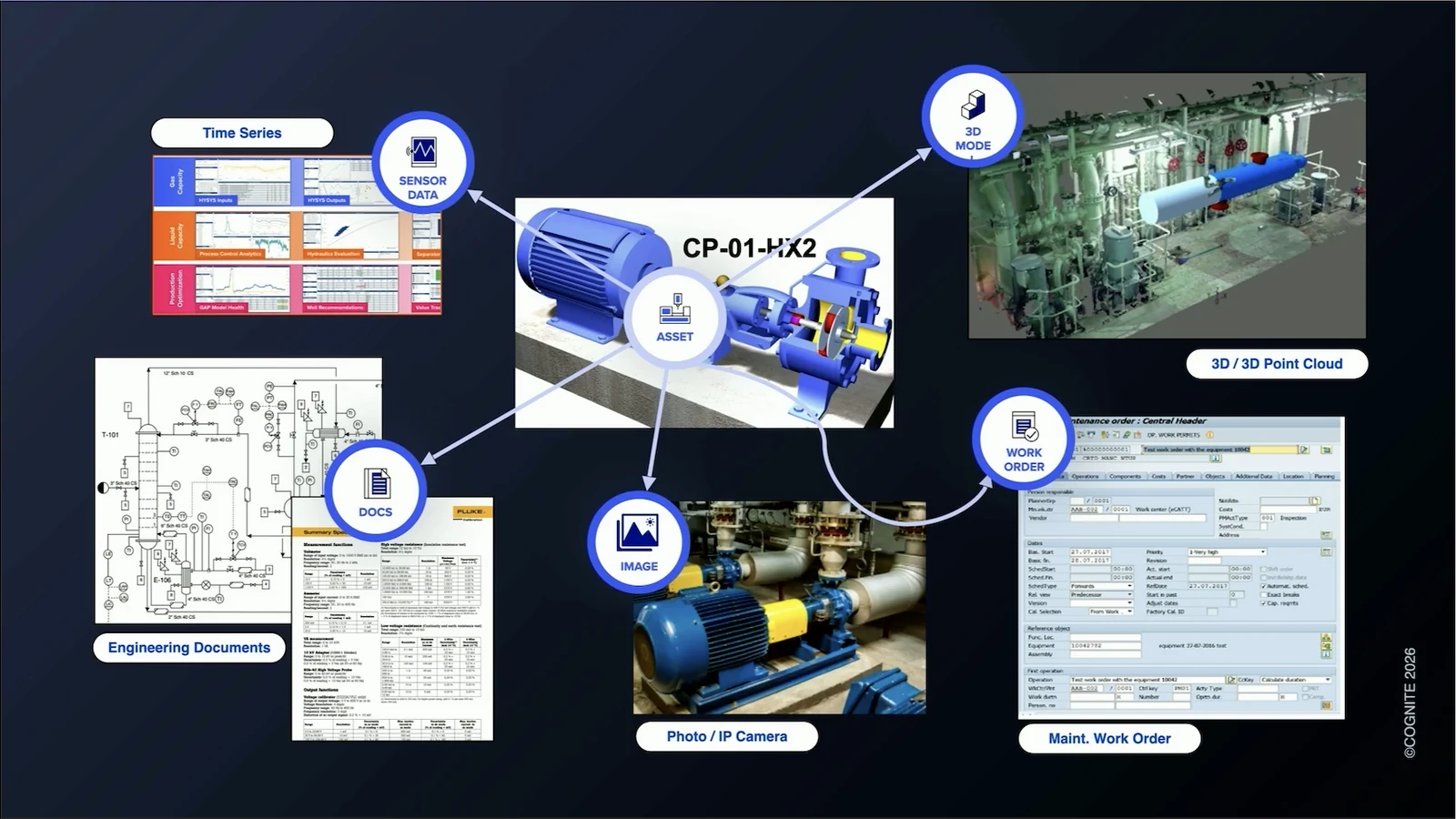
A hybrid approach to forecasting
NVIDIA says Kumo Forecast, formerly known as NV-Tesseract Forecasting, is a multivariate time-series forecasting model designed to combine two sources of information: representations learned during pretraining and historical observations available for a particular application. The model can produce a direct forecast from recent observations or add a retrieval pathway that searches historical data for related patterns. Further details are available from Hugging Face Blog in the original source material.
The retrieval-enhanced approach is called Domain-Aware Representation and Retrieval, or DARR. In this mode, Kumo Forecast uses a nearest-neighbor process to find relevant patterns in historical context and combines those patterns with the output of its direct forecasting path. Developers can configure how strongly the final prediction depends on each pathway. Further details are available from Back to Articles in the original source material.
Pretrained backbone and forecasting head
Kumo Forecast is built on the MOMENT-1-large Transformer backbone. The base encoder contains approximately 340 million parameters, while a trainable forecasting head maps the encoder’s representations to future values for the requested forecast horizon. NVIDIA describes the architecture as separating the pretrained representation model from the task-specific prediction layer, with encoder and embedder weights kept frozen while the forecasting head is trained.
The model supports direct forecasts for the horizon handled by its forecasting head and can use autoregressive extension for longer horizons. That distinction separates values generated directly by the forecasting head from forecasts extended recursively through later prediction steps.
Historical context remains separate
The system distinguishes between the input window and the retrieval context. The input window contains recent observations used to generate a forecast, while a separate historical DataFrame can provide additional examples for pattern retrieval. In the software development kit, this historical input is supplied through a context_df argument, allowing the retrieval data to be managed separately from the observations being forecast.
Kumo Forecast accepts numeric temporal data with a timestamp column and one or more numeric value columns. Inputs can be represented as a pandas DataFrame or provided through CSV or JSON. Supported input sequence lengths are 256, 512, 1024 and 2048 observations. When DARR is used, the dimensions of the context should be similar to those of the input context.
Interpretability accompanies predictions
Interpretability is included as a model-agnostic framework rather than requiring a separate forecasting architecture. When enabled, it produces an explanation bundle with lag and feature attributions for each forecast horizon, along with semantic-flow diagnostics and trajectory-stability diagnostics. Optional embedding Integrated Gradients are also available.
These outputs are intended to accompany the forecast and help describe how the model arrived at horizon-specific results. NVIDIA points to its NVExplain work for further details on latent trajectory analysis and structure-preserving surrogate methods for time-series forecasting.
Library and adaptation options
The Kumo-Forecast library provides a DataFrame-first API, configurable forecast horizons and optional historical context for retrieval. NVIDIA also says the Kumo-TS repository includes an example showing how to fine-tune Kumo Forecast on a user-supplied CSV. The project therefore supports both a pretrained inference workflow and a documented starting point for adapting the model to a user’s own numerical time-series data.
The model code and weights are identified in the source as NVIDIA/Kumo-TS and nvidia/Kumo-Forecast, respectively. Kumo-Forecast is available under the Apache 2.0 license, according to NVIDIA’s publication.
Use-case testing and predictive maintenance
NVIDIA recommends comparing direct and retrieval-enhanced configurations on the same held-out forecasting windows when evaluating an application. The company says forecast quality should be checked across the intended horizons and operating conditions, reflecting its requirement for use-case-specific testing rather than relying on a single general result.
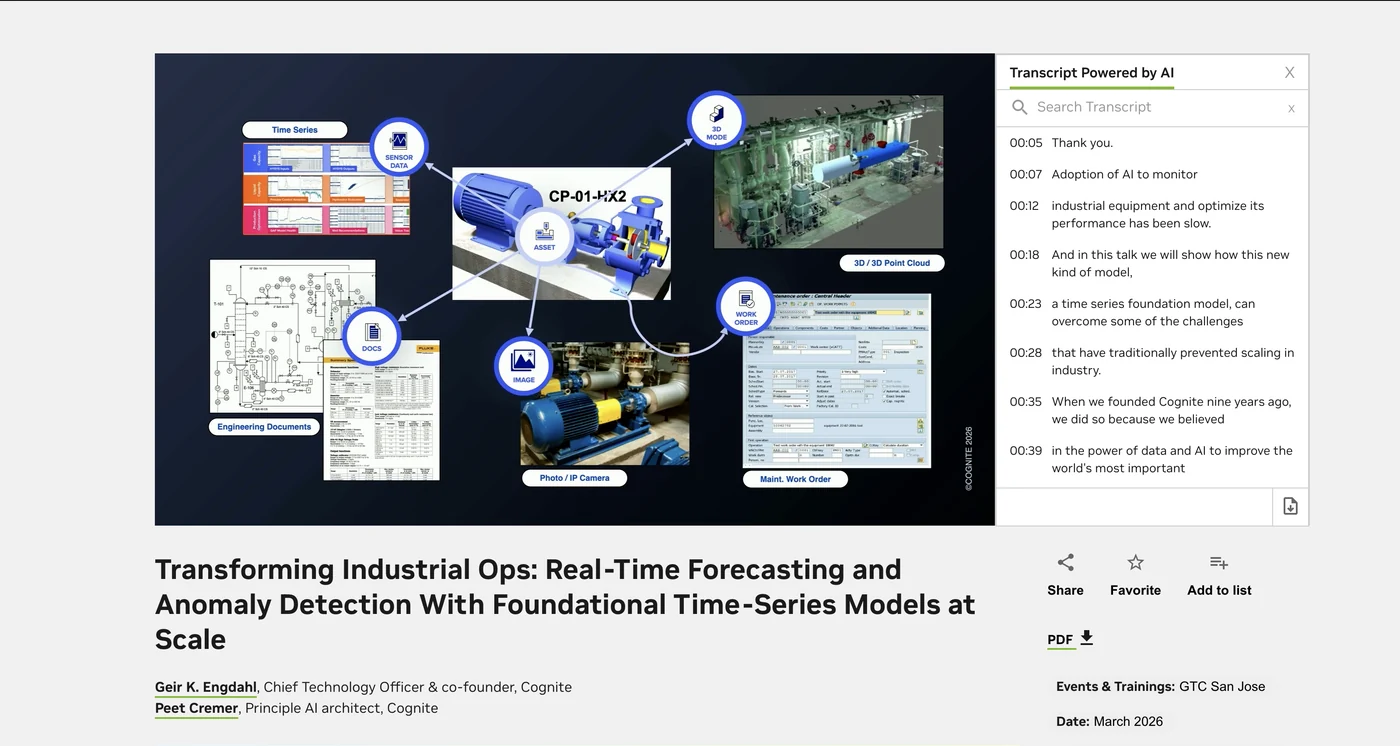
The Factory Operations, or FOX, Blueprint includes Early Access to a Predictive Maintenance module that uses Kumo Anomaly and Kumo Forecast. According to NVIDIA, the module analyzes real-time data to predict future anomalies. The source also references a session from GTC San Jose 2026 connected to the blueprint.
Sources
- Hugging Face BlogNVIDIA Kumo Forecast Combines Pretrained Time-Series Representations with Historical Pattern Retrieval and Interpretability
Continue chronologically
Related entity coverage
Related stories
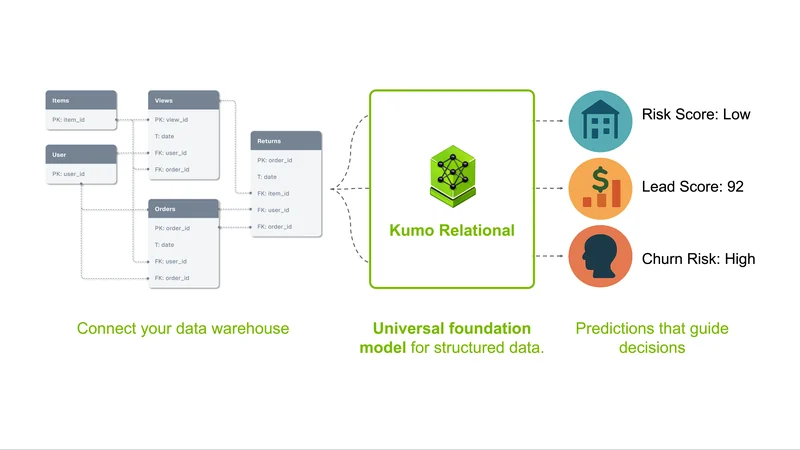
NVIDIA Kumo Relational Outperforms Supervised ML
NVIDIA introduces Kumo Relational, a pre-trained relational foundation model that performs enterprise database predictions without training.
NVIDIA Expands Nemotron 3.5 with New Retrieval Models
NVIDIA expands its Nemotron collection with open models for embedding, reranking, and document parsing to enhance enterprise agent workflows.
Cities Scale Physical and Agentic AI Services With NVIDIA
Cities worldwide are building and scaling physical and agentic AI services using NVIDIA platforms to improve infrastructure planning and public operations.

Nvidia Developer Builds 'MonsterHouse' Halloween Voice Agent
An Nvidia developer creates MonsterHouse, an interactive Halloween voice agent running locally on a single workstation using advanced AI models.