Nvidia Developer Builds 'MonsterHouse' Halloween Voice Agent
A custom-built, interactive Halloween display transforms a garage door into a grumpy, pirate-inspired building powered by modern conversational AI.
 Radwan AbdulhadiEditor and technology writer

Introduction to MonsterHouse
Holiday displays continue to evolve as developers integrate generative artificial intelligence into seasonal projects. A notable example comes from a developer who built an interactive projection named MonsterHouse for Halloween festivities, designed to engage directly with young visitors. Instead of relying on traditional pre-recorded audio tracks, the installation listens to trick-or-treaters, formulates contextual responses, and replies in the voice of a grumpy old pirate ship that softens when visitors display good manners.
The conceptual foundation of the project centers around giving a standard garage door a distinct personality and a fiery grin. Rather than focusing solely on traditional scares, the installation aims for a cantankerous yet approachable demeanor. The entire interactive pipeline is built using the <a href="https://github.com/NVIDIA-AI-Blueprints/nemotron-voice-agent">NVIDIA Nemotron Voice Agent</a> framework, combining multiple specialized speech, language, and animation models to operate in real time on a local setup.
The AI Pipeline: Listening, Thinking, and Speaking
Achieving low-latency, real-time conversational interaction requires a coordinated pipeline of specialized artificial intelligence models handling distinct sensory and cognitive tasks. The listening phase relies on <a href="https://huggingface.co/nvidia/nemotron-speech-streaming-en-0.6b">Nemotron ASR</a> to accurately transcribe visitor speech into text. Once the speech is converted into written input, the system routes the data to the central language generation component to formulate an appropriate reply.
For the cognitive processing layer, the project utilizes <a href="https://huggingface.co/nvidia/NVIDIA-Nemotron-3.5-Bolt-E4B-4GB">Nemotron 3.5 Bolt E4B 4GB</a>. This open small language model is purpose-built for conversational agents and interactive characters, delivering efficient local inference. A custom LoRA adapter shapes the base model to embody the stubborn, pirate-themed backstory, ensuring the character responds with appropriate reluctance before eventually granting treats.
Once the text response is generated, the vocal delivery is handled by <a href="https://build.nvidia.com/nvidia/magpie-tts-zeroshot">Magpie TTS Zeroshot</a>. This zero-shot text-to-speech technology uses a brief reference audio sample to condition the voice, allowing the system to switch between various emotional delivery styles ranging from grumpy and menacing to amused and delighted based on tags provided by the language model.
Animation and Visual Effects
Creating a convincing talking structure required combining physical design elements with advanced facial animation software. The physical mouth was constructed by modifying garage door boards to resemble jagged lips, backed by virtual fire effects projected into Unreal Engine 5. To synchronize the speech with the physical structure, Audio2Face-3D processes clean synthesized speech output and translates it into realistic mouth movements mapped onto the custom 3D character mesh.
Visual tracking also plays a critical role in managing visitor interactions. Additional vision models such as Nemotron 3 Nano Omni describe incoming costumes, while YOLO and ByteTrack algorithms monitor visitor counts and movement patterns near the driveway. This sensory integration allows the interactive display to acknowledge crowd presence even when active conversations are not taking place.
Hardware Execution and Local Deployment
Maintaining an off-grid, self-contained architecture required careful management of available computational resources and memory budgets. Rather than relying on cloud-based APIs, the entire application logic, speech recognition, language model inference, text-to-speech synthesis, and animation rendering run concurrently on a single local workstation.
The hardware configuration powering the installation features high-performance processing components, specifically pairing an NVIDIA RTX PRO 6000 Blackwell Max-Q with an NVIDIA RTX PRO 4000 Blackwell GPU. This local hardware setup ensures that response times remain fast enough to maintain a natural conversational flow with trick-or-treaters without perceptible lag.
Conversational Design and Optimization
Designing a compelling interactive experience involves more than just plugging an LLM into a speaker system. The character needed a structured conversation path that guides visitors from an initial hostile greeting to a warm farewell once manners like saying "please" and "thank you" are demonstrated. To prevent repetitive interactions and streamline performance, the system incorporates prepared text banks for common greetings and cached audio responses for frequent candy jokes.
Furthermore, the pipeline streams speakable text segments before the entire sentence generation is finalized, allowing the garage door to begin talking while the remainder of the response is still processing. This optimization prevents awkward conversational pauses, ensuring that the haunted house maintains its lively and cantankerous performance throughout the evening.
Sources
- Hugging Face Blognemotron-halloween
Continue chronologically


Related entity coverage
Related stories
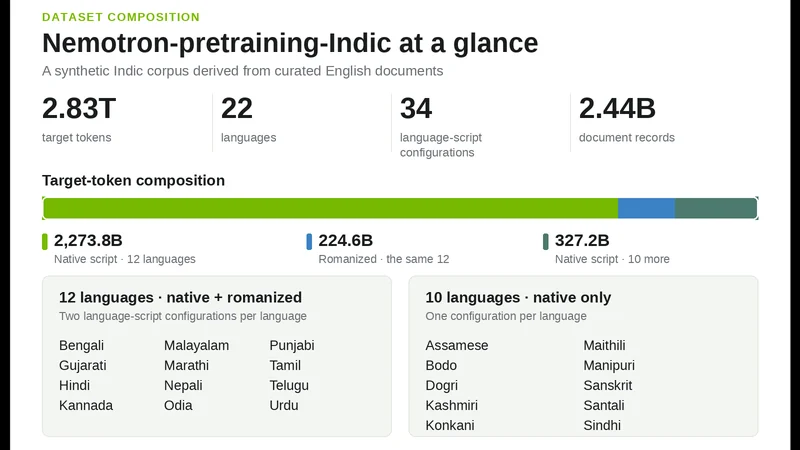
NVIDIA and AI4Bharat Launch Indic Pretraining Corpus
NVIDIA and IIT Madras lab AI4Bharat introduce Nemotron-pretraining-Indic-v1, featuring 2.8 trillion tokens and an open data generation pipeline.
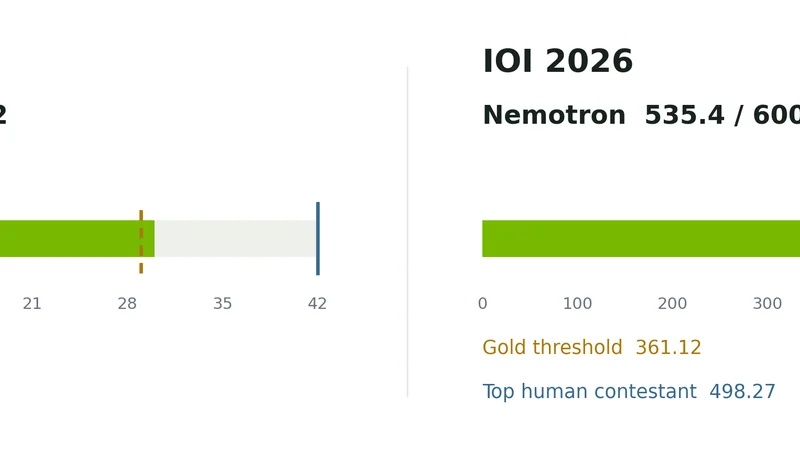
NVIDIA Fine-Tunes Nemotron for Gold-Level IMO and IOI Results
NVIDIA demonstrates how fine-tuning the Nemotron model family using SFT, RL, and inference loops achieved gold-medal levels at IMO 2026 and IOI 2026.
NVIDIA Expands Nemotron 3.5 with New Retrieval Models
NVIDIA expands its Nemotron collection with open models for embedding, reranking, and document parsing to enhance enterprise agent workflows.
NVIDIA Launches Nemotron 3.5 Transcribe and Granary v2
NVIDIA introduces Nemotron 3.5 Transcribe and Granary v2, delivering advanced multilingual transcription, speaker attribution, and promptable audio tools.