
NVIDIA Launches Isaac ROS 5.0 to Advance Agentic Robotics
The latest release brings GPU-accelerated workflows and agentic support to the global developer ecosystem, enabling more efficient creation of intelligent machines.
 Radwan AbdulhadiEditor and technology writer
Expanding the AI Robotics Frontier
NVIDIA has officially unveiled NVIDIA Isaac ROS 5.0, a major update designed to empower developers to build, customize, and deploy sophisticated robotics applications. Announced today at the ROSCon conference in Toronto, Canada, this release marks a significant step forward in integrating AI agents into the [ROS](https://developer.nvidia.com/isaac/ros) ecosystem. By providing a collection of GPU-accelerated packages, NVIDIA aims to simplify the way humans and AI agents collaborate to develop robots that can perceive, reason, and act within dynamic environments.
Modern robotics development relies heavily on the open-source framework managed by [Open Robotics](https://www.openrobotics.org/), which provides the necessary libraries and standards for modular software design. With Isaac ROS 5.0, NVIDIA brings its accelerated computing capabilities to this community, offering tools that help nearly 1.3 million users move from conceptual ideas to working applications with greater speed and efficiency.
Agentic Workflows and Foundation Models
The integration of [AI agents](https://www.nvidia.com/en-us/ai/) is a core feature of the 5.0 release. These agents are designed to assist developers by automating repetitive tasks and navigating complex codebases. To support this, NVIDIA has introduced agent-ready documentation and reusable skills that allow AI to perform setup and manipulation tasks. For instance, the new FoundationStereo fine-tuning skill allows an AI agent to adapt perception models to specific hardware configurations, while FoundationPose enables robots to track the orientation of objects up to 5.5x faster than previous iterations.
Platform Support and Standards
Isaac ROS 5.0 includes native support for ROS Lyrical and Ubuntu 24.04, ensuring developers have access to the latest platforms. A key development in this release is the collaboration with the [Open Source Robotics Alliance](https://osralliance.org/2026/09/ros-lyrical-luth-gains-vendor-neutral-accelerated-memory-transport-from-nvidia/) to contribute a standard data-handling interface. This ensures that robotics software can operate efficiently across diverse computing hardware, particularly when utilizing GPU acceleration via CUDA.
Industrial and Ecosystem Integration
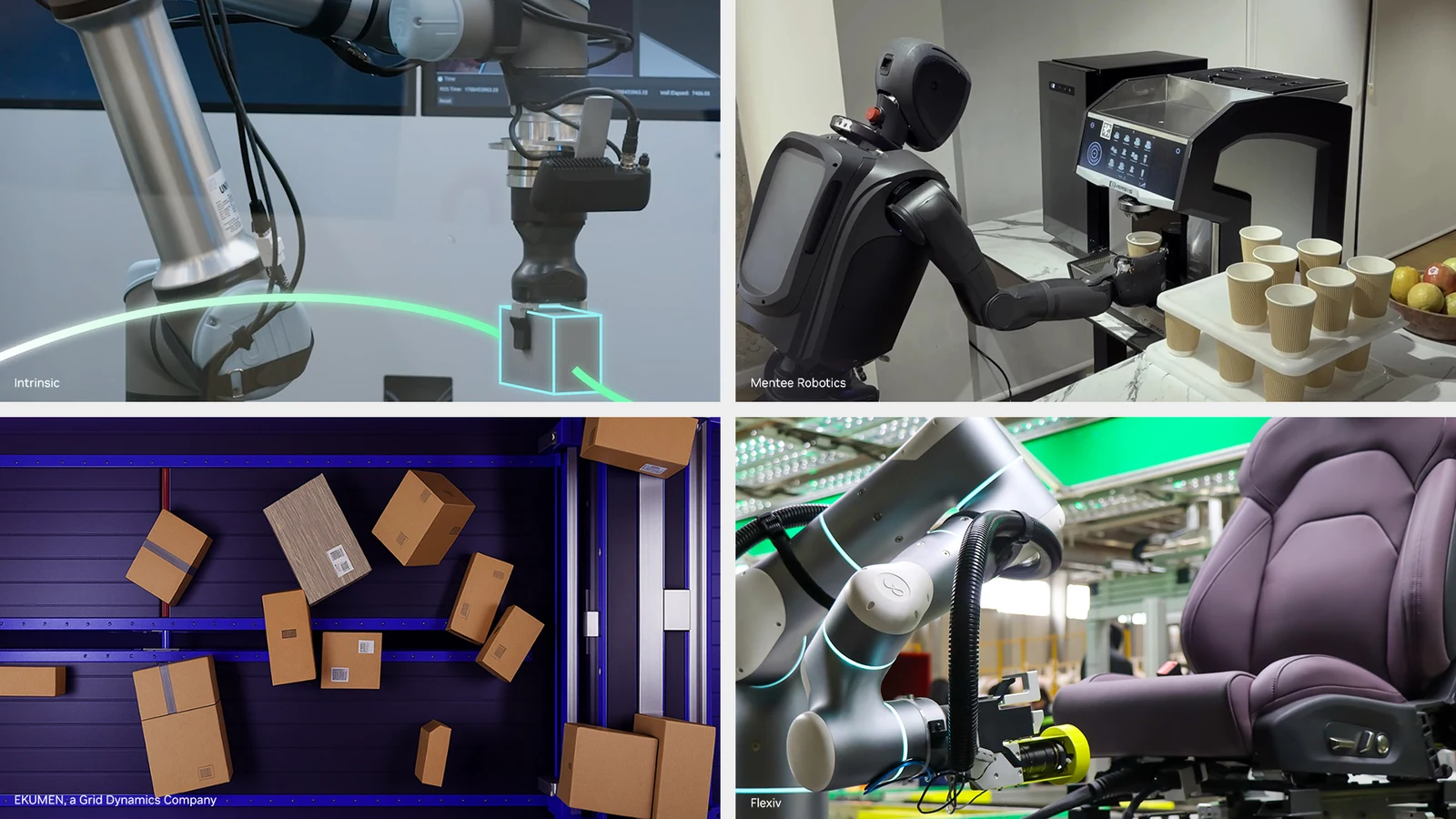
The broader [robotics ecosystem](https://www.nvidia.com/en-us/industries/robotics/) is already leveraging these new capabilities. Projects like AgenticROS—sponsored by RealSense—are connecting NVIDIA's advanced models to ROS-based systems, while companies like Intrinsic are integrating FoundationPose into their industrial machine-tending solutions. These collaborations demonstrate how the platform supports diverse use cases, ranging from autonomous pick-and-place tasks to complex manufacturing automation.
Additionally, NVIDIA Jetson devices, such as the Orin Nano and the high-performance Jetson Thor, serve as the scalable foundation for running this [physical AI](https://www.nvidia.com/en-us/glossary/generative-physical-ai/) stack at the edge. By maintaining interoperability with tools from partners like Foxglove, Ouster, and Ekumen, NVIDIA ensures that developers have a streamlined path from initial research and simulation to real-world deployment.
Sources
- NVIDIA BlogNVIDIA Isaac ROS 5.0 Advances Agentic, Open Source Robotics Development