Astronomers Discover Cosmic Debris Disk Around White Dwarf
New observations of a distant white dwarf reveal a complex debris disk that could mirror the future fate of our own planetary system.
 Radwan AbdulhadiEditor and technology writer
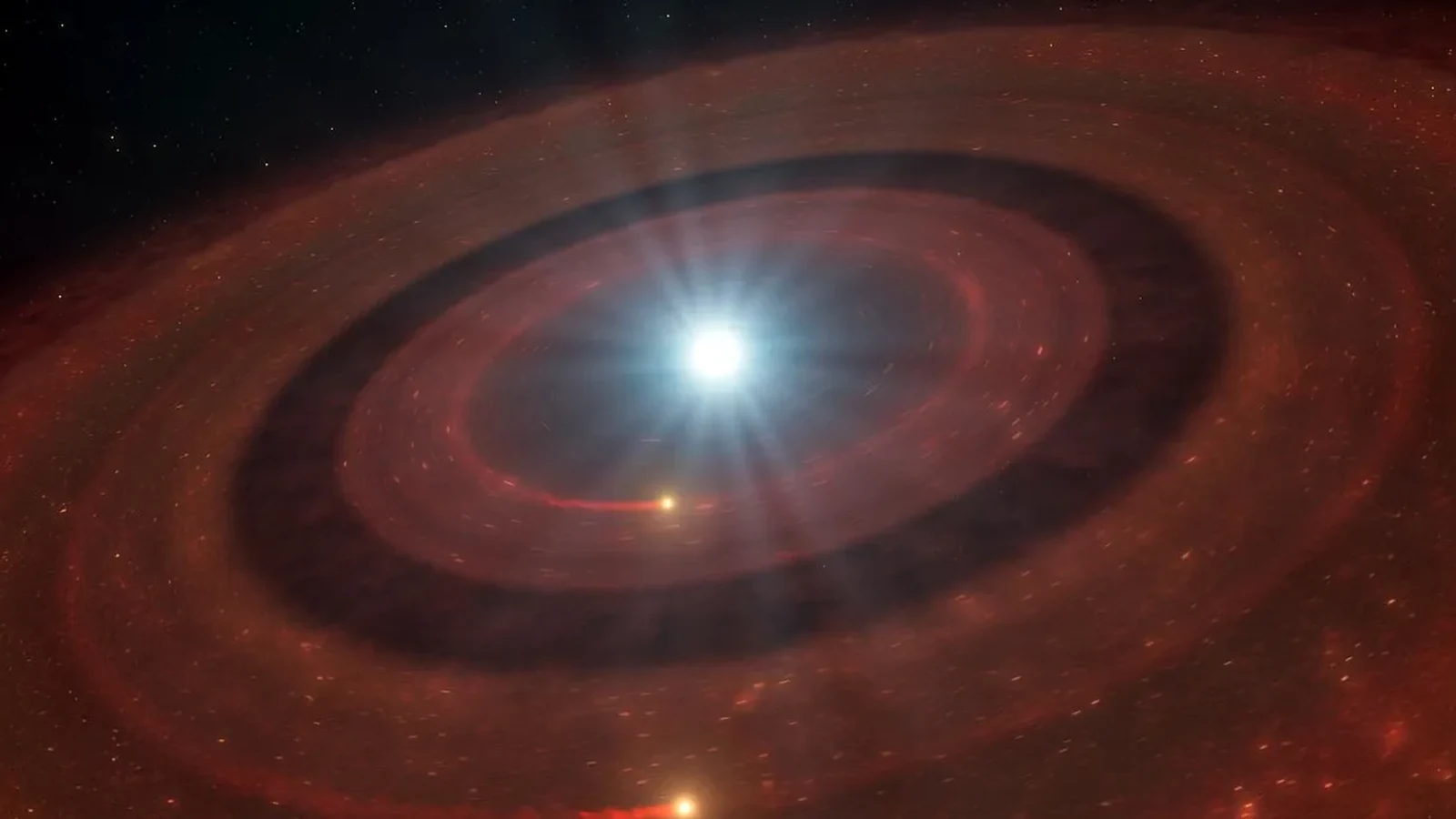
Discovery of a Distant Debris Disk
Astronomers at the European Southern Observatory (ESO) have uncovered a unique debris disk surrounding a white dwarf, composed of remnants from the solar system that once orbited it. Researchers believe these complex structures could offer a crucial glimpse into what the end of our solar system will look like once the sun runs out of fuel.
The white dwarf, designated J1328−1450, is situated approximately 1,600 light-years away from Earth. While star-mapping catalogs had previously identified the object, new observations conducted with the observatory using its Very Large Telescope revealed an unusual structure consisting of two distinct rings of gas separated by a distinct gap.
Evolution from Red Giant to White Dwarf
According to observations, this disk of material likely represents the remnants of the planetary system that historically orbited J1328−1450. As the star transitioned through a red giant phase and ultimately became a white dwarf, it may have actively destroyed some of its planets while leaving other rocky bodies exposed to extreme cosmic environments.
During this violent transformation, portions of the released material accumulated to form a surrounding disk of gas and dust around the dead star. Similar planetary destruction processes could eventually unfold in our solar system as stellar evolution progresses over billions of years.
Implications for Our Solar System
The evolutionary process that shaped the J1328−1450 system is projected to repeat itself in our cosmic neighborhood. In approximately 5 billion years, the sun will completely exhaust its nuclear fuel and expand into a red giant. During this turbulent expansion phase, it could engulf nearby bodies, including the innermost planets of the system.
Following that expansive phase, the sun will shed its outer layers and leave behind a white dwarf core. Any rocky bodies or other rocky bodies that manage to survive this stellar transformation could potentially break apart under gravitational stress, ultimately forming a debris disk around the dead star similar to the one currently observed at J1328−1450.
Clues Regarding Surviving Planetary Objects
Beyond illustrating potential stellar fates, the white dwarf's two debris rings point to another intriguing possibility. The physical layout and structure of the rings appear to be shaped by celestial bodies that astronomers have not yet been able to identify directly through standard imaging.
Current data analysis suggests that following the star's radical transformation, at least two planetary objects may have survived among the scattered stellar remnants. Researchers theorize that these two surviving bodies could vary significantly in scale and composition.
Analyzing Ring Formation and Structure
Scientific models indicate that the object positioned closest to the white dwarf might measure only a few kilometers in diameter, whereas the more distant object could reach a size comparable to Pluto or even the moon. Their gravitational interactions with the surrounding debris field could account for the clean separation of the two distinct rings.
Despite these compelling hypotheses, researchers emphasize that it has not yet been definitively confirmed whether these objects exist independently. An alternative theory suggests that the unusual ring structure might instead originate from distinct geological layers of a single disrupted planet-like body, such as its separated crust and dense core.
Sources
- WIREDA Newly Discovered Trail of Cosmic Debris Illustrates How the End of the Solar System Could Look
Continue chronologically


Related stories
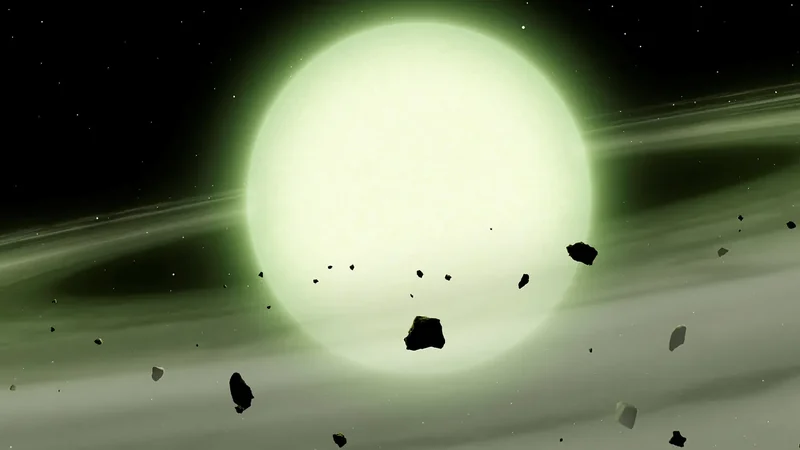
Scientists Discover Pink and Green White Dwarf Stars
Astronomers discover that dying white dwarf stars can display vibrant pink, green, and purple hues due to extreme density and absorbed planetary material.
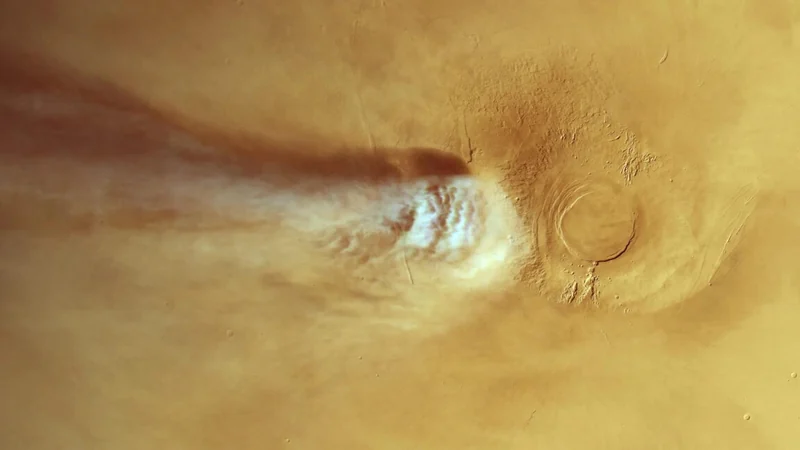
Martian Cloud Formation May Reveal Never-Before-Seen Physics
A new model reveals that a massive 1,000-mile cloud on Mars may be driven by rare ice-forming physics never directly observed in nature.
NASA Releases Nearly 1 TB of Artemis II Data to Public
NASA has made roughly 800 gigabytes of scientific data from the Artemis II mission available to the public, including images, audio, and reports.
Discover Tools at Runtime with AWS Agent Registry
Learn how AWS Agent Registry addresses hardcoded tool scaling bottlenecks by allowing enterprise orchestrators to discover capabilities dynamically.