Microsoft Introduces Copilot Harness for Multi-Model AI
Microsoft has announced the rollout of the Microsoft Copilot harness, a company-wide multi-model orchestration layer designed to help developers build agents that complete complex, long-running tasks.
 Radwan AbdulhadiEditor and technology writer

Bringing Multi-Model Orchestration to the Enterprise
Competing effectively in the current artificial intelligence landscape requires a multi-model strategy. Building a system that works seamlessly across different AI models and surfaces presents major challenges regarding performance, quality, and cost. To address these demands, Microsoft has adopted a <a href="https://benchmarks.github.com">a best-in-class, truly multi-model harness</a> company-wide, developed initially by the GitHub engineering team.
The Microsoft Copilot harness now powers multiple surfaces, including Copilot Code, Copilot Studio, the GitHub Copilot app, the command-line interface, and Visual Studio Code. Microsoft is making this framework available through <a href="https://devblogs.microsoft.com/foundry/microsoft-copilot-harness-in-foundry">Microsoft Foundry</a>, providing enterprise customers and developers with a fully managed tool to build agents that can reason, utilize tools, and handle long-running tasks.
Understanding the Role of the Harness
According to Microsoft, while AI models supply intelligence, the harness acts as the surrounding orchestration layer. It supplies agents with instructions, context, execution environments, and controls required to perform meaningful work. Furthermore, the harness includes support for open standards like the Model Context Protocol (MCP), agent skills, and agent plugins.
The rapid pace of AI development means that a leading frontier model today can easily fall behind tomorrow. Building and maintaining custom harnesses or model routers to keep pace can be difficult and slow. By leveraging the same system that Microsoft and GitHub utilize in their own software, developers can bypass the maintenance burden while maintaining access to <a href="https://x.com/ArtificialAnlys/status/2115477376981508419">perform across model families</a>.
Enterprise-Scale Engineering and Rust Migration
The Copilot harness originated within GitHub, where engineers created technologies focused on <a href="https://github.blog/ai-and-ml/github-copilot/project-hydrafusion-frontier-quality-via-multi-model-orchestration/">multi-model orchestration</a>. Designed to be fast, token-efficient, and predictable, the framework gained high satisfaction among developers before being standardized across wider Microsoft Copilot experiences.
To achieve higher efficiency, the engineering team <a href="https://github.blog/ai-and-ml/generative-ai/migrating-the-github-copilot-runtime-to-rust-using-copilot/">ported the harness runtime to Rust</a>, delivering industry-leading performance alongside lower session overhead and faster time-to-first token. Because it runs across major Microsoft surfaces, the framework has been battle-tested at the scale of millions of users and numerous real-world use cases.
Availability and Integration
Developers can access the new framework immediately, as the <a href="https://github.com/github/copilot-sdk">SDK is available to download</a> or run directly within the cloud via Microsoft Foundry management. The platform remains open and interoperable, allowing teams to integrate alternative harnesses and frameworks if desired.
Within this architecture, Microsoft manages the agent loop and sandbox, complete with built-in governance and optimization. Users supply the specific instructions, skills, tools, and model preferences, helping advance the vision of a robust system that preserves model choice.
Sources
- Microsoft BlogIntroducing the Microsoft Copilot harness: Unlocking the potential of truly multi-model agentic work
Continue chronologically
Related entity coverage
Related stories
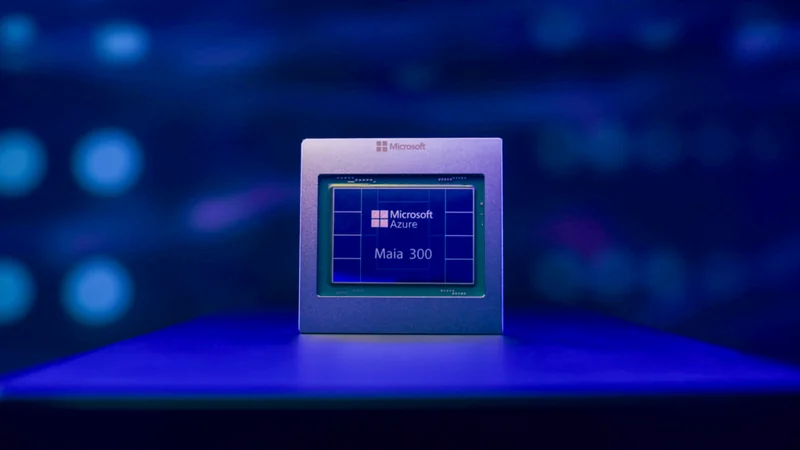
Microsoft Expands Azure Maia System to Multi-Gigawatt Scale
Microsoft announces multi-gigawatt Azure Maia deployments for 2027, highlighting Maia 200 production use and detailing the upcoming Maia 300.
GitHub Enterprise Now Includes Access to GitHub Copilot
GitHub Enterprise now includes GitHub Copilot for every licensed user working with a GitHub or Microsoft account team, streamlining management.
GitHub Copilot in Visual Studio 2026 September Update
The September 2026 update for GitHub Copilot in Visual Studio introduces Git agent pull request exploration, BYOM updates, and NuGet vulnerability fixes.
GitHub Copilot CLI Adds Local Model Discovery Support
GitHub Copilot CLI version 1.0.94-0 introduces local model discovery, letting developers choose supported models directly from their workflows.