DJI Unveils Dock 4 With 25-Second Battery Swaps
DJI has launched its first-ever automated battery-swapping drone dock, aiming to drastically cut down emergency response turnaround times.
 Radwan AbdulhadiEditor and technology writer
Automated Battery Swapping for Rapid Deployment
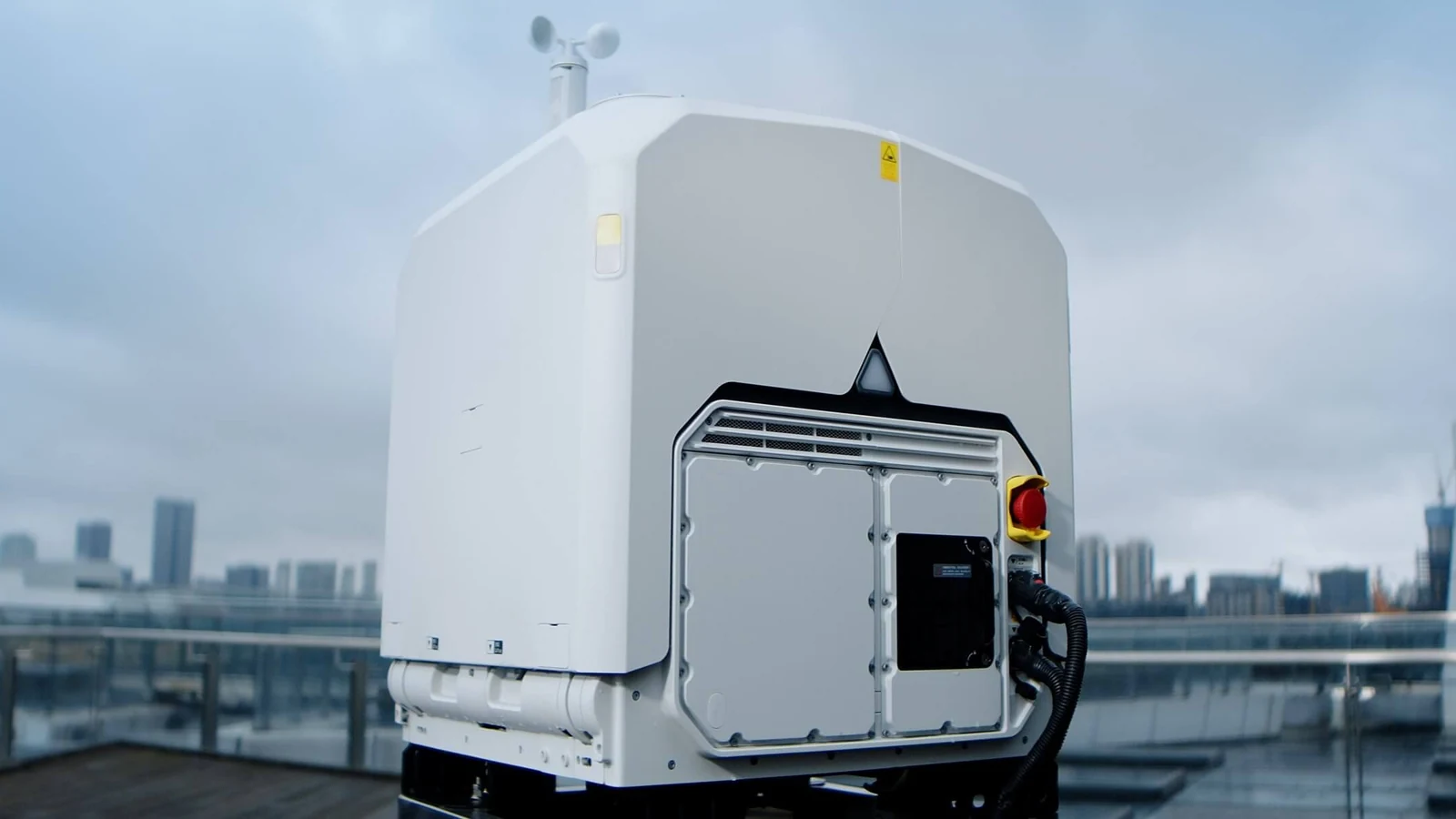
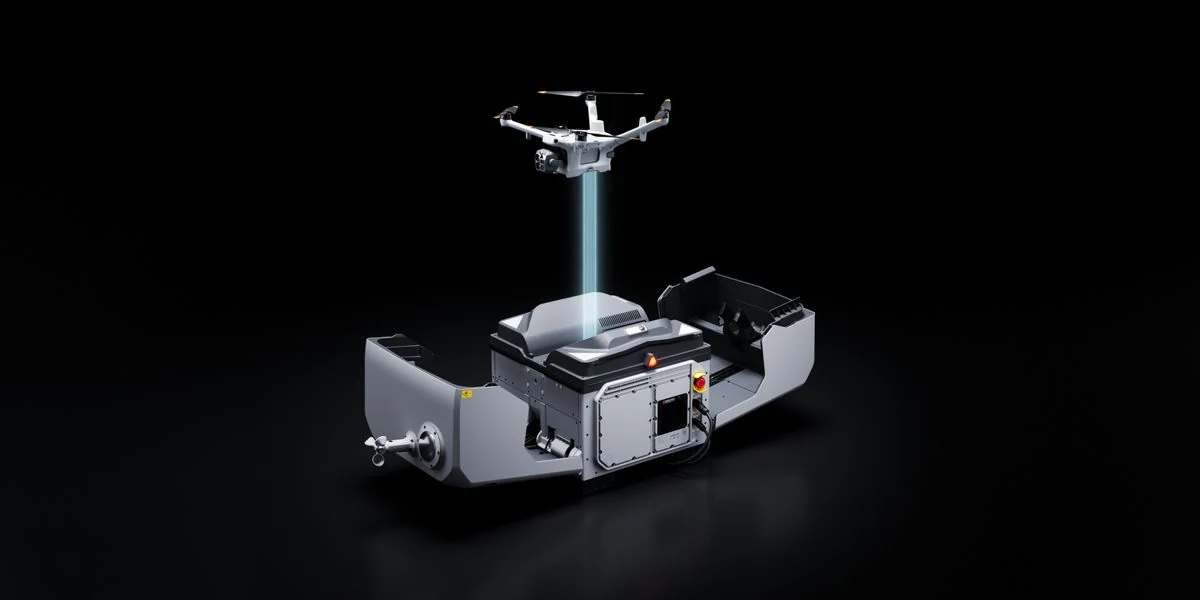
DJI has introduced its first-ever battery-swapping drone dock, the Dock 4, which features an automated 25-second battery swap mechanism according to a company press release. Traditional recharging workflows normally take around 30 minutes, but the new system promises a complete turnaround time of under 45 seconds from the moment the drone lands until it takes off again.
Positioned as a dock-as-a-first-responder solution with the marketing tagline "Always There, Always Ready," the system is tailored for safety and rescue missions. The Dock 4 weighs 66 kg bare and retains the same 400 x 400 mm mounting holes as its predecessor, the Dock 3. However, it is exclusively built to operate alongside the Matrice 5TD drone and requires the DJI O4 Ground Station.

Power Redundancy and Dock Specifications
The docking station charges two 925 g battery packs simultaneously, rated at 260 Wh each for up to 400 cycles, taking roughly 27 minutes to transition each battery from 15% to 95%. These packs also serve as a sequential backup power source, offering about 4.5 hours of energy each. When at least two packs are loaded, the dock maintains its swapping functionality even during a total loss of grid power, although the backup energy does not recharge the packs.
The entire hardware package is built to withstand rigorous environmental conditions, rated for operating temperatures ranging from minus 40 degrees to 50 degrees Celsius. The dock carries an IP56 rating, while the accompanying drone holds an IP55 rating and can handle winds up to 12 m/s.
Matrice 5TD Drone Capabilities
The Matrice 5TD drone is engineered for endurance, rated for nearly an hour of forward flight without a payload and slightly less during hover time. It achieves maximum speeds of up to 21 m/s during FlyTo tasks. For optics, the aircraft is equipped with three 50 MP cameras, encompassing a wide lens, a 70 mm equivalent medium telephoto lens, and a 252 mm equivalent telephoto lens providing 11x capabilities.
Additionally, the drone features a native 1280 x 1024 thermal camera alongside a 2560 x 2048 UHR infrared mode, color night vision that functions without a spotlight, and a laser rangefinder capable of reaching up to 3,000 meters. Sensor suites include rotating LiDAR, forward-, up-, and downward-facing millimeter-wave radar, and six-direction vision systems that allow the drone to detect power lines at night.
Onboard AI gives the aircraft the ability to detect 17 different object types, including cars, boats, and animals. Through DJI FlightHub 2, operators can search camera feeds using text or image queries and dispatch automated alerts.
Regulatory Hurdles and U.S. Market Restrictions
While the Dock 4 and Matrice 5TD bundle is currently available for order through partners in China priced at 167,999 yuan, or roughly $25,000 for the hardware alone, the system faces significant regulatory barriers in the United States. Tom's Hardware reports that the technical specification sheets lack Federal Communications Commission figures.
This lack of clearance stems from the FCC placing foreign-made drones and critical components on its Covered List, which prevents new foreign drone models from receiving authorization or being sold in the U.S. unless an exemption is granted by national security departments. Furthermore, separate regulatory proposals could target previously authorized foreign drones and docking stations equipped with thermal or LiDAR sensors.
Sources
- Tom's HardwareDJI’s first battery-swapping dock gets drones recharged and back in the air in under 45 seconds
Continue chronologically

Related stories
FCC's Brendan Carr Defers to Pete Hegseth on Execution Broadcasts
FCC Chairman Brendan Carr says the agency will defer to Secretary of Defense Pete Hegseth on whether TV networks can air a planned execution.

SpaceX Unveils Plans to Become a Major Mobile Carrier
SpaceX has announced plans to become a major mobile carrier through a strategic low-band spectrum acquisition pending regulatory approval.

SpaceX Moves to Challenge AT&T, Verizon, and T-Mobile
SpaceX is advancing an ambitious mobile carrier strategy, securing spectrum assets and regulatory approvals to build a competitive wireless network.

Sony Introduces ECM-W5 Wireless Microphone Kit
Sony has announced the ECM-W5 wireless microphone kit, a $400 audio solution featuring 32-bit float recording and broad compatibility.