CedarDB Unifies Transactions and Analytics for AI Agents
The Munich-based database engine CedarDB is addressing the growing demand for systems that can handle both operational records and analytical queries simultaneously in the era of agentic AI.
 Radwan AbdulhadiEditor and technology writer
Bridging the Divide Between Operations and Analytics
Databases have historically been built for one of two distinct jobs. Analytical databases help businesses spot trends and answer complex questions, while operational databases store day-to-day records of transactions, such as orders and payments. However, the Munich-based database engine CedarDB supports both functions, and its approach has gained significant relevance with the rise of agentic AI, according to co-founder and CEO Moritz Sichert.
CedarDB has been in development for the past decade. Its current momentum stems from enterprise companies whose existing data stacks may be well suited to storing years of transactions, yet less equipped to quickly answer natural language analytical questions about that data.
Origins in Academic Research and Umbra
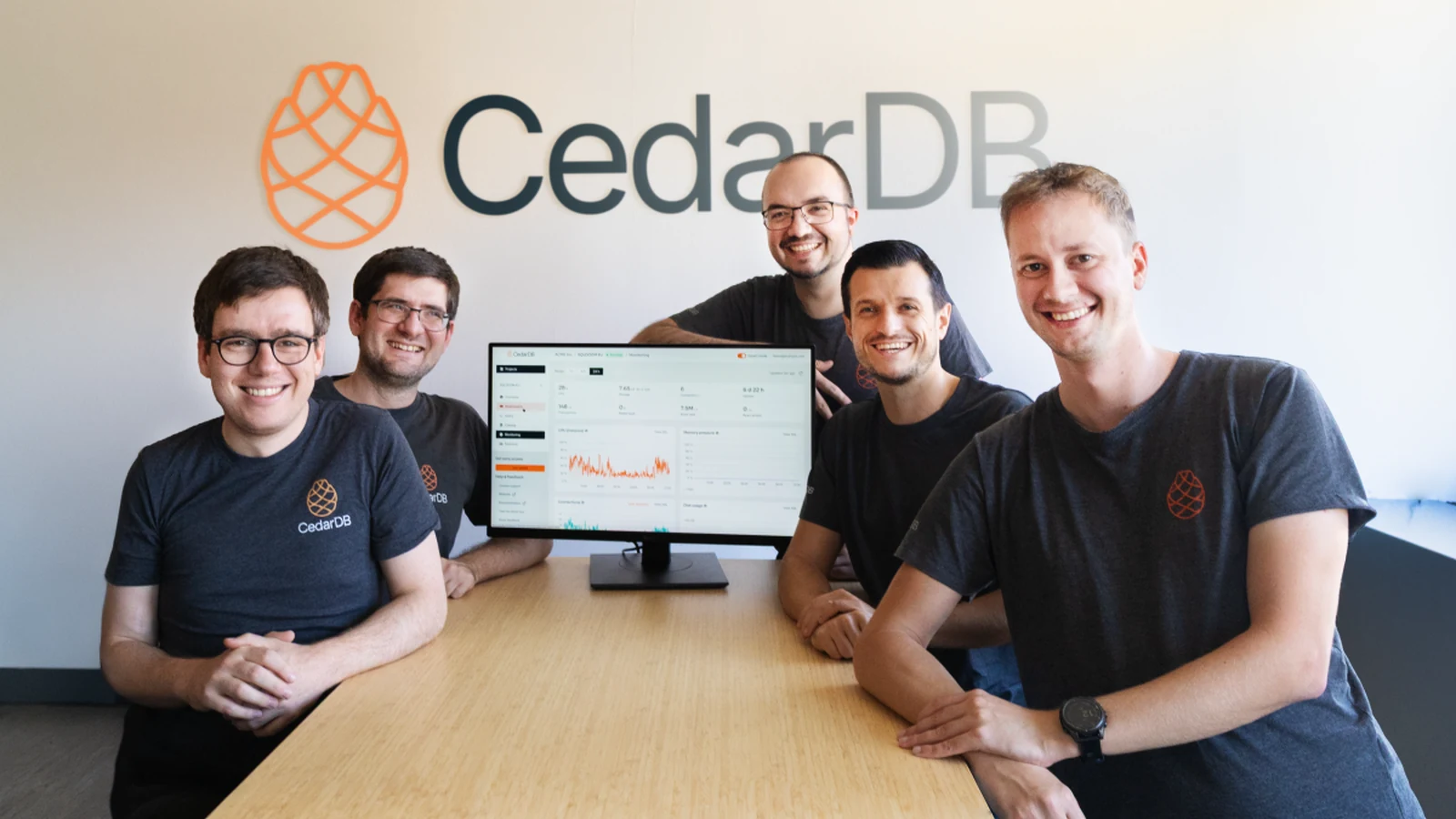
The questioning of the divide between analytical and operational queries is a direct by-product of CedarDB's focus on efficiency. The company operates as a spinout from the Technical University of Munich, drawing its foundation from Umbra, a research project built from scratch to outperform legacy database engines in processing speed by maximizing modern hardware capabilities.
With five Umbra researchers serving as its co-founders, CedarDB maintained this core philosophy, promising faster performance without requiring additional CPUs, processing power, or memory, while also demanding minimal changes from customers. In particular, the team ensured that CedarDB remains compatible with PostgreSQL, an open-source database system widely used across the industry.
Strategic Compatibility and Development Priorities
According to Sichert, this compatibility with the popular database helps keep switching costs low because users are not forced to rebuild their applications. It also provides an additional advantage: CedarDB follows the logic that large language models are most familiar with as a direct result of their training.
This decision represents one of several strategic choices that proved beneficial over time, though Sichert noted that it was not entirely driven by luck. In a corporate blog post, co-founder Christian Winter detailed key priorities established by the team after leaving academia, highlighting objectives such as reliability, fault tolerance, and compatibility with popular tools.
Funding Milestones and Cloud Expansion
While navigating early deployment strategies, the team debated whether to launch a cloud offering immediately. Ultimately, the company launched CedarDB Enterprise as an on-premise product alongside its free CedarDB Community Edition. Both offerings were announced concurrently with a €5.3 million seed funding round, which is approximately $6 million.
The cloud initiative was delayed rather than abandoned. Following beta testing with users from its waitlist, the company announced limited availability for CedarDB Cloud onstage at TechCrunch Disrupt, where it competed alongside other early-stage ventures in the Startup Battlefield competition.
Broader Market Validation and Future Outlook
A fully managed, cloud-hosted version is expected to help CedarDB expand its user base beyond large enterprises while positioning the startup to compete with major data firms that have reached similar conclusions regarding data architecture. For instance, Databricks cited the agentic era as the primary driver for launching its own unified data architecture aimed at combining transactions, analytics, streaming, and operational data.
While it remains too early to gauge the full market disruption of these unified approaches, Sichert interprets the moves by major players as validation of market demand. CedarDB currently operates with a team of 14 people to serve its initial cloud users, though leadership expects to scale the team as market traction grows.
Sources
- TechCrunchCedarDB wants one database to handle both transactions and analytics, as AI agents raise the stakes
Continue chronologically

Related stories
Database Expert Runs Doom in SQL Using 5,900 Lines of Code
Discover how database expert Lukas Vogel successfully ported Doom into CedarDB using SQL, featuring full graphics, multiplayer, and sound.
NVIDIA Expands Agent Toolkit to Ground Enterprise AI
NVIDIA expands its open-source Agent Toolkit with the Agent Knowledge Foundation, integrating company data to build trustworthy enterprise agents.
UK Amazon Quick User Group Grows in 2026
Discover how the UK Amazon Quick User Group expanded in 2026, hosting quarterly meetups, hands-on workshops, and real-world customer success stories.
NVIDIA and EBU Expand Sovereign AI Framework for Media
NVIDIA and the European Broadcasting Union have expanded their sovereign AI standards for media, alongside new Adobe Frame.io GPU-accelerated video search tools.