NVIDIA and EBU Expand Sovereign AI Framework for Media
At a creative industry event in Berlin, NVIDIA, Adobe, Bertelsmann, and UFA showcased advancements in intelligent media, highlighting expanded EBU sovereign frameworks and accelerated video search workflows.
 Radwan AbdulhadiEditor and technology writer

Expanding Sovereign AI Standards Across European Public Media
At a creative industry event held in Berlin and hosted in collaboration with Adobe, Bertelsmann, NVIDIA, and UFA, fresh advancements in intelligent media came into focus. Central to the updates is an ongoing collaboration between the European Broadcasting Union (EBU) and NVIDIA to expand their sovereign framework, incorporating cloud technologies, open models, and integration partners.
The EBU serves as the premier alliance of public service media, encompassing more than 115 member organizations across over 55 countries and reaching an audience of more than 1 billion people. As artificial intelligence and autonomous agents integrate further into newsrooms, production pipelines, and audience services, broadcasters require foundational structures that secure editorial independence, data sovereignty, and national resilience. Building upon standards initially introduced last year, this expanded initiative brings in sovereign cloud providers, open model developers, and systems integrators to help broadcasters deploy agents while retaining full control over data, infrastructure, and security.
Cloud Infrastructure and Open Models for European Broadcasters
The expanded initiative translates core governance principles into deployable services, establishing reference architectures for workload execution, data governance, model selection, and lifecycle security. Antonio Arcidiacono, chief technology and innovation officer at the EBU, noted that these shared standards strengthen member resilience and maintain audience trust.
To support these deployment options, major cloud providers are mapping the new standards to localized requirements. Microsoft is integrating capabilities from the Microsoft Sovereign Cloud—including Azure Local and Foundry Local—to enable local processing of sensitive editorial materials and maintain operations during connectivity interruptions. Meanwhile, Nebius provides a dedicated platform allowing broadcasters to train, fine-tune, and run models directly on European infrastructure.
Open models allow organizations to inspect, evaluate, and adapt technologies for regional languages and policies. NVIDIA Nemotron open models deliver a foundational layer that broadcasters can customize for domain-specific applications. Furthermore, system integration firms like Qvest contribute media-specific consulting to ensure that reference architectures remain practical and interoperable within real-world broadcast environments.
Adobe Frame.io Accelerates Video Search with NVIDIA Computing
Alongside sovereign cloud updates, Adobe highlighted recent enhancements designed to help creative professionals search through vast video data libraries faster. The company utilizes NVIDIA accelerated computing to drive a GPU-accelerated search pipeline, leveraging NVIDIA NVDEC for video decoding, TensorRT for optimized AI inference, and the CUDA platform for preprocessing and embedding generation.
Adobe has also advanced GPU-accelerated media ingest utilizing NVIDIA NVENC and NVDEC to speed up video encoding and decoding, helping production teams manage expanding media libraries with greater efficiency. Performance metrics cited at the event include roughly 5x faster embedding generation, up to 4x higher throughput, and up to 5x lower latency for search processing. Additionally, a new two-frame-per-second proxy reduces storage and transfer requirements while preserving necessary visual details.
Practical Application in Global Content Production
This accelerated capability directly benefits major production houses like UFA, one of Germany's leading film and television producers. Delivering over 3,500 hours of programming annually—including the daily drama "Gute Zeiten, schlechte Zeiten"—editors often need to source specific reactions or historical exchanges from up to 15 years in the past, a task that standard folder structures struggle to resolve.
Frame.io semantic search enables editors to locate moments inside video files by concept, action, or setting, while hybrid search incorporates notes, transcripts, and approval statuses. An editor can query specific character behaviors, filter by verified footage, and proceed directly to review.
This work forms part of a broader collaboration between Adobe and NVIDIA that also encompasses Adobe Substance 3D, Firefly Foundry, and enterprise 3D digital twin workflows. Professionals interested in further updates can explore additional resources via the dedicated event coverage and media technology portfolio.
Sources
- NVIDIA BlogNVIDIA Advances Agentic Security for Media, From European Public Service Broadcasting to Global Content Production
Continue chronologically

Related entity coverage
Related stories
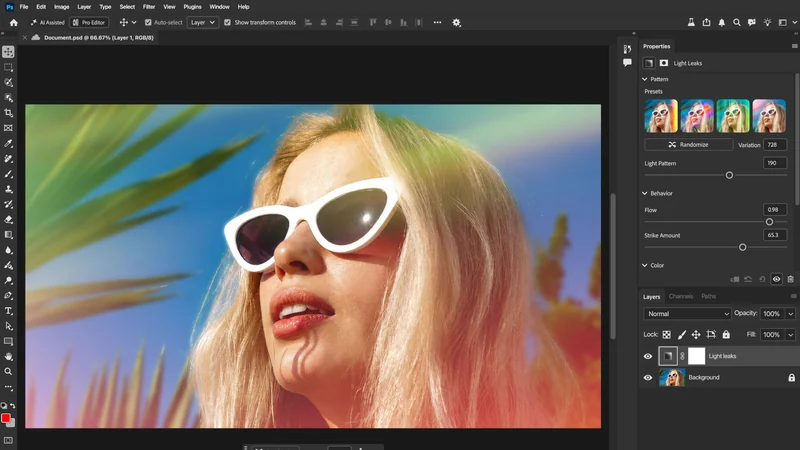
Adobe Rebuilds Photoshop and Premiere for NVIDIA RTX Spark
Adobe has rearchitected Photoshop, Premiere, and Substance 3D to deliver double the speed for AI and creative workflows on NVIDIA RTX Spark systems.
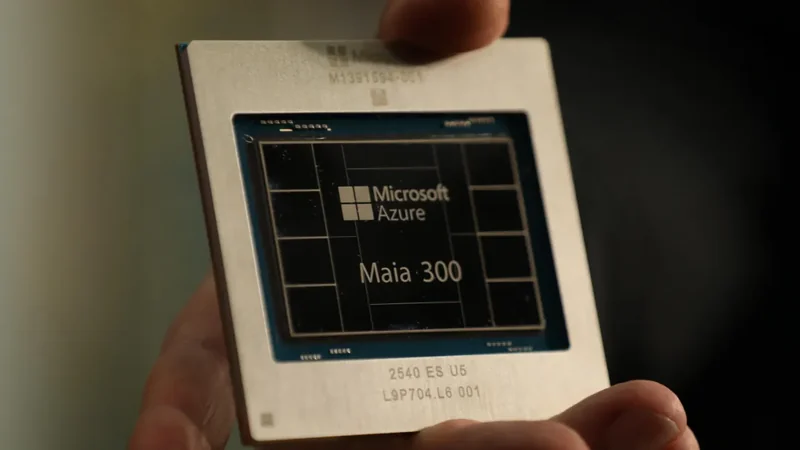
Microsoft Unveils Third-Generation Maia 300 AI Chip
Microsoft announces its third-generation Maia 300 in-house AI chip, designed to improve cloud efficiency and reduce reliance on Nvidia GPUs.
European Leaders Adopt NVIDIA Vera CPUs for Local AI Infrastructure
European cloud providers and global technology partners are adopting NVIDIA Vera CPUs to build local infrastructure and scale agentic computing workloads.
Microsoft Launches Surface Laptop Ultra with Nvidia RTX Spark
Microsoft unveils the Surface Laptop Ultra and Dev Box, powered by Nvidia RTX Spark chips and a revamped Windows 11 featuring Execution Containers.