Building Context-Aware AI Assistants with AgentCore and OpenClaw
A new architectural pattern demonstrates how to transform disposable chat conversations into durable, structured knowledge using Amazon Bedrock AgentCore and OpenClaw.
 Radwan AbdulhadiEditor and technology writer
Overcoming the Stateless Limitation of AI Assistants
Standard off-the-shelf AI assistants answer individual questions with high accuracy, but they struggle significantly with continuity. When interacting with a stateless assistant, every conversation starts completely from scratch, placing the entire burden of re-explaining context squarely on the user. To address this gap, developers can build personal assistants that accumulate context by utilizing OpenClaw, an open-source agentic system operating on top of the Amazon Bedrock AgentCore runtime.
By incorporating Amazon Bedrock AgentCore memory, developers can convert disposable chat sessions into durable knowledge structures. These stored insights can then be tagged with structured metadata to easily retrieve relevant records during subsequent conversations. While demonstrations often focus on domain-specific personas like gardening assistants, the underlying architecture remains completely domain-agnostic and adaptable.
Serverless Architecture on AgentCore Runtime
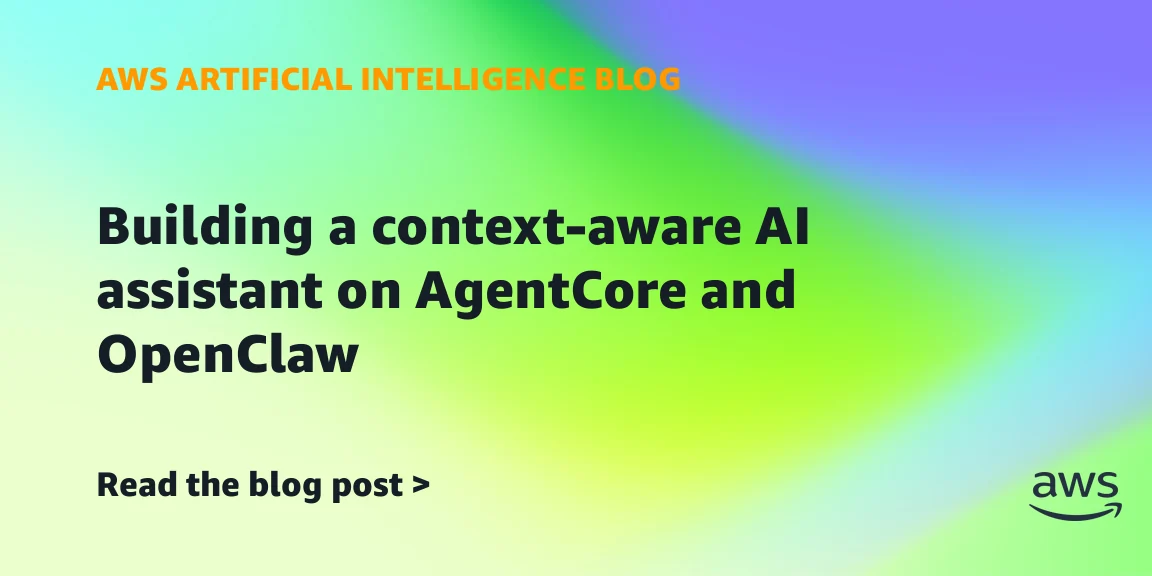
The entire system is designed to live within a single AWS CloudFormation template, enabling simple deployment patterns. The agent container executes on the AgentCore runtime, which leverages consumption-based pricing models. Under this structure, users are billed exclusively for the compute capacity their agents actively consume rather than for wall-clock uptime. This ensures that waiting for input or model responses does not incur charges.
The runtime environment enforces a minimalist container contract requiring services to listen on port 8080, expose a health-check endpoint, and provide an agent entry point. A thin wrapper process adapts the open-source agentic system to the required AgentCore HTTP protocol contract, managing gateway initialization, health validation, context assembly, and result persistence seamlessly across requests.
Routing Workloads and Managing Model Selection
To optimize performance and manage expenses, the assistant routes text chat and image understanding tasks to different underlying models accessible via Bedrock. High-volume conversational turns utilize efficient text models for fast and economical processing, while multimodal tasks leverage advanced vision models for complex diagnostic scenarios.
Image-based queries are deliberately routed around the standard gateway to ensure that multimodal content blocks reach the language model correctly. Both processing paths share a unified system prompt combining specific personas with accumulated memory, guaranteeing a consistent user experience regardless of the input modality.
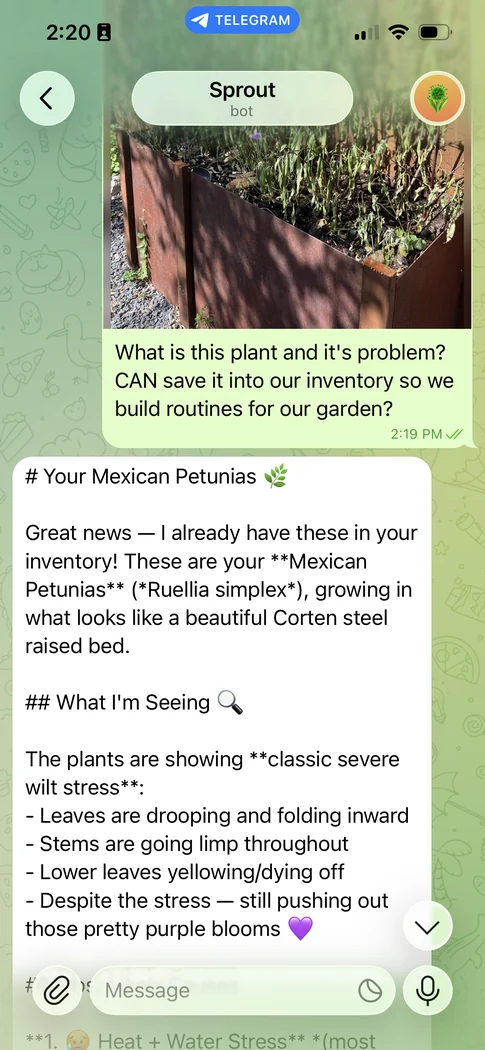
Deployment and Developer Resources
Developers interested in implementing this architectural pattern can access comprehensive guidance and templates provided by the platform maintainers. Detailed configuration instructions, script setups, and community skill manifests are readily accessible to facilitate rapid testing and customization.
Further technical documentation regarding platform primitives, runtime execution flows, and advanced memory filtering strategies can be found in the official developer guides. These resources help engineering teams scale their agentic workloads effectively while maintaining strict data governance and retrieval standards.
Sources
- AWS Machine Learning BlogBuilding a context-aware AI assistant on AgentCore and OpenClaw
Continue chronologically

Related entity coverage
Related stories
Build Multi-Agent Pipelines with Amazon Bedrock AgentCore
Learn how to build a multi-agent music production pipeline on Amazon Bedrock AgentCore Runtime Instances using shared sessions and GPU infrastructure.
Query Claims in Natural Language With Amazon Bedrock
Learn how to build a conversational claims assistant using Amazon Bedrock Knowledge Bases to answer natural-language queries with citations.
AWS Details Multi-Account AI Agents with AgentCore and MCP
Learn how to build multi-account AI architectures using Amazon Bedrock AgentCore Gateway, MCP, and IAM for secure cross-account data queries.
GLM 5.3 Launches on Amazon Bedrock for Coding and Agents
Z.ai's 753B-parameter GLM 5.3 mixture-of-experts model is now available on Amazon Bedrock, bringing advanced coding and long-horizon agentic capabilities.