OpenAI and Ironclad Advance AI for Complex Workflows
A new research collaboration between OpenAI and Ironclad aims to improve how AI agents navigate specialized business software and professional contracting workflows.
 Radwan AbdulhadiEditor and technology writer

Advancing Computer Use for Professional Work
When OpenAI introduced GPT‑6 Astra, it demonstrated how far its models have evolved in executing professional computer tasks, ranging from preparing documents to testing websites. The next strategic objective for the organization is to make these AI agents more capable and efficient when operating specialized software to resolve complex business problems.
To achieve this, researchers are exploring how to train models to comprehend a company's internal business rules, execute multi-step workflows, and independently verify that their finished work satisfies original requirements. To accelerate these efforts, the company announced a direct partnership strategy with a select group of software providers.
Partnering with Ironclad on Contracting Workflows
The first partner in this research initiative is Ironclad, a recognized leader in artificial intelligence contracting. Working closely with Ironclad, researchers developed specific tasks requiring AI agents to configure agreements, manage approvals, and handle reusable legal terms.
This collaboration allows real customer needs and operational challenges to directly influence frontier model development. According to published details shared via OpenAI News, Ironclad's domain expertise was instrumental in defining success metrics for complex legal operations.
Translating Legal Operations Into Training Tasks
Configuring legal processes often requires turning short lists of rules—such as finance approval thresholds or security reviews—into structured intake forms, document templates, and compliance records. An AI agent executing these workflows must maintain a view of all requirements while navigating software interfaces.
Employees from Ironclad and OpenAI helped researchers identify 11 distinct tasks spanning legal, commercial, and procurement operations. These included setting up nondisclosure agreements, creating procurement approval workflows, and updating reusable legal clauses based on selected jurisdictions.

Evaluating GPT-6 Astra Against GPT-5.6 Sol
In comparative evaluations, GPT‑6 Astra served as the first frontier model trained directly on the established Ironclad tasks. Utilizing Max reasoning settings for Astra and High reasoning for Sol, researchers measured significant performance differences across the 11 evaluation benchmarks.
Astra achieved an average score of 55.0%, representing a 32% improvement over GPT‑5.6 Sol's average score of 41.6%. Additionally, the estimated average time per attempt dropped from 37.0 minutes for Sol down to 19.2 minutes for Astra, demonstrating greater efficiency alongside higher accuracy.

Expanding Research Collaborations
The collaboration highlights the ongoing balance between automation and human oversight in complex professional domains, where platforms must preserve strict business controls while handling exceptions. Organizations interested in solving similar challenges can apply to explore a research collaboration with the engineering teams.
Prospective partners are expected to provide concrete examples of tasks they want agents to handle, evidence of current failure points, secure testing environments, and subject-matter experts who understand the underlying operational workflows.
Sources
- OpenAI NewsAdvancing computer use with Ironclad
Continue chronologically

Related entity coverage
Related stories
Airbnb expands access to GPT-6 Astra for engineering teams
Airbnb is widening access to OpenAI frontier models, including GPT-6 Astra, to help engineering teams solve bugs, design systems, and ship features faster.
OpenAI Introduces Dots: Proactive AI Assistants for Complex Work
OpenAI introduces dots, proactive AI assistants powered by GPT-6 Astra designed to handle complex projects and everyday tasks continuously.
V7 Enhances AI Agent Memory Using OpenAI’s Latest Models
V7 Go leverages GPT-5.6 and GPT-6 Astra to transform scattered corporate files into structured institutional memory for complex, reliable AI workflows.
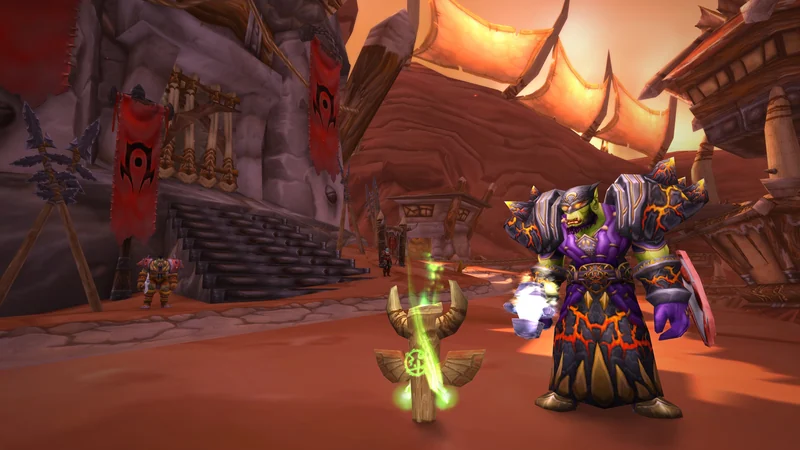
GPT-6 Astra Clears WoW Orc Zone Blind in 40 Minutes
OpenAI's GPT-6 Astra cleared World of Warcraft's Orc starting zone in 40 minutes with zero deaths by parsing raw server network packets and SQL files.