Closing the AI Knowledge and Capability Gap in Business
A new playbook demonstrates how non-technical professionals can move past mere AI awareness to hands-on building through structured, six-week mentoring programs.
 Radwan AbdulhadiEditor and technology writer
The AI Knowledge-Capability Gap
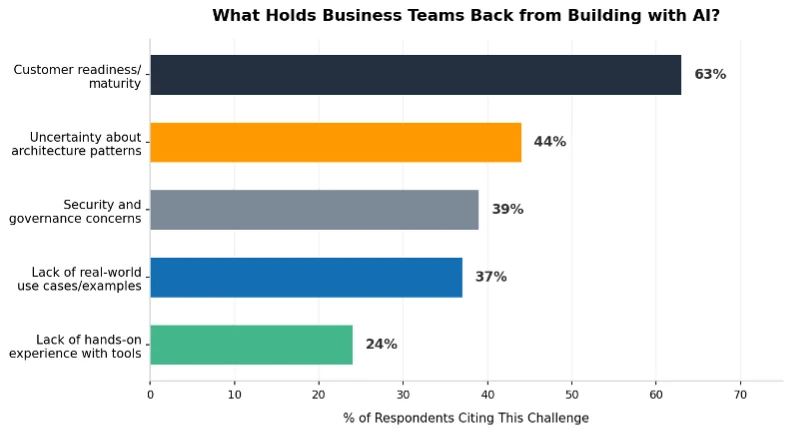
The most significant hurdle facing modern organizations in artificial intelligence adoption is not a lack of awareness, but rather the gap between talking about AI and building solutions with it. Professionals whose daily work increasingly relies on AI solutions often lack formal engineering backgrounds, yet they are expected to evaluate vendor solutions, field customer inquiries, and identify automation opportunities. Further details are available from AWS Machine Learning Blog in the original source material.
While many business teams sit in sales, operations, finance, or product roles and have completed various certifications, they frequently stumble when asked how these technologies actually function under the hood. Surveys of business professionals indicate that roughly ninety percent express a strong desire for hands-on experience in building AI agents, but they lack the necessary scaffolding and connective tissue to build safely without fear.
A Six-Week Structured Playbook
To address this challenge, organizations can implement a structured six-week program designed to pair business professionals with mentors and production-grade tools. By dedicating approximately four hours per week, participants are given the time and iteration cycles required to struggle with unfamiliar concepts, recover, and build sustainable technical confidence.
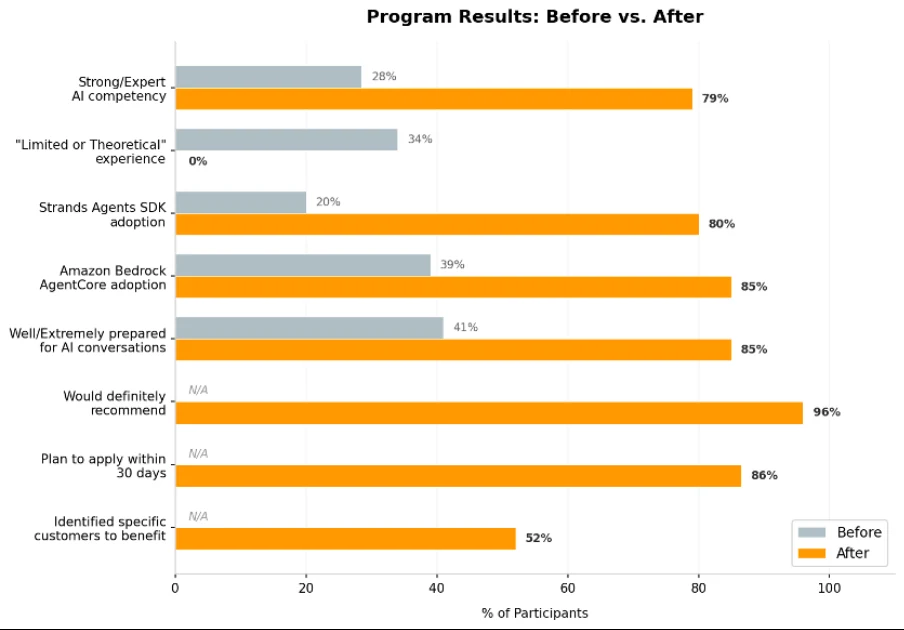
Program data reveals that phased learning schedules enable participants to retain practical skills at triple the rate of intensive two-day formats. This approach deliberately avoids rushing through foundational concepts, giving non-technical staff the space they need to absorb technical content with real-world purpose.
Hands-On Prototyping and Real-World Results
The effectiveness of this methodology was demonstrated when four customer-facing professionals with zero engineering backgrounds formed a team and successfully built WealthWise, a multi-agent AI financial advisory tool that ultimately won first place in a competitive showcase. Their solution incorporated advanced multi-agent orchestration to deliver intelligent financial advisory services across five specialized agents.
The successful prototype leveraged powerful underlying infrastructure, utilizing platform capabilities such as Amazon Bedrock to build, connect, and optimize agents at scale.
Core Principles for Success
The winning team attributed their rapid progression to five core principles established on their very first day: prioritizing learning over winning, maintaining regular cadences through daily standups, starting with a minimum viable product before refining, actively engaging in office hours for mentorship, and maintaining psychological safety above technical output.
Participants noted that the hands-on format dramatically accelerated what could otherwise have been a lengthy and intimidating learning curve. By working directly within the ecosystem, they developed a deeper technical fluency as well as valuable empathy for customers navigating new AI solutions.
Replicating the Program Structure
Organizations aiming to replicate this playbook must first secure management buy-in, framing the required time commitment as an investment in conversation quality and operational fluency rather than a disruption to daily tasks. Recruiting participants via targeted internal channels ensures that account managers, solutions consultants, and operations analysts are adequately represented.
The foundational phases guide teams from defining realistic problem statements rooted in actual business scenarios to participating in practical training sessions. Rather than relying on passive lectures, these sessions allow participants to work directly inside actual production-grade tools, establishing a reliable environment to build and scale prototypes.
Sources
- AWS Machine Learning BlogBuilding AI builders: Playbook for closing the AI knowledge-capability gap
Continue chronologically
Related entity coverage
Related stories
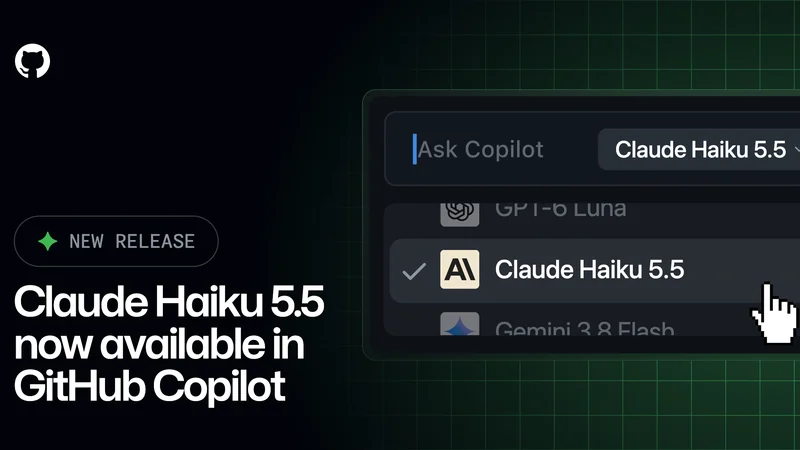
Claude Haiku 5.5 Launches on Amazon Bedrock and AWS
Anthropic's Claude Haiku 5.5 is now available on Amazon Bedrock and Claude Platform on AWS, offering high efficiency for subagents.
NarrateAI Brings LLM Quality Assurance to Amazon Bedrock
NarrateAI implements five advanced quality assurance techniques on Amazon Bedrock to achieve 99% numerical accuracy with real-time streaming.
AWS Introduces Agentic Conversational Video Intelligence
Amazon Web Services details a new agentic conversational video intelligence solution using Amazon Bedrock, Rekognition, and Transcribe.
Use Open Weight Models With Amazon Bedrock for Coding
Pair open weight models with Amazon Bedrock and OpenCode for a secure, flexible, pay-per-use AI coding assistant without managing infrastructure.