Big Tech Cashing In On AI As Broader Market Lags
A new market comparison highlights a widening financial divide between America's largest technology giants and the rest of the corporate market regarding artificial intelligence returns.
 Radwan AbdulhadiEditor and technology writer

The Growing Divide in AI Fortunes
Artificial intelligence spending is generating substantial revenue for technology providers, but most other S&P 500 companies have yet to show comparable gains in productivity or profit margins. According to Apollo’s Daily Spark analysis, the financial benefits of artificial intelligence remain difficult to spot across much of corporate America, creating a stark contrast between tech suppliers and consumer industries.
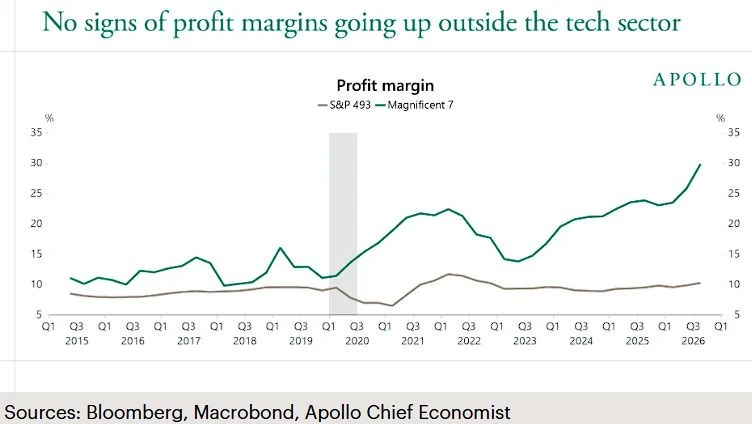
Apollo Global Management chief economist Torsten Slok reported that revenue per worker and profit margins are rising for the Magnificent Seven technology stocks while remaining flat across the other 493 companies in the S&P 500. Despite massive investments and widespread hype around artificial intelligence, the technology has reportedly delivered zero financial payoff to corporate America outside of the tech sector.
Rising Token Costs and Corporate Pressures
Running AI models at scale can quickly drive up operational costs because many providers charge by token usage. Consequently, corporate bills climb as employees make more requests or AI agents process data and handle complex tasks. Slok pointed out that mainstream companies are beginning to view token spending as a cost center rather than an immediate source of growth.
Venture capital-backed businesses continue to spend heavily on tokens, whereas established companies have less incentive to pay for the newest models if cheaper alternatives can adequately handle the job. This dynamic creates a distinct problem for AI providers hoping to turn growing software adoption into a lasting revenue stream. If AI expenses rise without a measurable improvement in business performance, additional spending could weigh heavily on operating margins.
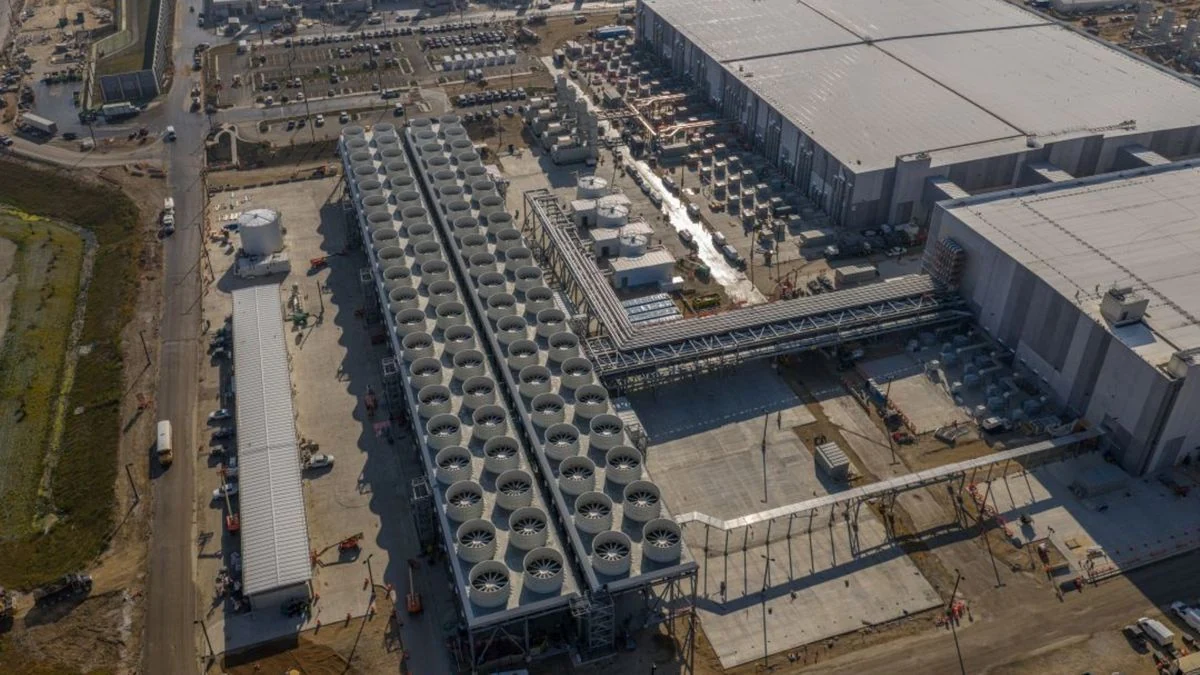
OpenAI CEO Sam Altman has similarly acknowledged the issue, describing AI token costs as a massive issue for customers seeking better value from their spending. As corporations evaluate their expenditures, the massive financial commitments surrounding data centers and infrastructure continue to face scrutiny.
Accountability, Trust, and Fintech Challenges
Industry observers note that artificial intelligence faces inherent limits when applied to traditional corporate environments. Slok emphasized that AI lacks an understanding of accountability, trust, culture, unwritten rules, ethical trade-offs, and fairness, all of which shape reputational risk and ultimately drive revenue growth and profit margins.
Similar financial tensions are emerging within the global financial technology sector. A PwC India survey found that 84 percent of surveyed fintech respondents had yet to see measurable financial results from their artificial intelligence investments, highlighting broader difficulties in translating technology adoption into tangible balance sheet improvements.
Despite these financial delays, companies continue to experiment with advanced implementations. The survey indicated that 48 percent of respondents identified proprietary intelligence as a leading strategic priority, while 30 percent expected customer experience to drive AI agent adoption over the coming years.
Security Hurdles and Operational Restraints
Trust remains a primary hurdle for businesses looking to deploy autonomous AI agents in sensitive sectors like financial services. The survey revealed that 41 percent of respondents identified customer trust and adoption as the biggest barriers to scaling agentic payments, while 33 percent pointed to fraud, security, and risk management as major concerns.
To mitigate these risks, major technology firms are working on specialized safety frameworks. Nvidia previously introduced its Open Agent Safety Platform, a hardware-and-software security stack designed to help businesses control AI agents and restrict potentially harmful actions. Meanwhile, rising token consumption has prompted companies including Microsoft, Meta, and Amazon to encourage tighter controls on AI usage as employee adoption and agentic workloads drive up corporate bills.
The Path Forward for the Wider Economy
Ultimately, market analysts argue that the long-term success of the artificial intelligence boom will be decided outside of major tech conglomerates. Because AI adoption remains concentrated among a relatively small group of companies, its wider economic effect will remain constrained unless usage spreads across more traditional industries and produces verifiable financial results.
Readers interested in staying updated on enterprise technology trends and hardware developments can follow Tom's Hardware for ongoing coverage and detailed analysis.
Sources
- Tom's HardwareBig Tech is cashing in on AI while the rest of corporate America sees no financial returns
Continue chronologically


Related entity coverage
Related stories
Apollo Economist: AI Delivers Zero Financial Payoff for Most
A new note from Apollo Global Management warns that artificial intelligence has yielded zero financial payoff for corporate America outside of tech.

OpenAI CEO Sam Altman Reveals New AI Agent at Developer Event
OpenAI CEO Sam Altman introduced new Dots AI agents at the annual developer conference while avoiding mention of recent security concerns.

OpenAI Eyes 'AI Compute Campuses' Amid Data Center Backlash
OpenAI is considering rebranding data centers to 'AI compute campuses' as public backlash grows over infrastructure demands and the 2028 election.
Senate Investigation Alleges AI Data Center Claims Mislead Public
A U.S. Senate investigation accuses AI data center developers of misleading the public regarding community costs, permanent jobs, and tax benefits.