US Regulators Propose Cyan Lights for Autonomous Vehicles
U.S. federal safety regulators are exploring new lighting standards for autonomous vehicles, while major automotive and tech companies advance artificial intelligence integration and self-driving strategies.
 Radwan AbdulhadiEditor and technology writer
Proposed Cyan Lighting for Autonomous Vehicles
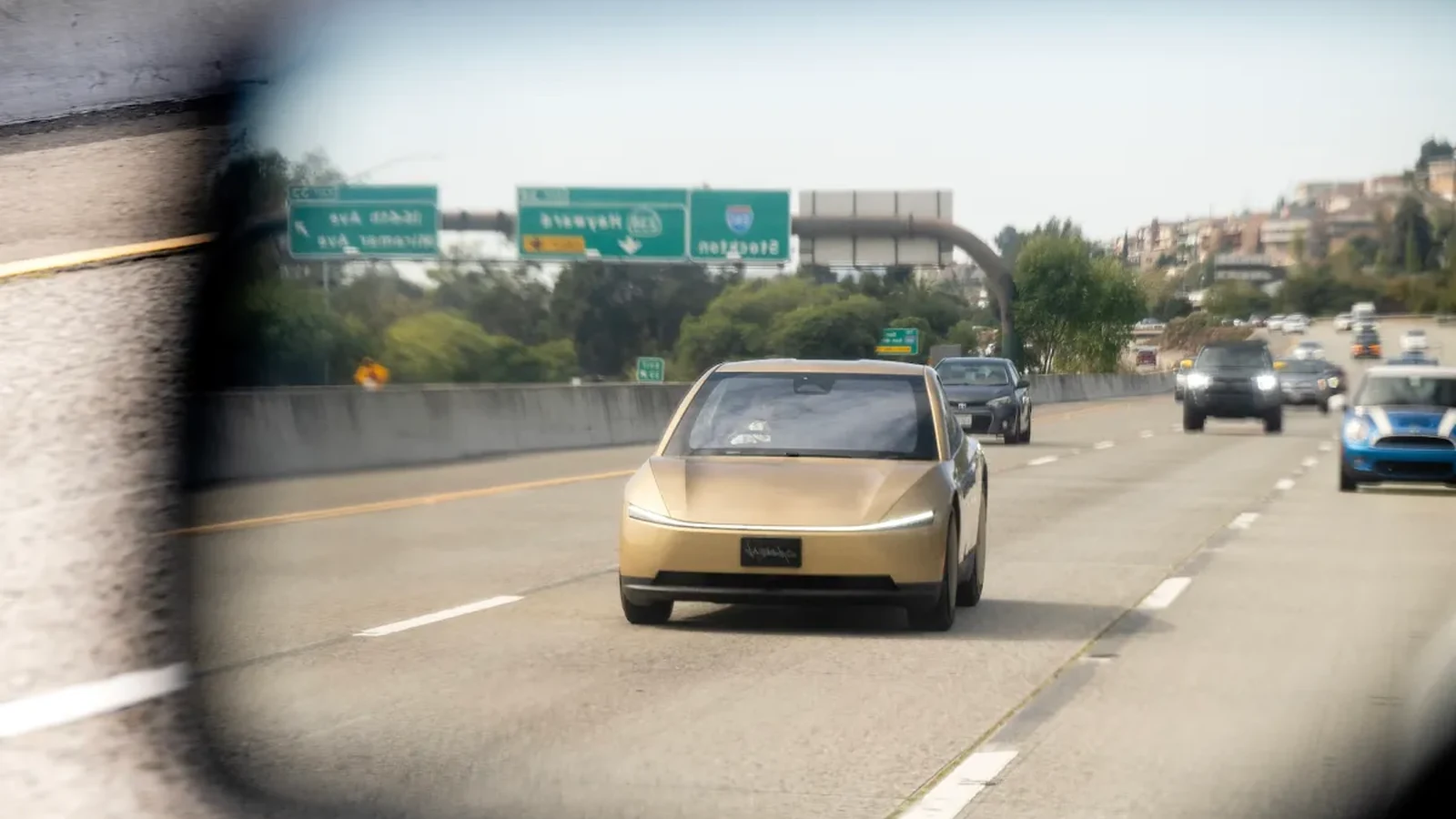
U.S. federal safety regulators are continuing to address the complex regulatory challenges surrounding autonomous vehicles, introducing a new proposal that could visually signal to the public when a vehicle is operating autonomously. The National Highway Traffic Safety Administration (NHTSA) has issued a proposal detailing new lighting requirements that include an option for cyan-colored lights to indicate when an autonomous vehicle is operating without a human occupant actively monitoring the road.
While the agency is not enforcing an immediate mandate for blue-green lights, the proposed framework establishes specific equipment standards regarding light placement, emission color, and activation mechanisms. Under the guidance, the NHTSA suggests that the cyan indicators should remain steadily illuminated instead of flashing, and remain visible from the front, rear, and both sides. Additionally, the regulatory update aims to eliminate requirements for manually operated controls for turn signals, high beams, and hazard lights as part of a broader effort to streamline AV adoption without compromising safety.
General Motors Outlines AI and Autonomous Strategy
Amid evolving federal regulations, General Motors recently detailed how it plans to integrate future transportation technology during its annual GM Forward event. The company has laid out how it plans to overhaul the electrical and computational architecture of its upcoming vehicles to deliver faster software, enhanced automated driving capabilities, and a conversational AI assistant designed to update its long-running OnStar platform.
The technological overhaul is slated to debut in 2028 with the Cadillac Escalade IQ. Alongside this architecture upgrade, GM will introduce an autonomous highway driving feature that permits drivers to remove their hands and eyes from the road without needing to remain ready to take manual control. Furthermore, the automaker has adopted enterprise AI company-wide to accelerate its vehicle development timelines.
Rivian Advances Simulation With Strategic Acquisition
Artificial intelligence startups continue to see heavy acquisition activity across the transportation sector. Rivian recently announced an acquisition of Third Dimension, a U.K.-based startup founded by veterans of the gaming and autonomous vehicle industries that utilizes AI to convert images and videos into realistic three-dimensional virtual environments.
The transaction focuses on closing the simulation-to-real gap, bridging the data divide between real-world driving scenarios and simulated environments. While financial terms of the deal were not disclosed, Third Dimension previously secured a $7 million seed funding round and employs roughly fifteen engineers.
Global Autonomous Transit Partnerships and Developments
International mobility collaborations are also moving forward. Ride-hailing firm inDrive has signed a memorandum of understanding with autonomous driving company Pony.ai and Nvidia to explore testing robotaxis in Kazakhstan by 2027, bringing autonomous technology onto the inDrive ride-hailing platform.
Meanwhile, in the aviation sector, autonomous flight technology startup Reliable Robotics raised $115 million in a Series D funding extension, bringing its total round to $275 million and pushing its valuation past the $1 billion threshold. The funding includes $90 million in equity led by Nimble Partners and $25 million in debt from Silicon Valley Bank.
Regulatory Scrutiny and Industry Resistance
As self-driving vehicle deployments expand, grassroots resistance has also drawn attention. A Washington Post reported piece highlighted the mysterious origins of an advocacy group actively campaigning against robotaxis in Washington D.C., echoing previous investigative findings regarding organized opposition movements seeking to restrict autonomous vehicle testing and deployment in urban environments.
Regulatory bodies and industry participants continue to navigate these friction points, balancing safety mandates, public awareness lighting proposals, and rapid technological deployment to shape the future of modern transportation.
Sources
- TechCrunchTechCrunch Mobility: Blue-green is the color of autonomy
Continue chronologically

Related entity coverage
Related stories
Kazakhstan Expands Compute for Its AI Future
Kazakhstan's AI ecosystem scales up with infrastructure plans, deployments, and new collaborations across the full AI stack.

Study Finds New Cars and Apps Share Data With Third Parties
A new study reveals that many modern connected vehicles and automaker apps transmit sensitive driver data to advertisers and data brokers.
Engadget Review Recap Highlights iPhone Duo and Rivian R2
Engadget shares a new roundup of recent device reviews, featuring the foldable iPhone Duo, the mid-sized Rivian R2 electric SUV, and more.

Rivian Shapes Its Future as a Tech and Autonomy Supplier
Rivian CEO RJ Scaringe outlines ambitions beyond EV manufacturing, focusing on software licensing, AI models, custom silicon, and industrial robotics.