Black Forest Labs Launches FLUX.3 Image Klein
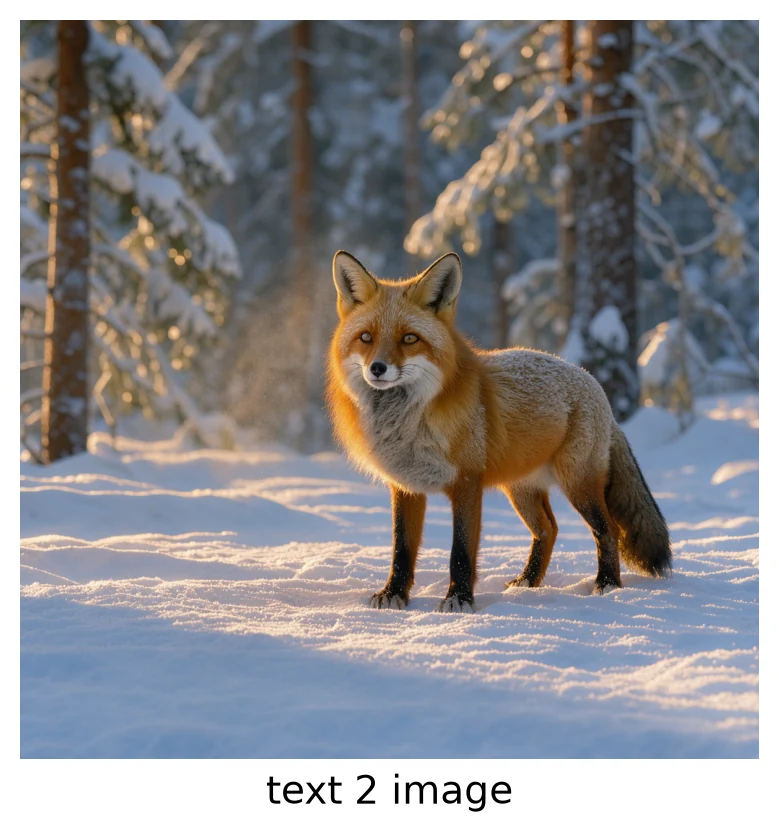
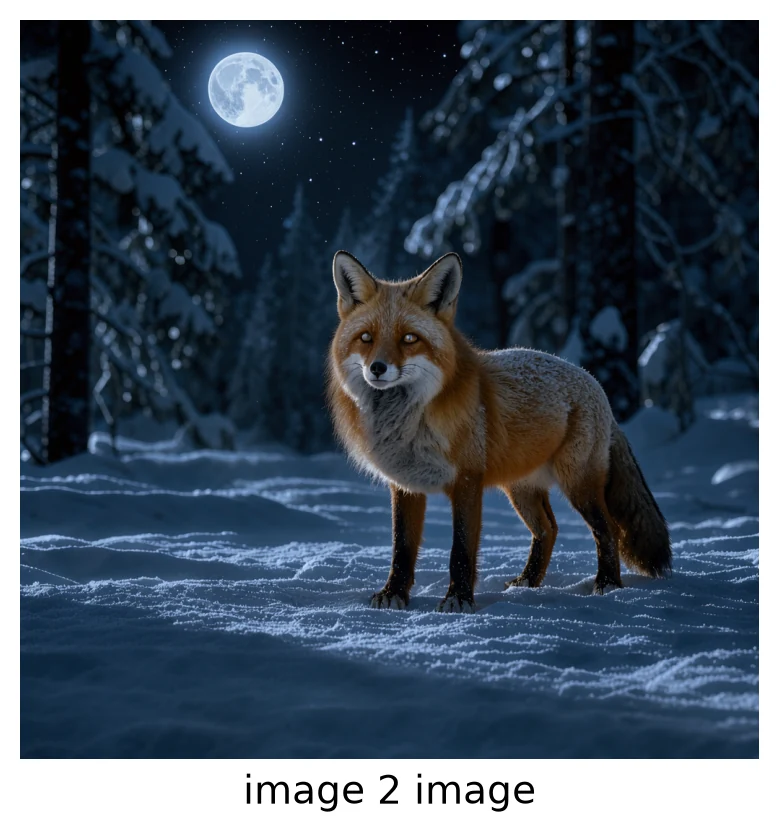
Black Forest Labs has released its FLUX.3 Image Klein model, featuring native support in Diffusers from day one for text-to-image generation, multi-reference image-to-image capabilities, and bounding-box layout control.
 Radwan AbdulhadiEditor and technology writer
Introduction to FLUX.3 Image Klein
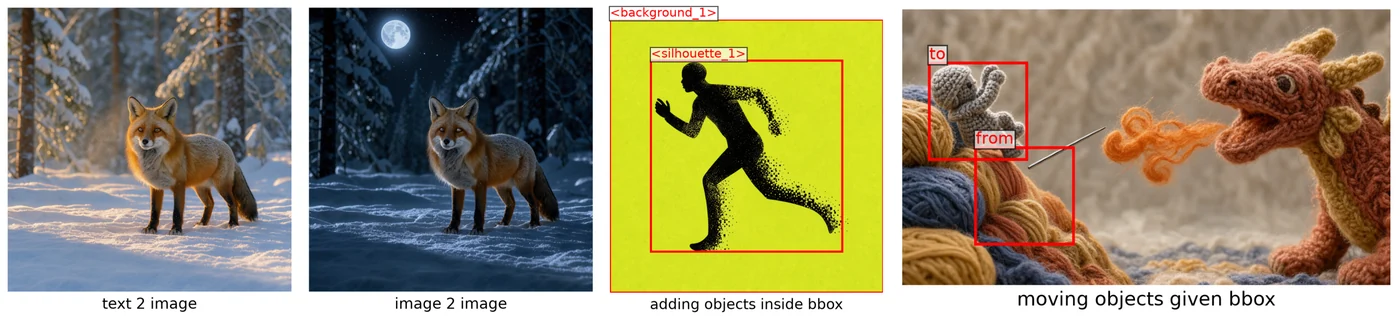
Black Forest Labs has officially released its latest generative model, combining text-to-image and multi-reference image-to-image tasks into a single system alongside a novel layout control feature. Users can write bounding boxes directly into the prompt to designate where specific parts of an image should be placed, or to dictate how parts of a reference image should be shifted.
Both open checkpoints for the model are hosted in the official FLUX.3 Image Klein collection, allowing developers and enthusiasts to explore the capabilities and test generation directly through Hugging Face spaces.
Performance and Checkpoint Options
The distilled checkpoint of FLUX.3 Image Klein is designed for speed, producing a 1024 × 1024 image in approximately 2 seconds on an NVIDIA H100 GPU using 16 default steps. For environments with smaller GPUs, the model supports NVFP4 and FP8 weights that can be loaded seamlessly using single-file loading functions.
In addition to the distilled version, the base checkpoint runs 50 steps utilizing classifier-free guidance and is recommended for fine-tuning tasks such as LoRA training. Black Forest Labs provides the transformer as a single file in bf16 alongside quantized formats like rowwise FP8 and nvfp4.
Layout Control and Prompting Mechanics
The layout control mechanism lets users append a JSON list of regions following the main caption, where each designated region contains an ID, a normalized bounding box, and a text description. Boxes are scaled on a 0 to 1000 coordinate system, ensuring consistent application across various image resolutions.
For editing workflows, regions specify both a source bounding box in the reference image and a target bounding box in the final output. If reference images are utilized, they are integrated into prompts using specific reference tokens that correspond to the order in which the images are processed by the pipeline.
Training and Custom LoRAs
Because FLUX.3 functions effectively for both text-to-image and image-to-image tasks, it serves as a robust base model for custom LoRA creation. The Diffusers library ships with DreamBooth LoRA training scripts tailored for both tasks, giving creators tools to train unique styles or specific dataset attributes.
To accommodate memory constraints during training, optimization flags such as gradient recomputation, latent caching, and 8-bit Adam optimizer states can be applied. Furthermore, instruction-based image editing scripts allow training on instruction triplets consisting of reference images, target images, and operational prompts.

Under the Hood: Architecture and Processing
FLUX.3 operates as a latent-space flow model that uses the same VAE architecture as Flux.2, compressing images into patches that translate to a 64 × 64 grid of tokens for a 1024 × 1024 resolution. For text encoding, the model integrates Qwen3-VL by reading hidden states across eight distinct layers rather than relying solely on the final layer.
The transformer processes these tokens through a structured two-stage pipeline. The first stage processes text, noisy images, and reference streams independently through dedicated blocks, while the second stage merges all streams together into joint blocks where cross-attention takes place before final decoding.
Sources
- Hugging Face BlogWelcome FLUX.3 Image Klein in Diffusers
Continue chronologically


Related stories
Hugging Face Brings Native TPU Support to PyTorch Ecosystem
Hugging Face announces native TPU support for PyTorch via TorchTPU, allowing Transformers and Diffusers to run directly on Google TPUs.

CWE-bench v2 Launches With 100 Tasks to Test AI Cyber Capabilities
CWE-bench v2 has been released by Collinear AI, offering a public set of 100 tasks designed to evaluate frontier AI models on security workflows.
StateBench Released to Test Long-Document State Tracking
A new benchmark evaluates how well language models track changing entity states across long documents, revealing limitations in current architectures.

Hugging Face Crypto-Mining Malware Campaign Returns
A cryptomining and backdoor campaign abusing Hugging Face model repositories has quickly returned following an initial takedown.