
Train Multimodal RL Models with SkyRL and HyperPod
Reinforcement learning post-training for multimodal models can be scaled efficiently using open-source frameworks on managed cluster infrastructure.
 Radwan AbdulhadiEditor and technology writer
Scaling Reinforcement Learning Workloads
Reinforcement learning post-training has emerged as a fundamental technique for developing capable language model agents. By generating trajectories, receiving rewards, and updating policies based on outcomes, models learn to reason across sequential steps. Executing these intensive workloads across multi-node environments requires persistent infrastructure capable of handling hundreds of GPU-hours.
To address these requirements, Amazon SageMaker HyperPod delivers specialized infrastructure for large-scale machine learning workloads on Amazon Elastic Kubernetes Service (Amazon EKS). The platform incorporates cluster resiliency features that continuously monitor node health and automatically replace faulty hardware without disrupting the entire cluster.
Infrastructure and Observability Capabilities
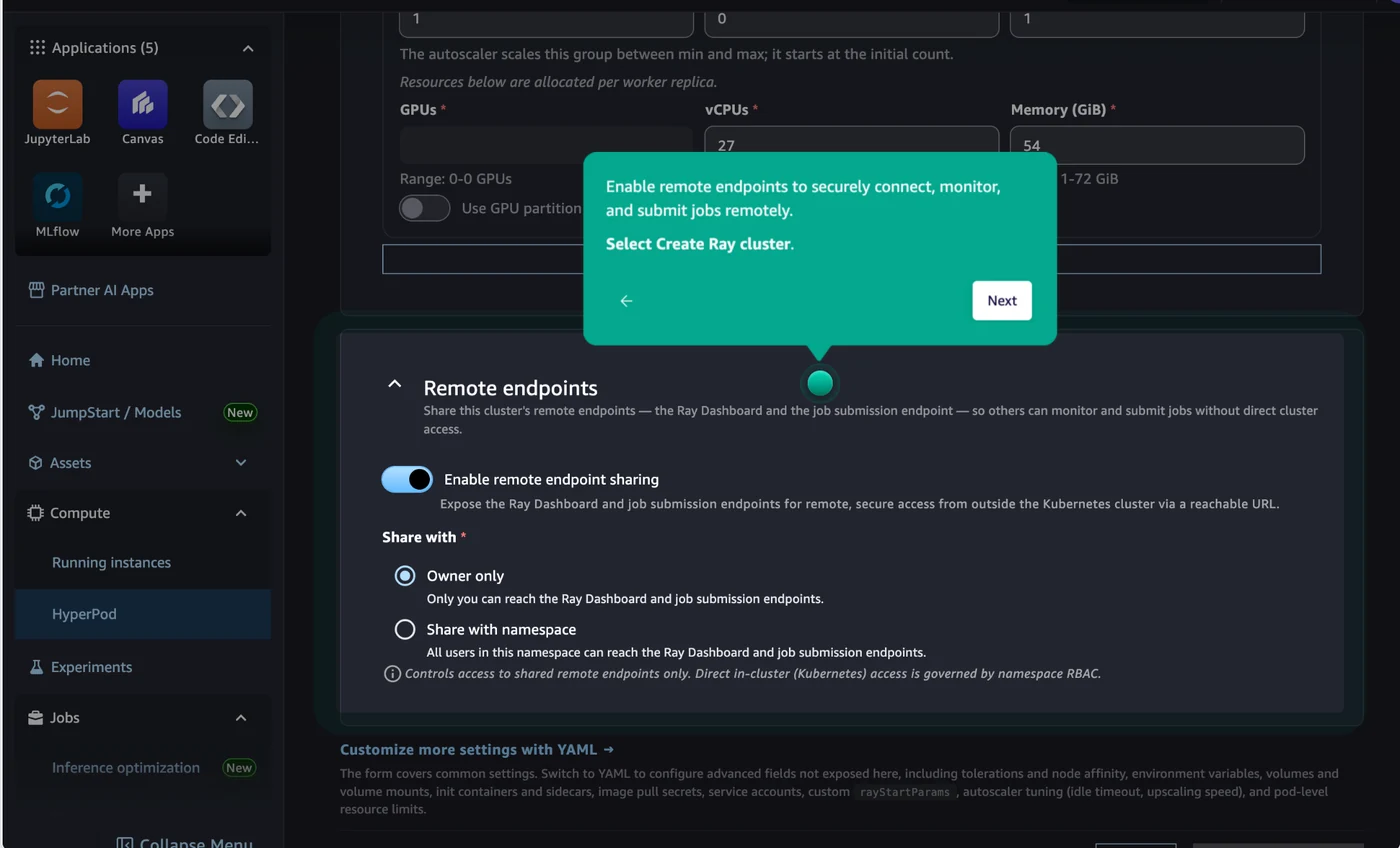
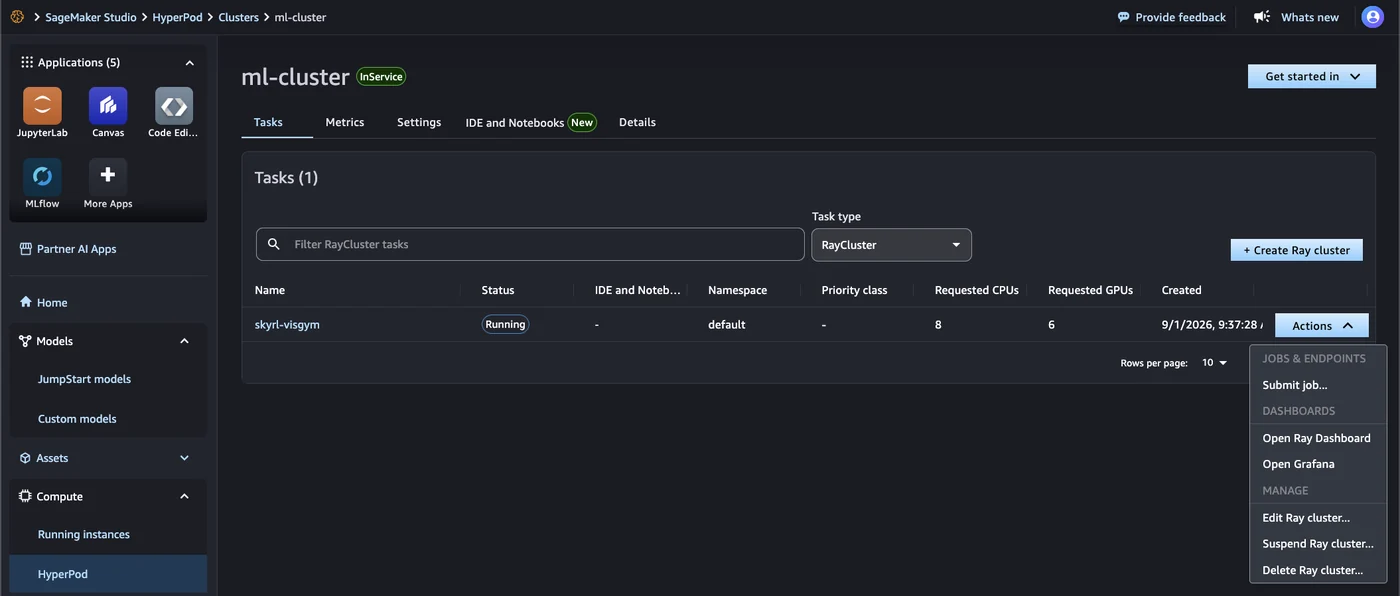
Maintaining progress during long training sessions is critical, as hardware interruptions can otherwise result in lost rollout data. By pairing automated node replacement with checkpointing, jobs can resume from their most recent saved state. Furthermore, integrated Ray capabilities on HyperPod enable developers to launch Ray clusters directly from SageMaker Studio, submit jobs securely, and track training metrics using dashboards provisioned by the HyperPod Observability add-on.
Teams can monitor training dynamics in real time through pre-built Amazon Managed Grafana dashboards. This comprehensive observability ensures that unexpected anomalies or performance bottlenecks can be identified and addressed promptly during multi-node execution runs.
Multimodal Post-Training with SkyRL
An official walkthrough published on the AWS Machine Learning Blog demonstrates how to utilize SkyRL, an open-source reinforcement learning framework, to post-train a Qwen3-VL-8B vision-language model. Starting from a supervised fine-tuning checkpoint known as the VisGym SFT checkpoint, the training process applies Group Relative Policy Optimization to navigate visual mazes.
In benchmark evaluations on a fixed set of 64 mazes, applying GRPO post-training on HyperPod significantly improved the maze solve rate from an initial baseline of 43.75% to more than 95%. This setup eliminates the need for a separate critic or value model by grading rollout attempts directly against the group average.
Cluster Topology and Configuration
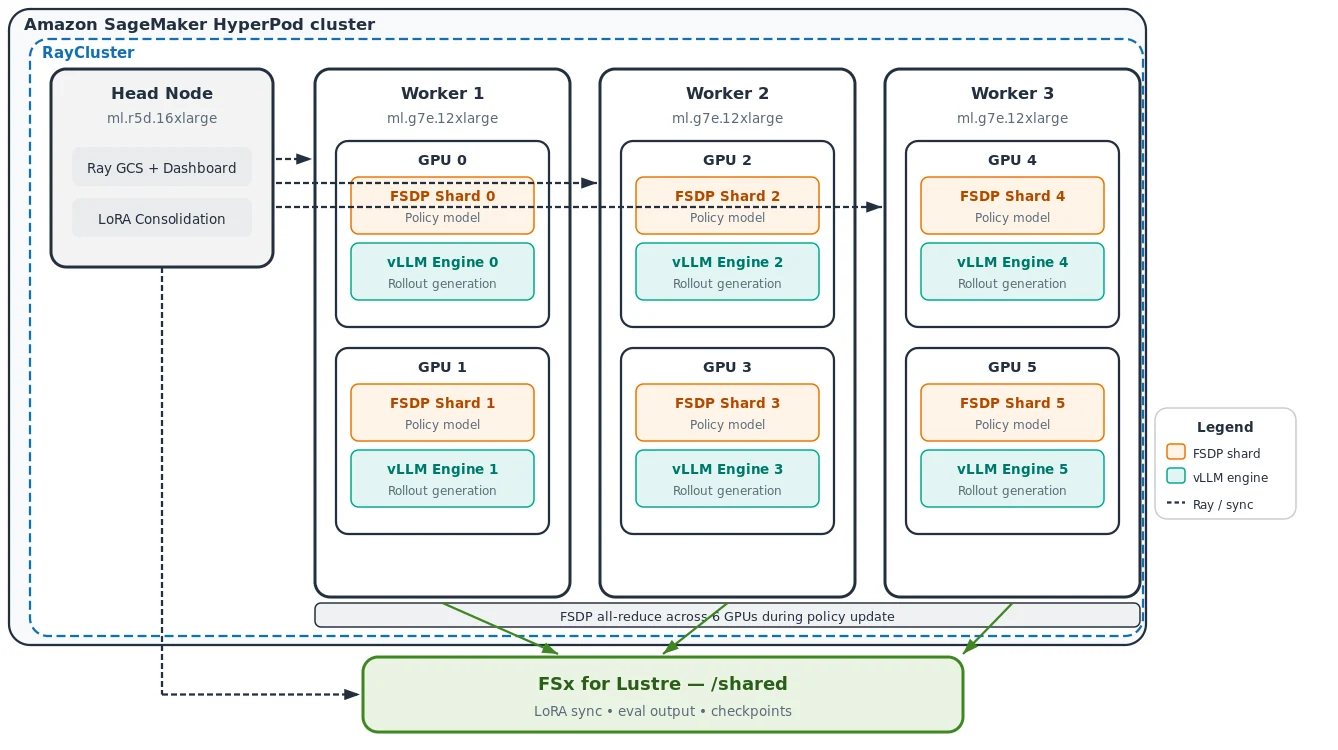
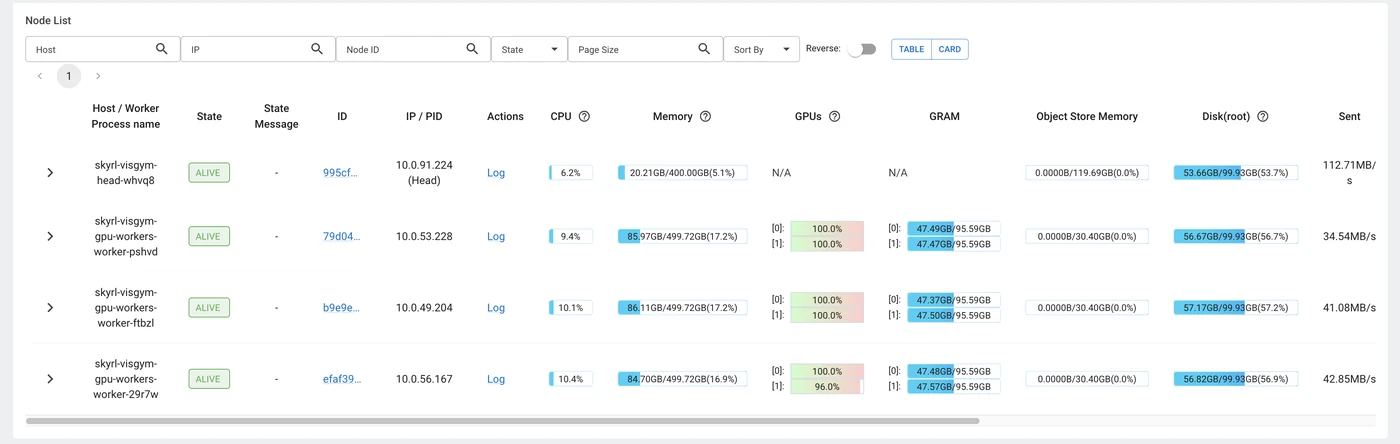
The walkthrough configuration deploys a Ray cluster on Amazon SageMaker HyperPod utilizing three GPU worker nodes and a CPU head node. Specifically, the architecture relies on three ml.g7e.12xlarge instances equipped with NVIDIA RTX PRO 6000 Blackwell GPUs and one ml.r5d.16xlarge instance to manage the Ray Global Control Store and dashboard.
Within this topology, SkyRL colocates inference and training tasks on the same GPUs. vLLM engines handle rollout generation while a policy model sharded using Fully Sharded Data Parallel manages gradient updates. Updated Low-Rank Adaptation weights synchronize across the infrastructure utilizing a shared file system.
Storage and Execution Workflow
Successful deployment requires several core components, including the Amazon FSx for Lustre CSI driver, compatible Kubernetes operators, and a shared filesystem mounted at a designated directory. Detailed installation steps and configuration requirements are outlined within the Ray on HyperPod getting started guide.
The shared storage volume acts as the repository for checkpoint storage, adapter weight synchronization, and evaluation outputs. Once the container image is built and pushed to an Amazon Elastic Container Registry repository, users can launch the cluster directly from SageMaker Studio to initiate their reinforcement learning workflows.
Sources
- AWS Machine Learning BlogAccelerate multimodal RL training with SkyRL on Amazon SageMaker HyperPod