
Google and UN launch searchable global data platform
Google and the United Nations system have launched a new open platform designed to make official global statistics easier to find, compare and analyze. The UN System Data Commons combines data from across UN organizations in a searchable, AI-ready resource.
 Radwan AbdulhadiEditor and technology writer
A single home for fragmented statistics
Entities across the United Nations system collect statistics on issues ranging from public health and education to poverty, electricity access and living conditions. Until now, much of that information has remained divided among separate organizations, databases and formats, making it difficult to connect related findings.
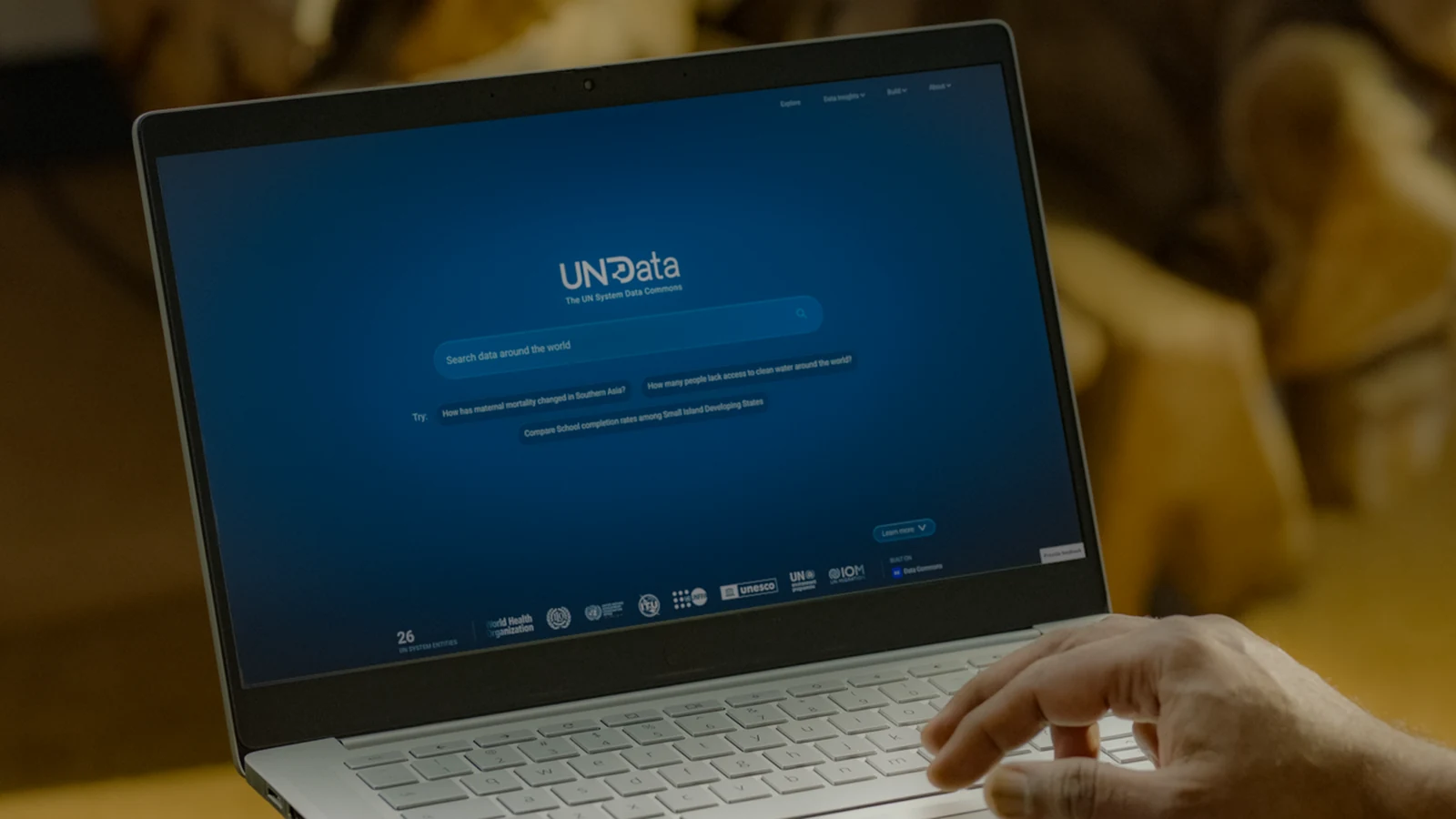
Google and the UN system say the new UN System Data Commons is intended to address that problem. The open-source platform, built on Google’s Data Commons, brings global statistics together as an interconnected knowledge graph that can be searched and analyzed in one environment.
According to Google, the project is supported by Google.org through the UN Foundation. Its stated aim is to make critical data more broadly accessible to researchers, journalists, nonprofit organizations, policymakers and other users who need to understand global trends.
Connecting metrics, places and time
The platform is designed to unify information that may otherwise be difficult to compare. It automatically integrates metrics, timelines and geographic boundaries, allowing datasets from different sources to be connected without requiring analysts to manually reformat every spreadsheet.
That structure is especially relevant to challenges that cannot be understood through a single measure. Questions about public health, poverty reduction or access to essential services often require several datasets to be examined together. The Data Commons approach is intended to help users identify relationships between those areas and focus more of their time on interpreting trends.
Google says datasets on the platform are validated with UN system statisticians and technical experts. That review is intended to keep responses grounded in official statistics, although the company also advises users to check underlying sources before citing critical figures.
Searching global data in plain language
The UN System Data Commons includes natural-language search features that let users ask questions without first learning the structure of each underlying database. Example questions provided by Google include how access to clean water in rural areas affects school attendance, how many people gained access to electricity over the last decade, and how life expectancy has changed across regions.
The platform is designed to return relevant data and interactive visualizations in response to those queries. Users who prefer a more conventional research process can use the Explore tab to filter information by location or by themes such as health and education.
A Blog section provides reports that explain selected trends in a more accessible format. Google gives the example of using UNICEF data to examine approaches to reducing child poverty. The combination of searchable statistics, filters and written analysis is intended to serve both specialist analysts and people who are less familiar with statistical databases.
AI assistants for research workflows
The launch also adds AI assistant capabilities to the data-research process. Rather than manually locating figures and assembling spreadsheets, users can prompt an assistant to retrieve information from the UN System Data Commons and organize it into outputs such as charts, graphs, infographics or draft reports.
The system is designed around open standards, including the Model Context Protocol, which Google identifies as a way for AI agents to access data from the platform. Those agents can fetch authoritative figures, connect information from different domains and package the results for further review.
The company presents the feature as a way to reduce repetitive research work, not as a replacement for verification. Google specifically says users should review the original sources when using important figures in published or consequential work.
Expansion planned through 2027
The initial launch is expected to be followed by the addition of datasets from more UN entities. Google says the UN system’s goal is to include 80% of its statistical datasets by 2027, suggesting that the platform’s usefulness will depend in part on how broadly organizations adopt it and how consistently additional data is integrated.
The project’s central promise is to make official international statistics easier to discover while preserving links to the institutions that produce them. By combining structured data, natural-language search and AI-ready access, the UN System Data Commons is positioned as a shared layer for exploring evidence about global conditions and progress.
Sources
- Google AIMaking global data easier to explore