Why the Physical AI and Robotics Race Will Be Won in the Patent Office
As advancements in machine learning reshape the physical AI landscape, industry experts warn that the ultimate winners will be determined by intellectual property strategy rather than hardware execution alone.
 Radwan AbdulhadiEditor and technology writer
The Shifting Focus of the Physical AI Race
Developments in AI, machine learning, and automation have given machines capabilities that would have seemed extraordinary a decade ago. As competition intensifies across the sector, the physical AI race is becoming less likely to be won by whoever builds the best machine, and more likely to be won by whoever owns the technology that determines its behavior.
This creates a particularly complex intellectual property landscape because innovations can span hardware, software, AI models, and calibration methods. According to industry perspectives, the most valuable invention may not be the physical device itself, but the underlying technology that enables it to behave in a specific way.
Professionals with decades of patent experience in industrial automation note a consistent pattern where early delays leave companies vulnerable. Robotics founders must decide what to patent, what to keep secret, and how to protect vital technologies before competitors act.
Navigating Complex Behavior and Swarm Robotics Patents
In many scenarios, the true innovation lies in behavior rather than the machine itself. A notable example includes Boston Dynamics’ lawsuit against Ghost Robotics regarding the infringement of core technology that dictated how a quadruped robot recovered after falling over.
Similar challenges are faced by startups operating in the field of swarm robotics, where the technical innovation is often an interaction between dozens of machines that produces behavior no individual unit could achieve alone. This raises complex legal questions regarding whether patent offices will protect group behavior or only the individual machines.
Regulatory bodies such as the European Patent Office have indicated that depending on the interaction between different entities, patent claims may need to define individual entities, overall systems, and precise interaction methods.
Although major players were able to resolve their dispute in 2025, ambiguous intellectual property scenarios often leave smaller companies at a disadvantage due to the high litigation costs required to defend patents.
Strategic Portfolios Beyond the Smartphone Era
Industry observers warn that patent disputes in robotics are likely to multiply, following a trajectory similar to the smartphone industry in the 2010s where global legal battles shaped market control and licensing agreements.
A strong intellectual property strategy does not require patenting every single component. Startups that attempt to patent every piece will quickly exhaust their engineering time and resources while competitors secure filings on the innovations that truly matter.
Balancing Confidentiality and Patent Publication
Because a patent is inherently a publication, it may not be appropriate for every innovation. Manufacturing processes and calibration techniques that are difficult to reverse-engineer from finished products are often better protected through trade secrets and confidentiality.
For sensitive innovations in fields like defense technology, publishing a patent can inadvertently reveal technical solutions and strategic advantages to competitors and adversaries.
Sources
- The Robot ReportThe physical AI race will be won in the patent office
Continue chronologically
Related stories
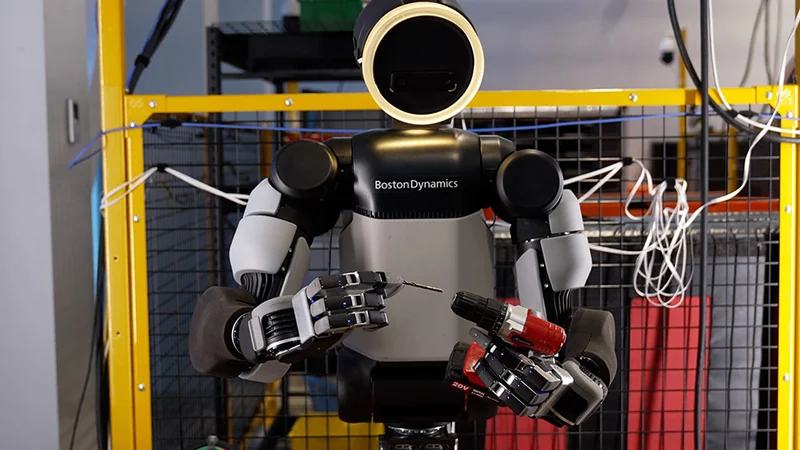
Boston Dynamics Reveals Four-Fingered Hand for Atlas
Boston Dynamics has unveiled a new four-fingered hand for its Atlas humanoid, designed for high-fidelity simulation and tool manipulation.
September 2026 Robotics Highlights Bring New Products and Humanoids
Discover the top robotics stories of September 2026, featuring new humanoid developments, major acquisitions, and product launches from live industry events.
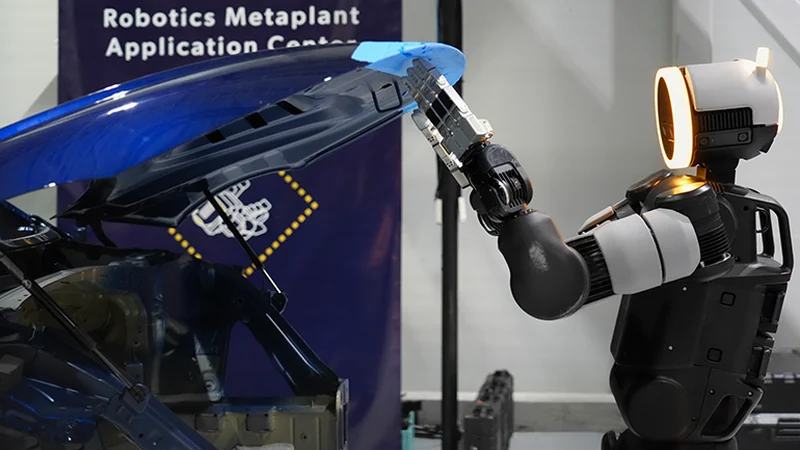
Boston Dynamics Opens Metaplant Application Center for Atlas
Boston Dynamics has launched its Robotics Metaplant Application Center in Georgia to train Atlas humanoids for large-scale automotive manufacturing tasks.
Feather Builds the Android of Robotics for Software Developers
Feather Robotics is developing a customizable $30,000 modular humanoid platform and software toolkit tailored for software developers.