Two‑Year Test Reveals Liquid‑Metal TIM Solidifies, Not Dry Out
A two‑year electron microscope experiment on a gallium‑indium‑tin alloy TIM reveals that the material does not evaporate but chemically bonds with copper, forming a solid CuGa₂ compound. The hardened layer conducts heat at roughly one‑quarter the rate of bare copper, while nickel plating keeps the film about ten times thinner.
 Radwan AbdulhadiEditor and technology writer
Experimental Setup and Duration
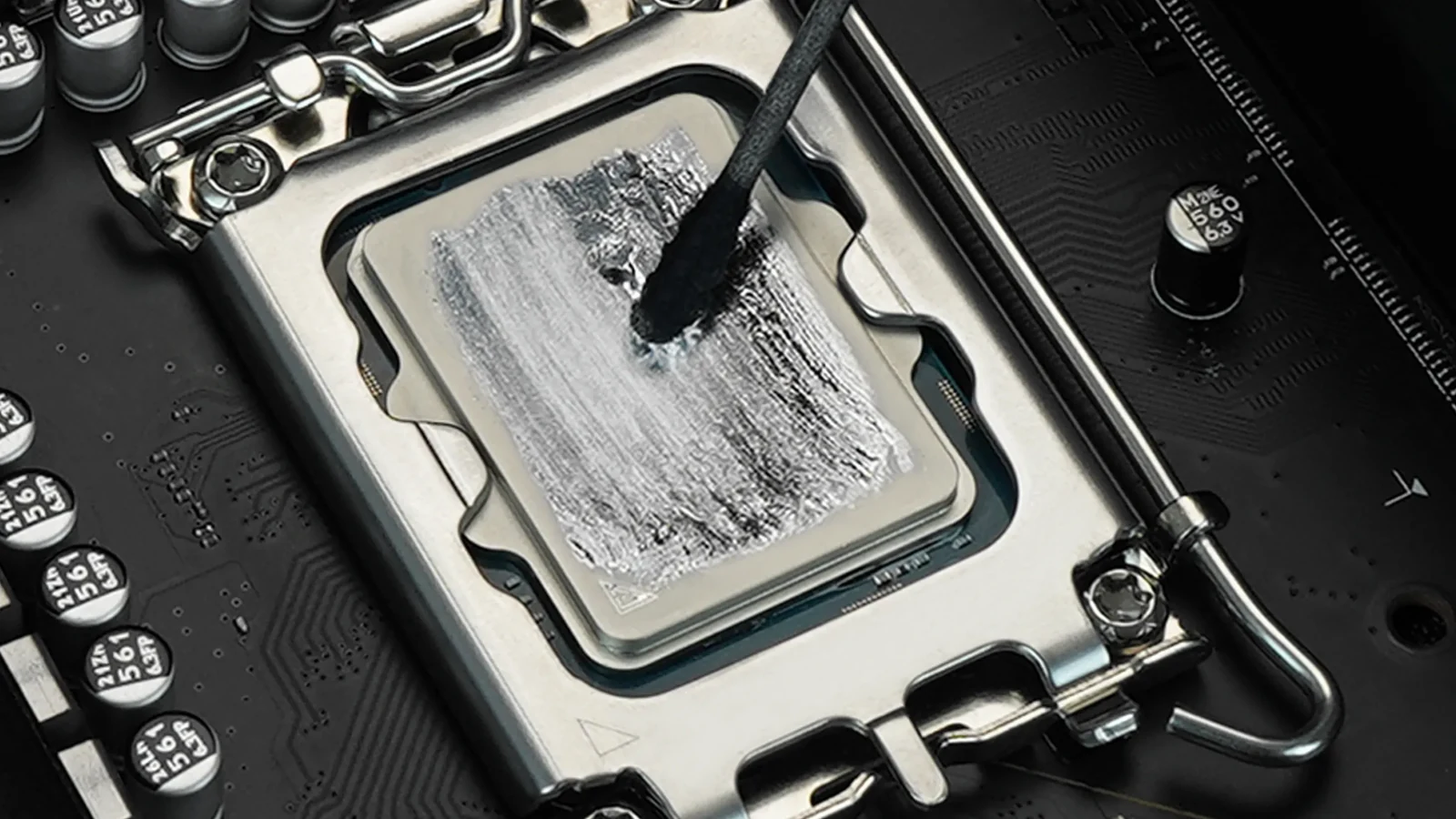
YouTuber and Thermal Grizzly founder der8auer conducted a two‑year electron microscope investigation on a gallium‑indium‑tin liquid‑metal TIM, storing the samples in a vacuum or nitrogen‑filled environment between sessions to prevent oxidation. The detailed report appears in Tom's Hardware, where the methodology and visual evidence are documented.
Key Findings: From Liquid to Solid
After one hour the TIM remained liquid, crystals appeared by the two‑month mark, and the sample showed no further change after two years. Electron microscopy revealed that the gallium reacted with the copper cooler to form CuGa₂ (one copper atom to two gallium atoms), creating a solid film. The solidified layer’s thermal conductivity was measured at roughly 100 W/mK, about a quarter of pure copper’s ~400 W/mK. The film grew at an approximate rate of 1 µm per day, eventually reaching 50‑100 µm depending on temperature and gallium availability. der8auer’s new video demonstrates the transformation and includes electron microscope footage of the bonding process. Viewers can watch the full analysis at the new video.
Material Interactions: Copper vs. Aluminum vs. Nickel
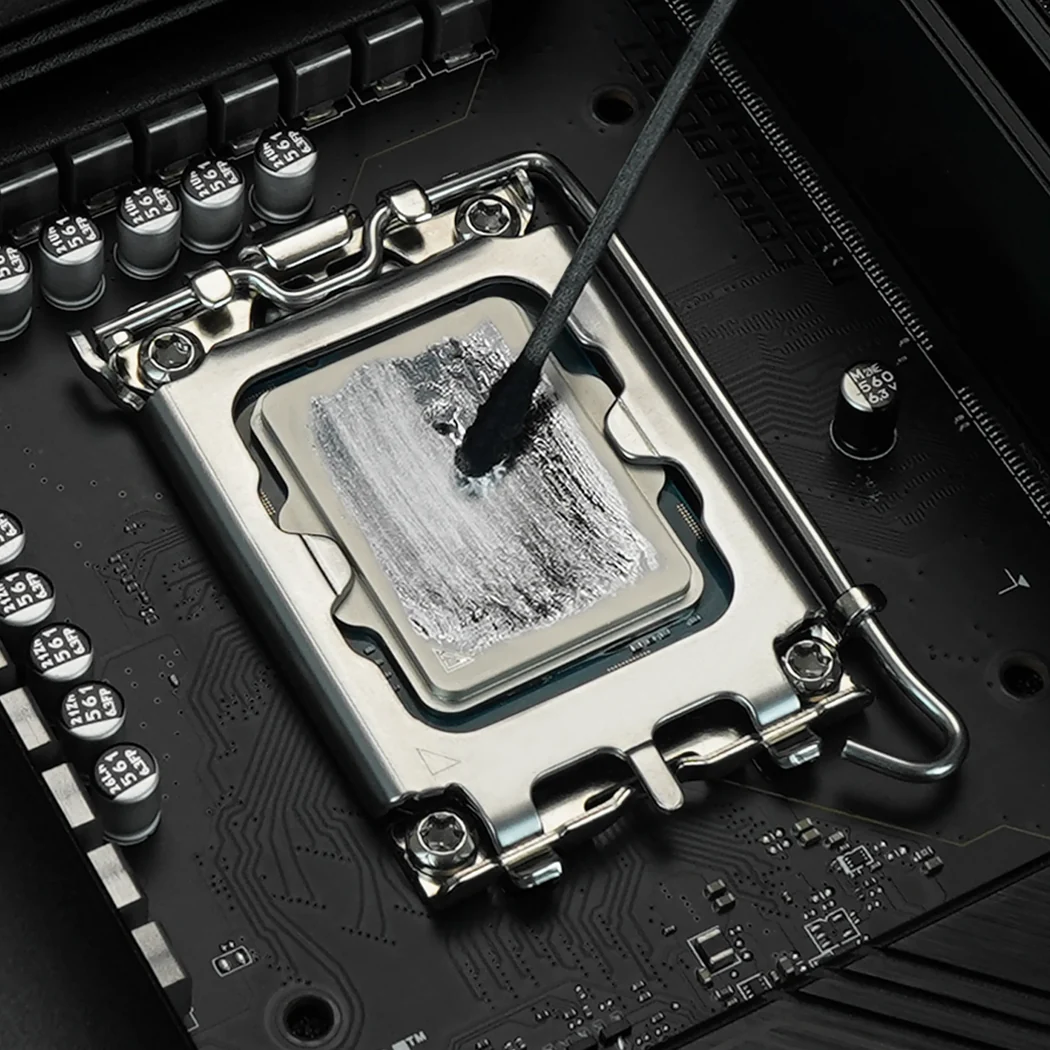
When the liquid metal contacts copper, the gallium atoms bond to form CuGa₂, producing a stable solid that cannot be wiped away with isopropyl alcohol or acetone. In contrast, aluminum suffers degradation: gallium infiltrates grain boundaries after the oxide layer is breached, causing surface swelling and eventual brittleness within half an hour. Nickel‑plated coolers generate NiGa₅ (one nickel atom to five gallium atoms), which remains solid at room temperature but yields a much thinner layer—approximately 1‑5 µm, about ten times thinner than the copper‑based film. For more on Thermal Grizzly’s supply chain challenges, see the Thermal Grizzly article.
Performance Implications for High‑Density Components
As GPU power densities climb—der8auer cites the RTX 5090 and RTX 5080 as having roughly twice and three times the power density of the 8800 GTX, respectively—effective thermal interface management becomes critical. The solidified CuGa₂ layer, while still conductive, provides only about 25 % of the heat‑spreading capability of bare copper, potentially limiting cooling efficiency in extreme overclocking scenarios. Nickel‑plated solutions, though thinner, suffer from even lower thermal performance, making them less suitable for the highest power‑density applications.
Market Context and Future Outlook
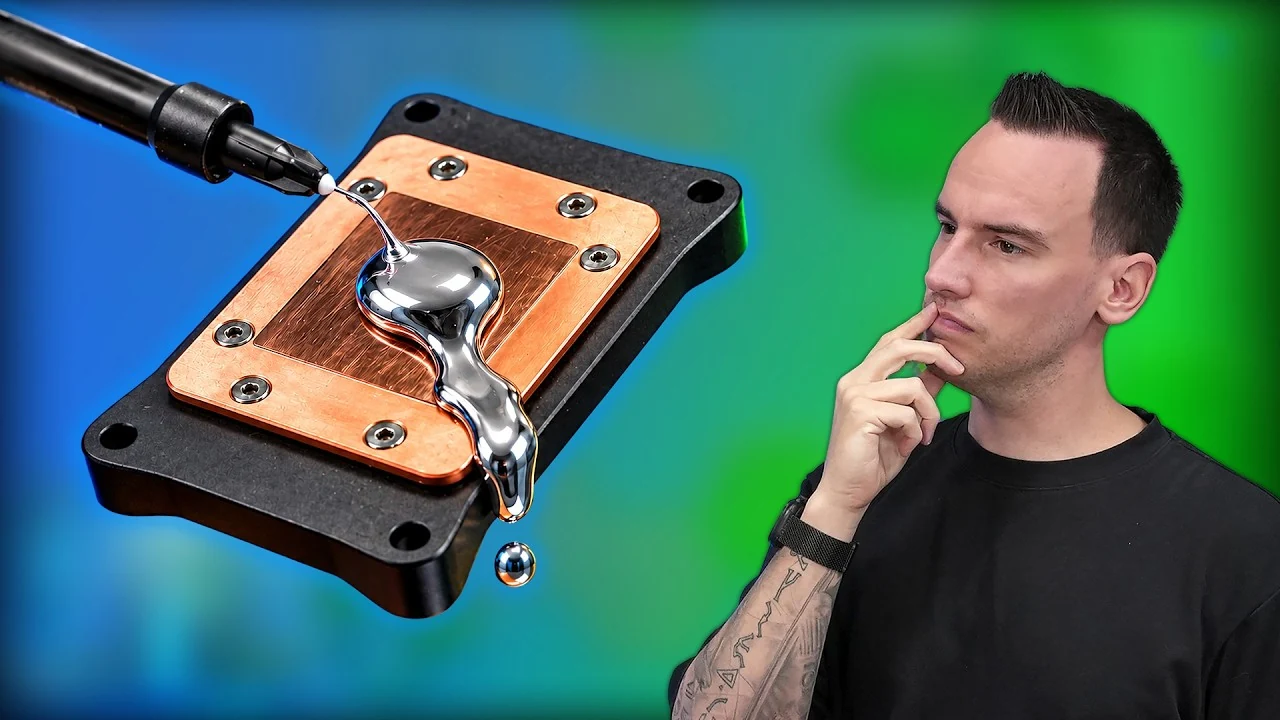
Gallium prices have surged more than double since the start of 2025, rising from €300 per kilogram to €2,500‑3,000 after five years of use. China supplies 99 % of the world’s gallium, and its export ban to the U.S. remains suspended only until November 27 2026, still requiring licenses. Thermal Grizzly aims to replace nickel with alternative coatings “hopefully next year” and plans to release a new version of its KryoSheet graphene pad for bare dies, which der8auer notes may be three to four degrees worse than liquid metal but could be attractive for cost‑sensitive builds.
Conclusion
The two‑year experiment overturns the assumption that liquid‑metal TIMs simply evaporate; instead they chemically transform into solid compounds that retain the metal but alter thermal performance. While the findings open avenues for new coating strategies, the high cost and material constraints mean the technology is likely to stay within the enthusiast bubble for now.
Sources
- Tom's HardwareExperiment shows liquid metal TIM doesn’t dry out; it turns solid
Continue chronologically


Related stories
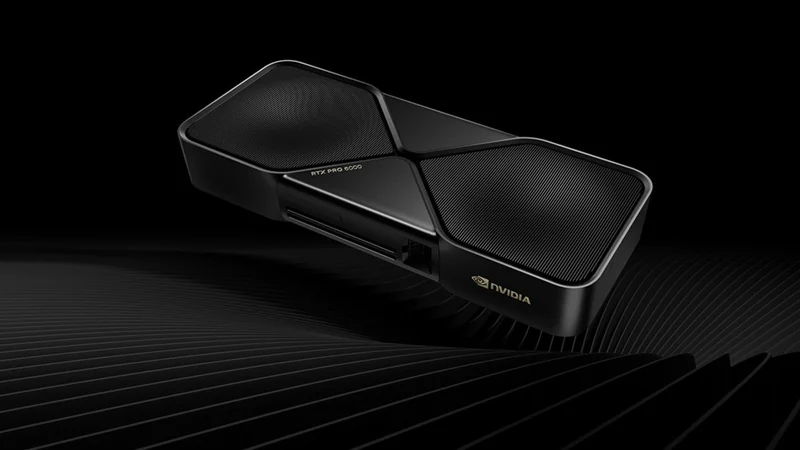
Why NVIDIA's $16,000 RTX PRO 6000 Is Not Built For Gaming
Explore why NVIDIA's powerful RTX PRO 6000 workstation GPU costs $16,000, features 96GB of memory, and targets professionals instead of gamers.
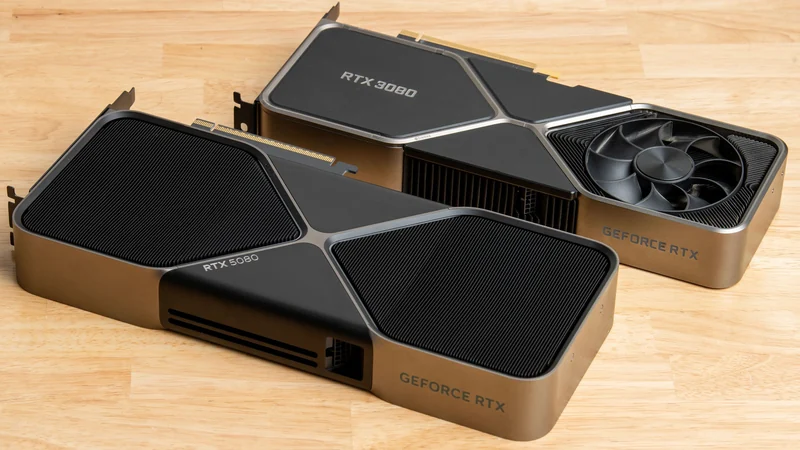
Nvidia RTX 5080 Prices Hit $2,000 Amid Severe Stock Shortages
Nvidia GeForce RTX 5080 prices have surged to $2,000, leaving its original $999 MSRP behind and matching the launch price of the RTX 5090.
Chinese Factories Strip RTX 5090s for AI Servers
A newly leaked video exposes industrial-scale Chinese workshops dismantling thousands of GeForce RTX 5090 graphics cards to build AI servers.
Stolen Nvidia RTX 5090 GPUs Surface Online From Airport Heist
An Nvidia RTX 5090 GPU from a $470,000 airport shipment heist has appeared online, while police identify three employee suspects.