Ex-Palantir Execs Launch Dream with $17M to Transform Construction
Former Palantir executives Andy Elder and Arjun Mathur have emerged from stealth with $17 million in seed funding to build AI world models aimed at disrupting legacy architecture and construction tools.
 Radwan AbdulhadiEditor and technology writer

Founding Background and Vision
Andy Elder and Arjun Mathur, former Stanford roommates who both studied computer science, spent a decade at Palantir before deciding to launch a startup together early last year. Elder led product design for a team of 800 people building software for U.S. defense and intelligence agencies, while Mathur served as a senior vice president in the company's commercial practice.
Despite having no direct background in architecture, the founders were troubled by a growing industry problem: fewer buildings are constructed in the U.S. today than a few decades ago as development costs have surged. Believing that artificial intelligence can boost productivity across the architecture, engineering, and construction industry, they set out to build Dream to automate building design and engineering.
Seed Funding and Industry Backing
The startup has emerged from stealth with $17 million in seed funding. The round was led by Andreessen Horowitz, with additional backing from SV Angel, XYZ, and Zigg Capital. Kimberly Tan, a partner at Andreessen Horowitz, noted that the firm first invested in the company over a year ago when the startup model was still just an idea, expressing strong admiration for their technical approach and independent model development.
The Technology: Structural Cognition and World Models
Dream aims to replace cumbersome, outdated architecture tools like Autodesk's AutoCAD and Revit. According to Mathur, architects and structural engineers still draw every piece of their designs part by part on legacy software where AI plays virtually no role. While standard large language models can generate images of buildings, their outputs lack structural soundness.
By contrast, Dream's world model is grounded in real physics and construction standards. Trained on more than 100 million square feet of building data gathered from permit archives across the United States, the system understands what is inside building walls, the materials used, what beams are made of, and how much weight they can support. The startup describes this approach as structural cognition because it generates structurally precise designs that account for internal elements like plumbing and HVAC.
Market Deployment and Competitive Landscape
Dream has already begun selling its product to architecture, engineering, and construction professionals and developers. Users utilize the model to conceptualize building designs and estimate overall costs. The platform is currently deployed across 10 active projects located in Texas and California.
While Dream is not the only company attempting to update architecture and construction software with artificial intelligence — other startups working in the space include Motif, Snaptrude, and Arcol — Elder and Mathur claim they are unique in developing a world model designed to instantly generate whole buildings.
Sources
- TechCrunchEx-Palantir execs launch Dream with $17M from a16z to build AI world models for construction
Continue chronologically


Related stories
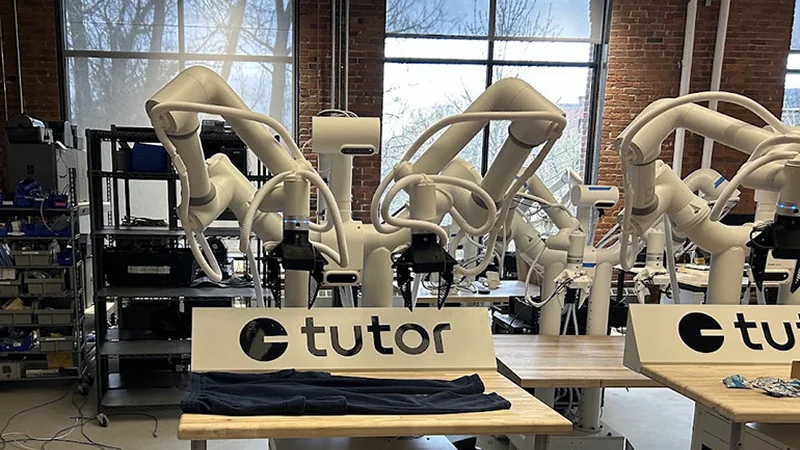
Tutor Intelligence Raises $75M to Scale Robot AI
Tutor Intelligence secures $75 million in Series B funding led by Andreessen Horowitz to scale its robot AI model training and deployments.
TypeSafe AI Reaches $7.5B Valuation After Launch of Jev
TypeSafe AI has raised $870 million in a funding round led by Andreessen Horowitz, valuing the startup at $7.5 billion just weeks after launch.

ICE Uses Palantir Database to Track Protesters, Files Reveal
Newly unsealed court documents reveal that ICE and DHS agents are allegedly utilizing a Palantir database to build dossiers on protesters and observers.

doxx.net Secures $38M to Launch Agentic Defined Networking Platform
doxx.net has raised $38 million in Series A funding to roll out its Agentic Defined Networking platform designed to protect AI agents on the internet.