Safeworld Emerges with $12M to Validate Gen AI Robots
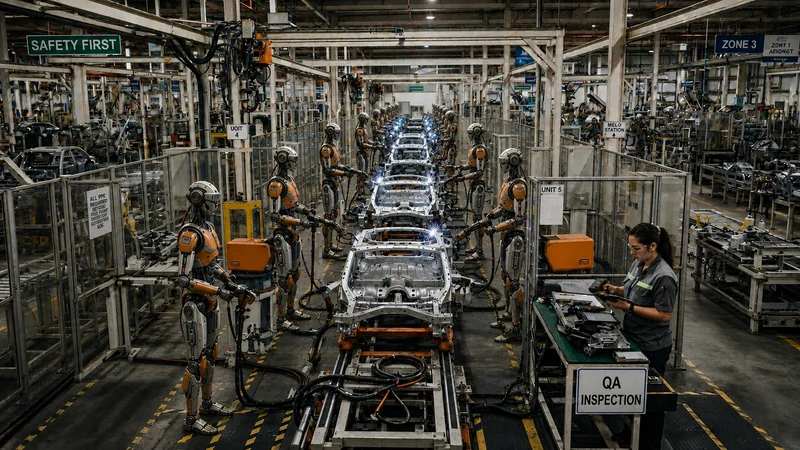
Safeworld is emerging from stealth with over $12 million in seed funding to address the safety and trust challenges of generative AI-powered robots.
 Radwan AbdulhadiEditor and technology writer

Tackling the Unpredictability of Generative AI Robots
The major trend in modern robotics involves handing operational control over to a generative AI model, a shift that introduces unique architectural challenges because these systems lack the predictability of traditional algorithms. Ensuring that a newly manufactured humanoid or autonomous machine operates safely remains a critical hurdle for developers. To tackle this problem, Dr. Ding Zhao, who directs the Safe AI lab at Carnegie Mellon University, has joined forces with startup executive Kyle Wong and machine learning engineer Simo Rachidi to launch Safeworld.
According to Zhao, deploying a robot successfully requires navigating a combination of advanced generative AI probabilistic evaluations and establishing core user trust. The company officially emerged from stealth with a seed round of more than $12 million. The funding round was led by Shine Capital and a16z Speedrun, with additional participation from Box Group, the Carnegie Mellon University Endowment, Innovation Endeavors, and SV Angel.
Establishing Industry Standards Before Deployment
Investors emphasize that establishing safety measures during the design phase is crucial for the robotics industry. Jonathan Lai, a partner at a16z Speedrun, noted that waiting until robots are actively deployed in households and colliding with children is far too late to begin addressing safety incidents.
Safeworld focuses its evaluation efforts on robotic control systems tested within simulations populated by realistic human models. This approach mirrors the validation challenges faced by autonomous vehicle developers like Tesla or Wayve, who must prepare machines for surprising real-world road incidents. However, Zhao argues that validation is significantly more difficult for robots due to unstructured environments and varying facility-specific safety standards.
Simulating Complex Human and Environmental Scenarios
Physical environments present numerous operational hazards, such as factory blind corners or uneven flooring where workers might trip and fall. Kyle Wong explained that testing these variables requires understanding precise stopping distances and human detection parameters to prevent collisions. Rather than forcing physical tests involving human falls, Safeworld replicates these conditions digitally.
The platform builds a digital version of a specific environment using models like Genesis or MuJoCo, inserts a simulated robot running its actual software, and runs thousands of potential interaction scenarios. This infrastructure provides third-party validation that robot builders can rely on, allowing competitors to share essential safety data.
Industry Partnerships and Empirical Verification
Robotics developers are already taking notice of the platform. Vishal Dugar, the CTO of Gritt Robotics, is currently developing the artificial intelligence brain for machines that help workers install photovoltaic panels at industrial solar farms. His company is partnering with Safeworld during the development of their safety simulations.
Dugar explains that mathematically proving the safety of complex robotic systems is exceptionally difficult, meaning verification must happen empirically. Because industrial robots operate directly alongside human workers, accounting for diverse human behaviors—such as kneeling, crouching, running, or falling—alongside varied appearances, clothing, and body configurations remains a top priority.
Future Outlook and Commercial Strategy
While Safeworld is still determining whether a product platform or a services-based approach will best serve its external users, the team remains confident in the market demand for their solution. Zhao anticipates that the company will achieve profitability rapidly, noting that any organization looking to deploy generative AI robots at scale will need to utilize validation services to handle complex real-world situations.
Sources
- TechCrunchCan Safeworld convince people that gen AI robots won’t hurt them?
Continue chronologically

Related stories
AI Hallucination Nearly Triggered US Military Attack
An AI-generated intelligence report falsely identified nuclear components on a Chinese ship, nearly triggering a US military operation.

Google expands AI & Economy research team
Google is adding economists and researchers to study AI adoption, productivity, labor-market change and the technology’s wider economic impact.

Boston Dynamics Reveals Four-Fingered Hand for Atlas
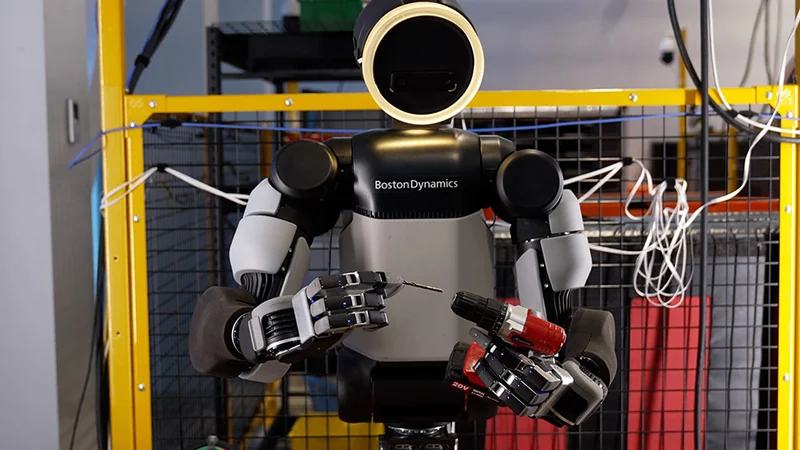
Boston Dynamics has unveiled a new four-fingered hand for its Atlas humanoid, designed for high-fidelity simulation and tool manipulation.
Asimov's Laws and Modern AI Safety Concerns
Tech leaders and lawmakers are examining whether Asimov's Three Laws of Robotics and advanced safeguards are enough to keep modern AI and robotics safe.