Starlink Spectrum Deal Boosts Mobile Plans
SpaceX is expanding its wireless ambitions by acquiring nationwide low-band spectrum licenses to strengthen its planned terrestrial mobile network alongside Starlink cellular services.
 Radwan AbdulhadiEditor and technology writer

Acquiring Low-Band Spectrum
SpaceX has entered into an agreement to purchase nationwide low-band spectrum licenses to support a planned terrestrial mobile network that will complement its space-based Starlink cellular service. Under the agreement, SpaceX will buy up to 14 megahertz of spectrum in the 800 MHz band from investment firm Grain Management, which acquired the spectrum rights earlier in the year from T-Mobile. T-Mobile had originally obtained the spectrum during its 2020 purchase of Sprint and was required to sell the licenses under a merger condition imposed by the US government. The purchase agreement was detailed in an announcement [from investment firm Grain Management](https://www.prnewswire.com/news-releases/grain-management-announces-definitive-agreement-to-sell-nationwide-800-mhz-spectrum-portfolio-to-spacex-302902974.html). Further details are available from Ars Technica in the original source material.
The Federal Communications Commission previously noted that the 800 MHz spectrum licenses cover approximately 100 percent of the US population. Depending on the county, the spectrum amount ranges from 4.85 megahertz to 14 megahertz. The FCC has stated that this spectrum can be used for terrestrial service, satellite-to-mobile service, or both. This low-band purchase builds upon SpaceX’s acquisition of 65 MHz of nationwide mid-band spectrum licenses from EchoStar, an acquisition that was approved by the FCC earlier in 2026.
Bridging Technical Gaps
SpaceX stated that this prime low-band spectrum addresses a key technical gap that will pave the way for Starlink Mobile to become a major mobile carrier in the United States. While the global 2 GHz mid-band spectrum will provide high-bandwidth capacity, the newly acquired low-band spectrum will establish a coverage layer capable of penetrating obstacles like walls to reach customers inside buildings. Furthermore, most existing mobile devices already support this underused frequency band.
The expansion strategy follows statements [said in August](https://arstechnica.com/tech-policy/2026/08/spacex-claims-starlink-mobile-will-better-than-att-t-mobile-and-verizon/) regarding the competitive potential of Starlink Mobile. SpaceX has been asserting that its service will eventually surpass traditional major telecommunications providers. Stock prices for AT&T, T-Mobile, Verizon, and satellite competitor AST SpaceMobile declined sharply following the news of the spectrum transaction.
Next-Generation Satellites and Network Architecture
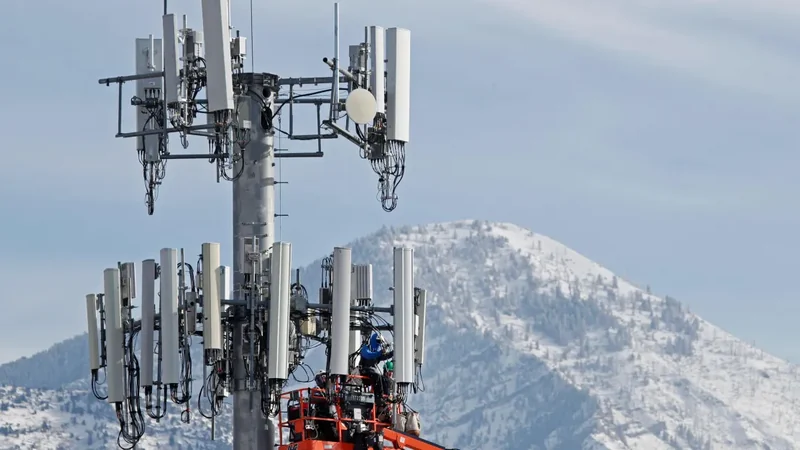
Alongside the spectrum acquisition, SpaceX received official approval to launch 15,000 satellites for an upgraded version of its mobile service. The company reported that these V2 Starlink Mobile satellites will deliver significantly more bandwidth than current generations, bringing high-speed service directly to unmodified devices worldwide. Regulatory filings outline plans to deploy radios feeding sectorized antennas on towers, rooftops, and other urban and rural structures to establish reliable signal propagation.
CEO Elon Musk noted that Starlink plans to utilize numerous small base stations rather than large, expensive cellular towers, leveraging broadband antennas installed on residential and commercial roofs to enhance local connectivity. The overall deployment timeline aims to commence direct-to-device services by late 2027 and expand coverage substantially through 2028.
Competitive Landscape and Regulatory Outlook
The transaction continues a trend of spectrum consolidation that has drawn scrutiny from smaller telecommunications entities. The Rural Wireless Association previously opposed spectrum sales to major buyers, citing concerns over spectrum aggregation that disadvantages regional providers. Across the domestic market, licensed spectrum allocated to mobile operators totals about 1.1 GHz, with dominant portfolios held by major telecom groups.
Meanwhile, traditional operators have formed counter-strategies. AT&T, T-Mobile, and Verizon finalized a joint venture agreement aimed at pooling spectrum resources to expand satellite coverage into terrestrial dead zones. As SpaceX pursues regulatory approval for its latest low-band purchase, the broader telecommunications sector continues to adapt to an evolving hybrid satellite-terrestrial competitive environment.
Sources
- Ars TechnicaStarlink spectrum deal boosts Musk plan to beat AT&T, T-Mobile, and Verizon
Continue chronologically

Related stories
SpaceX Moves to Challenge AT&T, Verizon, and T-Mobile
SpaceX is advancing an ambitious mobile carrier strategy, securing spectrum assets and regulatory approvals to build a competitive wireless network.

SpaceX Eyes 80,000 Cell Sites in Major Mobile Carrier Push
SpaceX is reportedly planning to tap into at least 80,000 cell sites as part of its push to compete directly with Verizon, AT&T, and T-Mobile.
SpaceX Unveils Plans to Become a Major Mobile Carrier
SpaceX has announced plans to become a major mobile carrier through a strategic low-band spectrum acquisition pending regulatory approval.

SpaceX Announces Plan to Become a Major Mobile Carrier
SpaceX acquires low-band spectrum licenses to transform Starlink Mobile into a major US carrier, challenging traditional cellular providers.