Nvidia Vera CPUs Land in Oracle Cloud
Nvidia's standalone Vera CPUs have arrived in Oracle Cloud Infrastructure Superclusters as part of a multi-gigawatt deployment.
 Radwan AbdulhadiEditor and technology writer
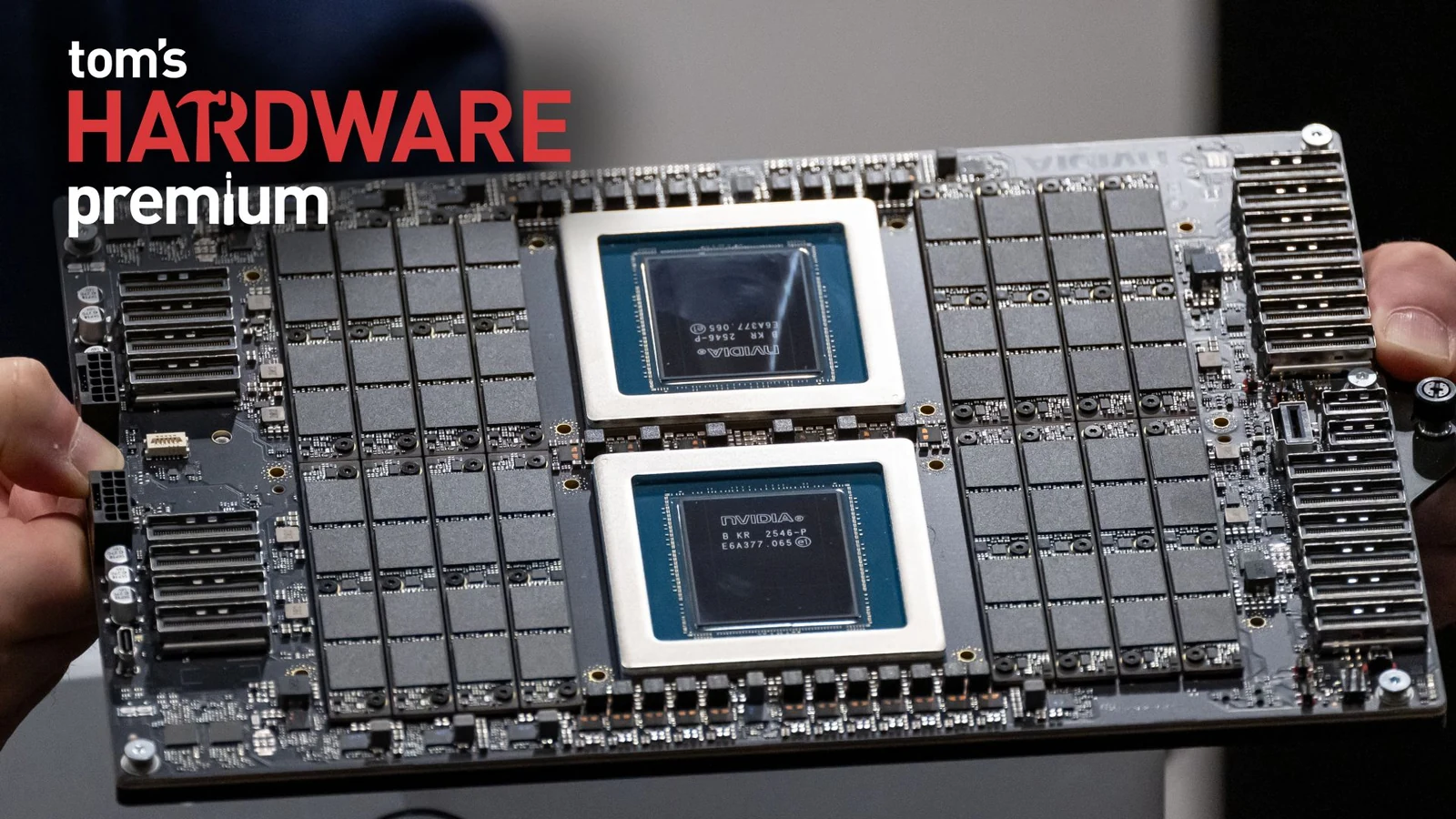
Oracle Cloud Deploys Standalone Nvidia Vera CPUs
Nvidia and Oracle announced the general availability of Nvidia's Vera CPUs and Vera Rubin rack instances on Oracle Cloud Infrastructure (OCI) Superclusters at Oracle AI World. The rollout follows Google Cloud's recent general availability announcement for Vera Rubin, marking another major milestone for Nvidia's AI infrastructure push among top-tier hyperscalers. While various neocloud providers have already embraced the architecture, a standalone deployment within a major hyperscaler like Oracle signals a broader market acceptance.
Hyperscale data centers have traditionally maintained a heavy focus on x86 processors, alongside alternative Arm offerings such as the Ampere Altra on OCI Superclusters. This deployment represents Nvidia's initial standalone CPU push directly into hyperscale data center environments, placing the processor alongside conventional x86 competition independent of attached GPU accelerators. Further details are available from Google in the original source material.
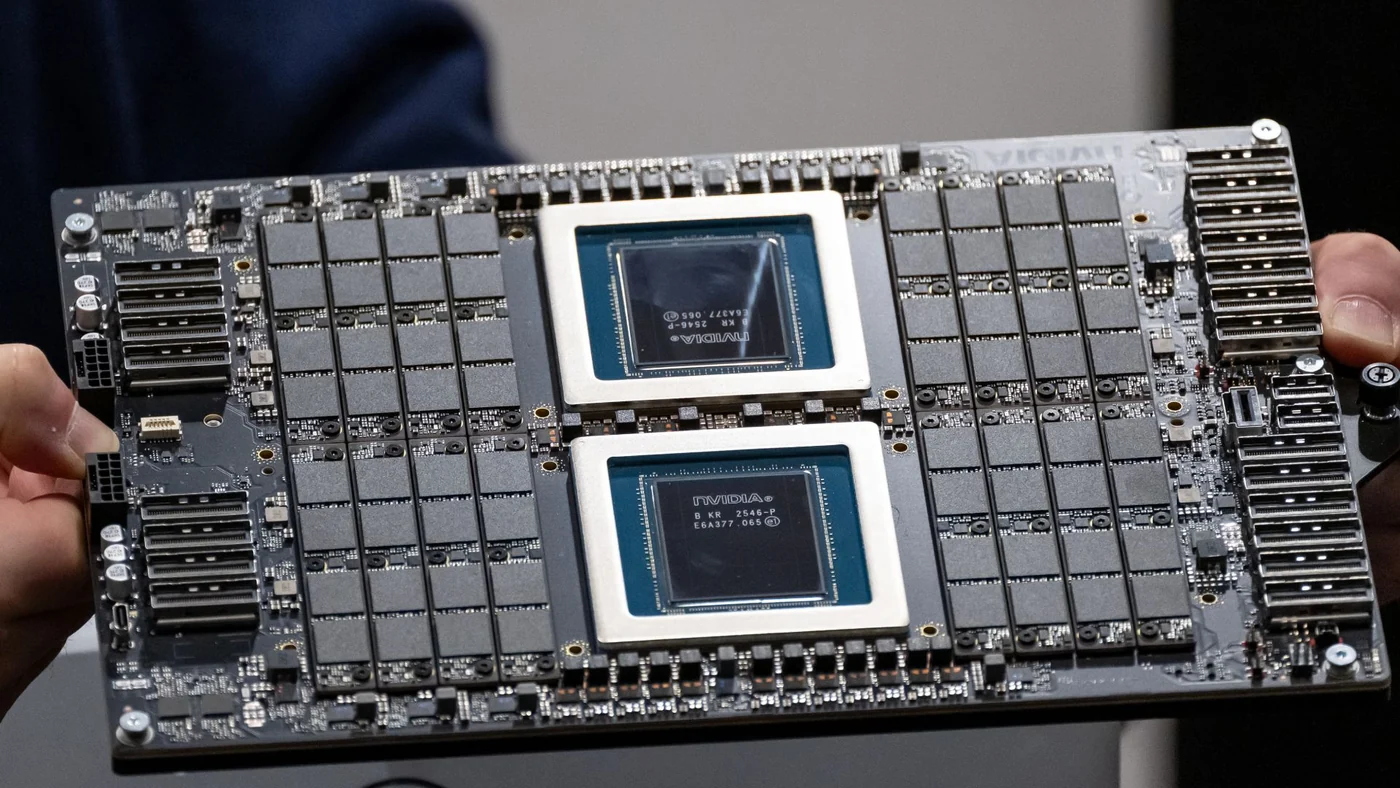
Performance Characteristics and Memory Bandwidth
Independent benchmarking of a local server configuration reveals notable performance characteristics for the processor. Although Nvidia initially detailed specifications for its custom architecture earlier, real-world evaluations shed light on how the hardware handles demanding data center operations compared to traditional multi-socket x86 servers.
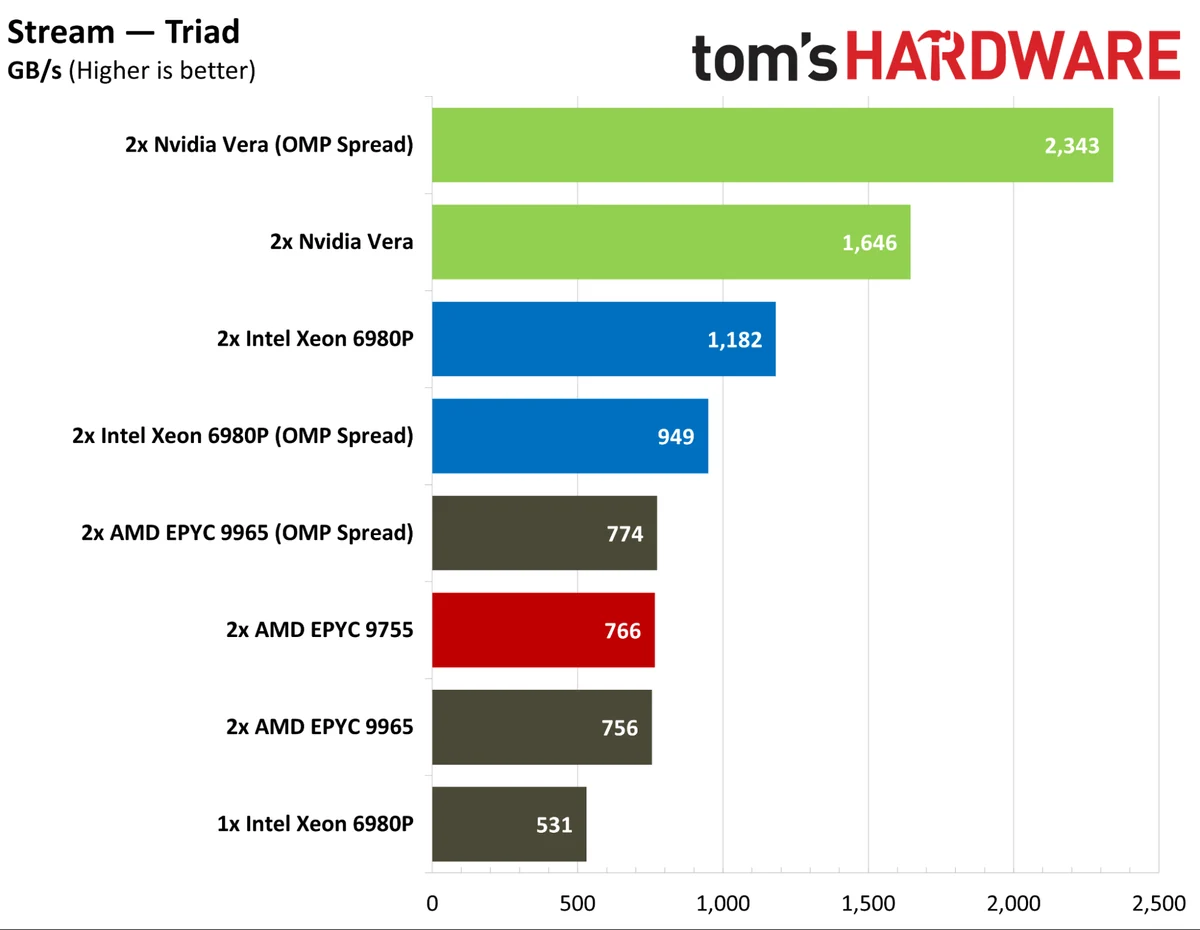
Industry-standard testing using the Stream benchmark demonstrates that Nvidia's use of LPDDR5X-9600 memory, combined with a monolithic die and a distributed mesh caching topology, achieves significant memory bandwidth advantages. In triad operations, the processor more than doubles the bandwidth available on a dual Intel Xeon 6980P system equipped with fast MRDIMMs.
Agentic AI Workloads and Python Performance
The memory bandwidth capabilities of the architecture are critical for agentic AI loops, particularly those involving extensive database queries and large document processing. Utilizing proper OpenMP threading policies allows the distributed mesh system to bind processes effectively across the die, yielding much higher memory throughput than centralized memory control configurations found in standard x86 systems.
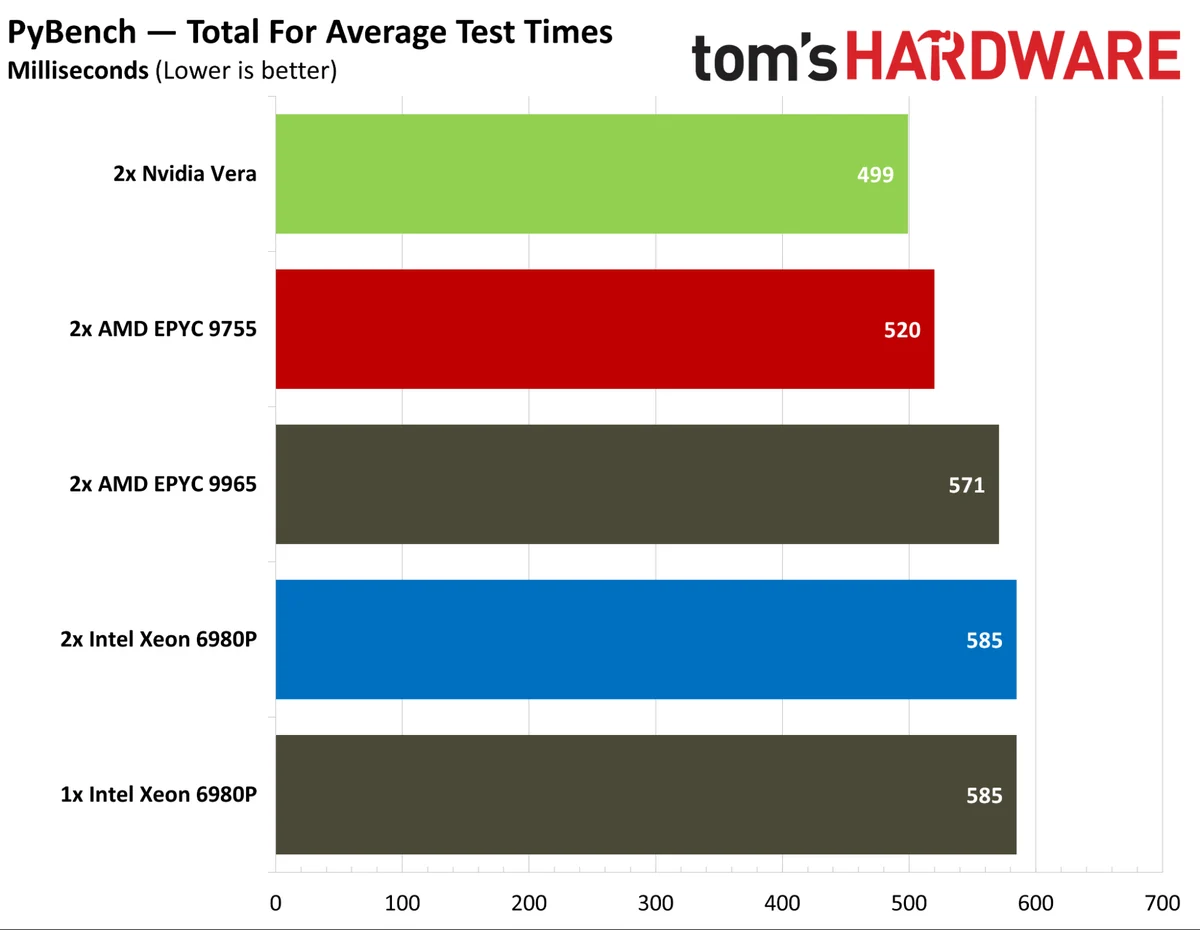
Python performance remains another vital vector for the expanding AI software ecosystem. Popular agentic frameworks and foundational machine learning libraries depend heavily on efficient execution. Initial evaluations indicate that the hardware performs strongly in these Python-driven workloads, competing effectively against processors that boast higher theoretical core counts.
General Data Center Workloads and Database Queries
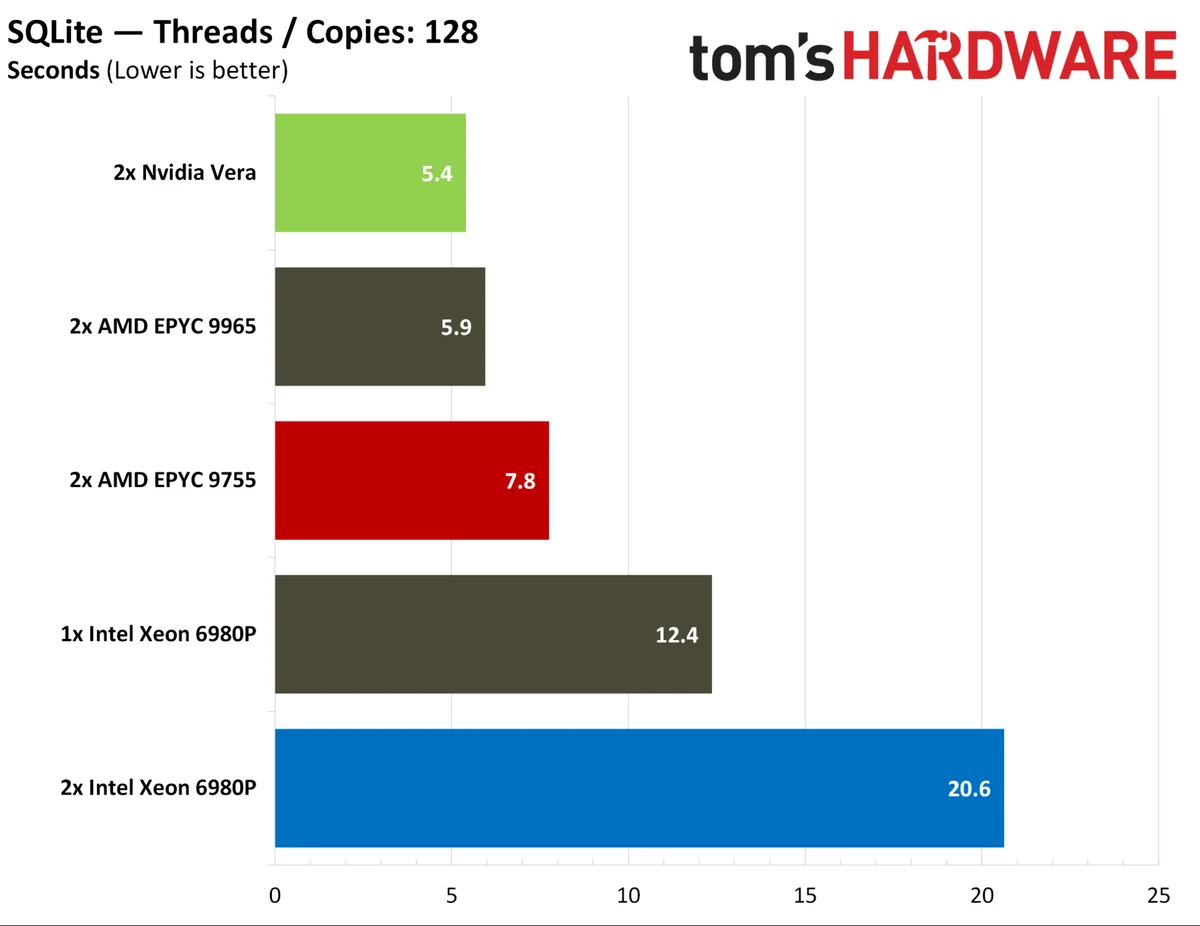
Beyond specialized artificial intelligence loops, many workloads running on the infrastructure reflect regular data center demands operating under high concurrency. Real-world tasks such as SQLite database queries benefit significantly from the system's second-generation Scalable Coherency Fabric, showcasing efficient data movement across the entire board.
These general-purpose capabilities suggest that the processor can serve as a viable alternative to traditional x86 solutions for specific server tasks, independent of whether operators require direct access to Nvidia graphics accelerators. Customer adoption in production environments will ultimately determine how widely these standalone instances are utilized.
Broader Deployment Plans and Future Expansion
As part of its multi-gigawatt infrastructure scaling, Oracle is approaching the rollout cautiously. The cloud provider also intends to offer Nvidia's HGX NVL8 platform, which groups eight Rubin GPUs together with a dual 64-core Intel Xeon 6 host featuring four terabytes of DDR5 memory. Furthermore, OCI Superclusters are slated to expand with dedicated clusters attached directly to dual Xeon 6 hosts.
Sources
- Tom's HardwareStandalone Nvidia Vera CPUs land in Oracle Cloud's multi-gigawatt deployment — our independent benchmarking of a local server reveals Vera's massive memory bandwidth lead over dual Xeon 6 server
Continue chronologically


Related entity coverage
Related stories
Modal Adopts Nvidia Vera CPUs After Internal Tests Show 2X Gains
AI startup Modal plans to deploy Nvidia Vera CPUs following internal tests that showed a 2x throughput advantage over current Intel and AMD processors.

Nvidia Vera CPU Benchmarked Against AMD and Intel
Nvidia's Vera data center CPU is benchmarked against AMD EPYC Turin and Intel Granite Rapids-AP, showcasing strong Python performance and bandwidth.
Intel's Gloomy PC Outlook Triggers $1 Trillion Chip Market Wipeout
Intel shares plunge 30% after a weak PC outlook, erasing $150 billion and sparking a wider semiconductor market bloodbath across the industry.

AMD Surpasses $1 Trillion Market Cap Milestone
AMD has officially joined the elite trillion-dollar market cap club, outpacing Intel following a significant surge in stock price fueled by data center demand.