NVIDIA cuDSS Generally Available for Simulations
NVIDIA has announced the general availability of cuDSS, an NVIDIA CUDA-X library designed to shift critical engineering and scientific simulation workloads onto GPUs.
 Radwan AbdulhadiEditor and technology writer
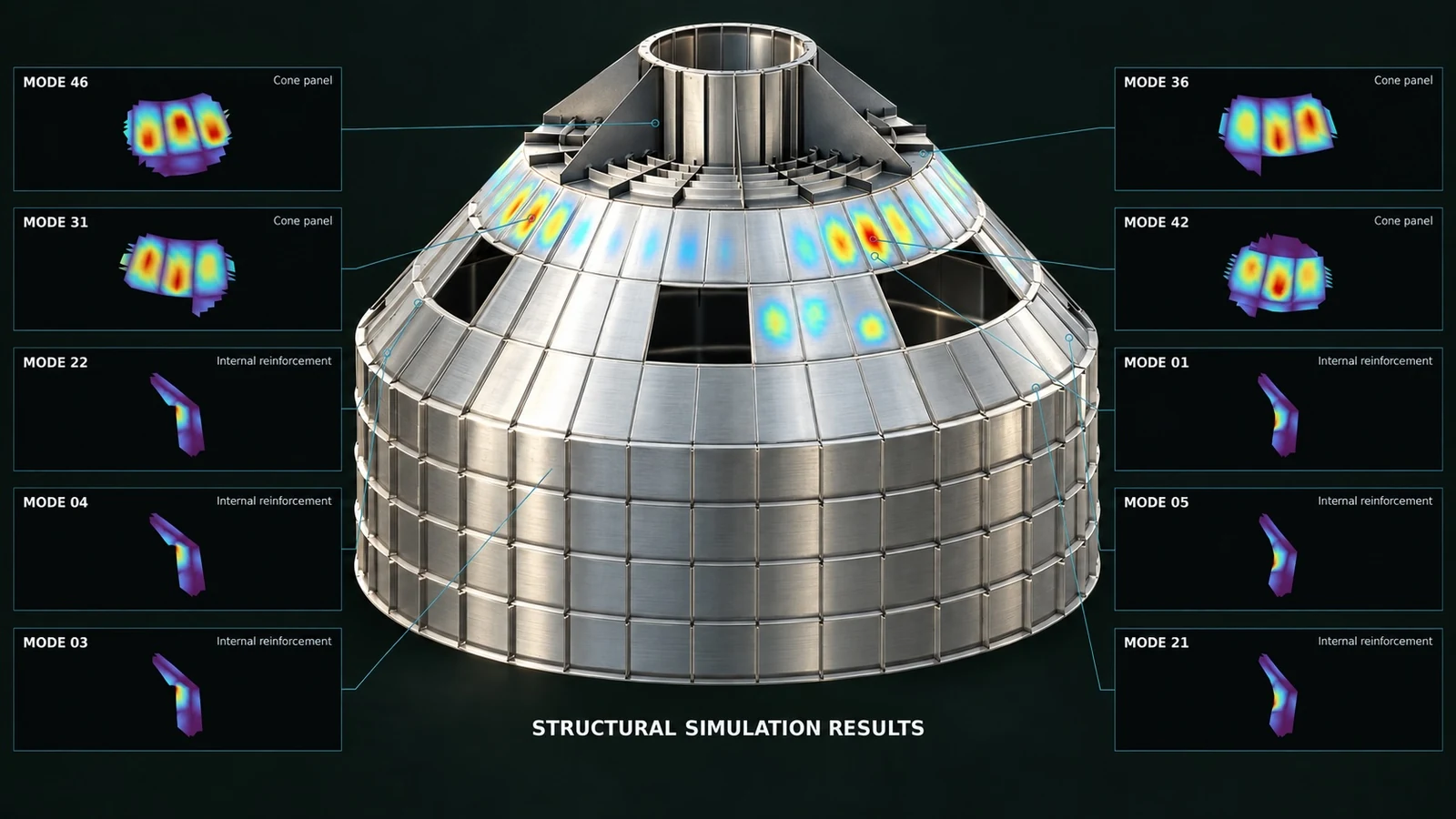
Accelerating Engineering and Scientific Simulations
Complex engineering feats—ranging from advanced chips to aircraft and industrial systems—heavily depend on computer simulation to accurately predict performance before physical construction begins. As designs become increasingly intricate, simulation workloads take longer to execute, which drives up computing demands and limits the scope of ideas that engineering teams can test.
To address these computational bottlenecks, NVIDIA announced the general availability of cuDSS, a specialized NVIDIA CUDA-X library that shifts a critical part of engineering and scientific simulations directly onto GPUs.
Targeting Large Sparse Systems
The new library accelerates the solving of large sparse systems, which is the math-heavy step that repeats frequently throughout engineering and scientific simulations. This mathematical step often dictates how many unique design iterations a team can evaluate.
By tapping into GPU architecture, applications utilizing the library can reduce their time to results and significantly increase simulation throughput. This capability allows end users to explore larger, more realistic models, achieve more accurate representations, and investigate a wider design space while reducing overall computational costs.
Early Adoption by Industry Leaders
Several major industry leaders are already integrating the technology into their software tools to transform operational workflows for their customers. Applied Materials utilized the library to accelerate sparse solves in Ginestra, its physics-based, defect-centric simulation platform, by up to 10 times compared to CPU-only approaches.
Similarly, COMSOL Multiphysics running on accelerated computing enabled ZEISS SMT to achieve a measured 4x speedup in an EUV lithography plasma simulation benchmark, successfully completing a full simulation in six days and 14 hours.
Integration Across Major Software Suites
Cadence incorporates the software in its Celsius software suite to accelerate simulations of heat, structural stress, and warpage in advanced chips and 3D chip designs, assisting customers like Nokia in analyzing complex architectures much faster.
Dassault Systèmes reported an 8 to 10x speedup when using the library within its Abaqus structural and computer simulation technology electromagnetic solvers. Meanwhile, Siemens integrated the tool into Simcenter STAR-CCM+ to accelerate structural simulations in fluid-structure interaction workflows.
Additionally, Synopsys utilizes the library inside its Sentaurus Device simulator tool to speed up simulations of advanced logic, memory, and power chips, allowing Infineon to model intricate devices with greater efficiency.
Scalability and Developer Access
As simulation workloads continue to grow in both size and structural complexity, the software is built to scale seamlessly out of the box from individual local workstations to massive computing clusters.
Software developers can integrate the library into existing engineering, scientific, and optimization software platforms, bringing powerful GPU acceleration directly to tools that researchers and engineers already use daily. Developers can access these capabilities through standard C, C++, Python, and Fortran programming interfaces.
Sources
- NVIDIA BlogNVIDIA cuDSS Now Generally Available to Accelerate Engineering and Scientific Simulations
Continue chronologically

Related entity coverage
Related stories
AI Transforms Semiconductor Fabs, Accelerating Engineering Work
Discover how AI-defined fabs use accelerated simulation, physics-based models, and digital twins to speed up semiconductor manufacturing processes.

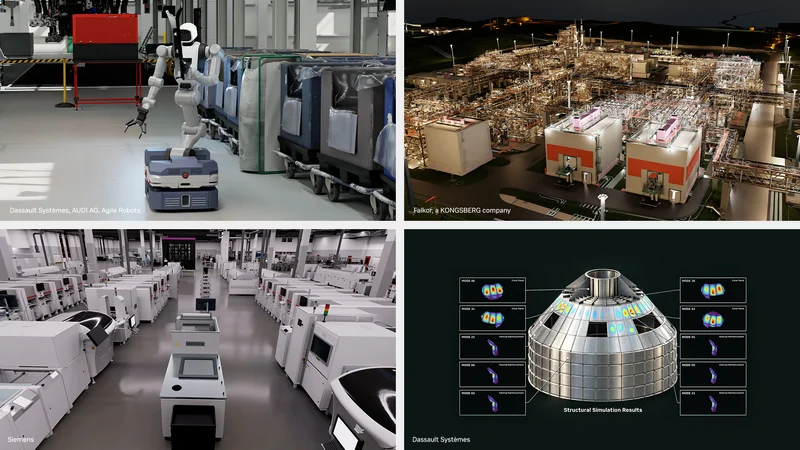
Europe's Industrial Leaders Reinvent Engineering with NVIDIA
Europe's industrial leaders are adopting NVIDIA CUDA-X, Omniverse, Cosmos, and Nemotron models to transform engineering and manufacturing operations.
Tom's Hardware Details Vera CPUs and Agentic AI Benchmarks
Explore the latest Tom's Hardware coverage including Nvidia Vera CPUs on Oracle clusters, agentic AI benchmarks, and LLM primers.
Tom's Hardware Hosts AI Chip Design Week
Tom's Hardware Premium presents AI Chip Design Week featuring an OpenAI interview, chipmaking insights, and agent safety updates.