How Quantum Computers Stay Colder Than Deep Space
Quantum computers rely on extreme cold to maintain accuracy, achieving temperatures well below deep space using specialized refrigeration systems.
 Radwan AbdulhadiEditor and technology writer
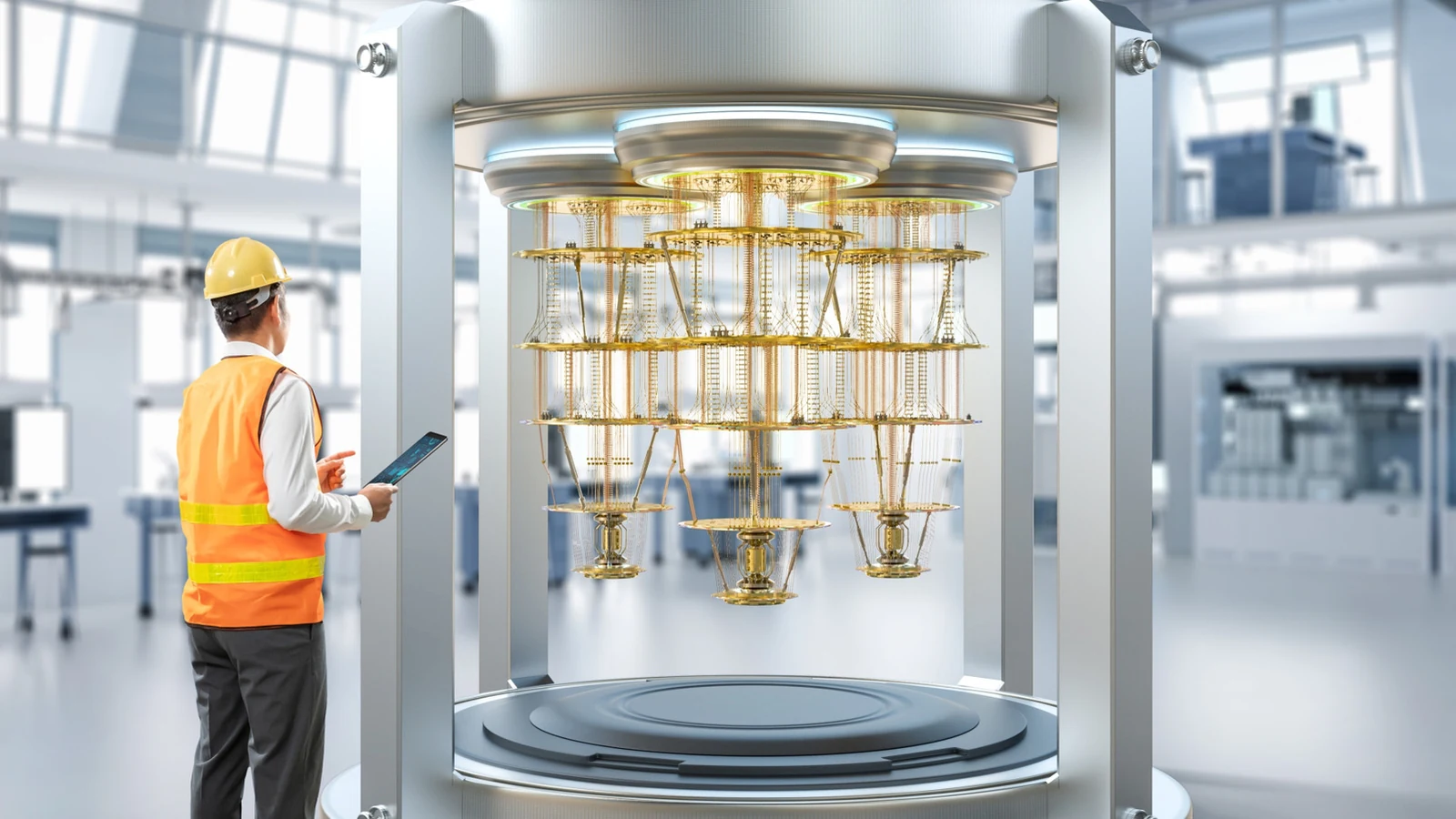
Achieving Temperatures Colder Than Deep Space
One of the coldest places in the universe is not located on a distant planet or in empty space between galaxies, but rather inside a specialized laboratory on Earth. According to data cited by Space.com, deep space sits at approximately 2.7 Kelvin, which is 454.8 degrees below zero Fahrenheit, preserved by the leftover glow of the Big Bang. In contrast, IBM's latest modular cryogenic system is cooled below 15 millikelvin. The company describes this environment as more than 180 times colder than deep space, bringing the hardware remarkably close to absolute zero.
The primary objective behind achieving these extreme temperatures is to protect the delicate foundational units of quantum computers known as qubits. While standard computers use bits that function as traditional switches set to either 1 or 0, a qubit operates more like a dynamic dial. It can hold multiple values simultaneously and possess a directional quality to carry complex information.
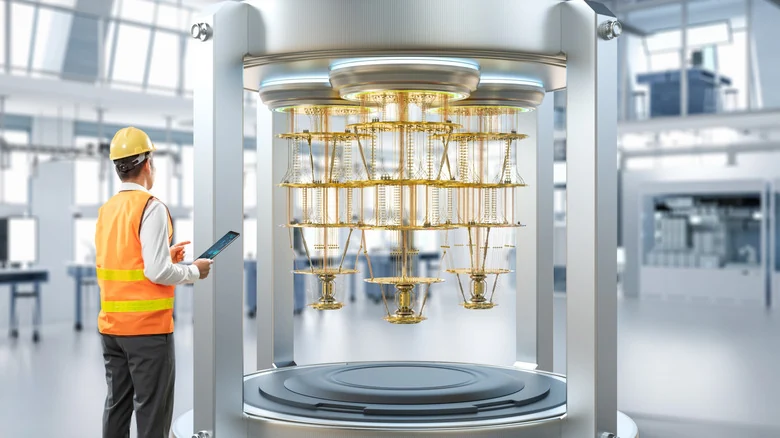
The Challenge of Heat and Decoherence
In quantum computing, algorithms are structured so that incorrect answers naturally cancel out while valid results remain, behaving similarly to intersecting waves on a body of water. However, the dials used to compute these results are exceedingly fragile. Any external disturbance can propagate across the system and dramatically increase the probability of calculation errors.
Heat fundamentally represents energy in the form of physical motion. When exposed to heat, molecules absorb energy and vibrate faster. For quantum hardware, even minute amounts of energy can disrupt a qubit state and impair how qubits interact with one another. This disruptive phenomenon is called decoherence. As a quantum computer absorbs more energy, the accuracy of its calculations decreases significantly. To prevent heat from scrambling the qubits, companies like IBM strive to reach temperatures as close to absolute zero as possible.
Inside the Sci-Fi Chandelier Refrigerator
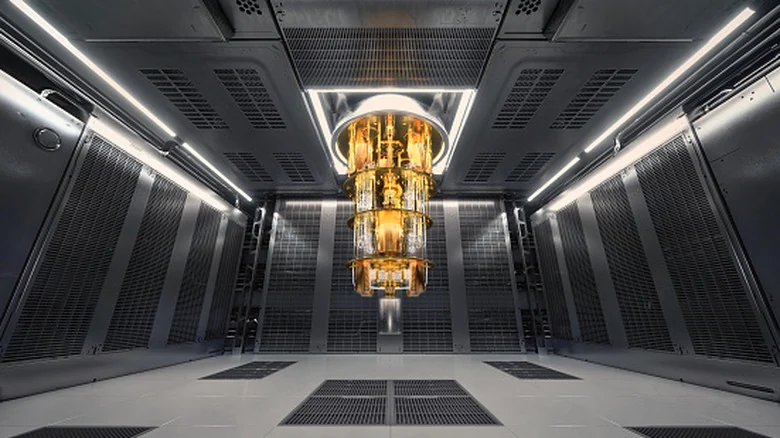
Observers examining a physical quantum computer often notice its resemblance to a sci-fi chandelier, featuring a structure that hangs down and narrows progressively toward the bottom. This specialized apparatus is a dilution refrigerator consisting of stacked metal plates, where each successive plate is colder than the one above it. While the top plate remains at room temperature, the bottom plate houses the processor at the coldest point in the entire machine.
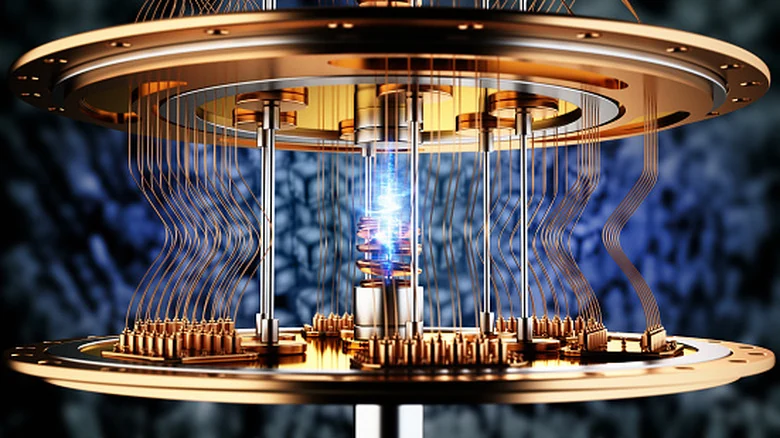
Despite this sophisticated engineering, a structural paradox remains. The control wires managing the qubits originate at room temperature. Because wires inherently conduct heat, every connection carries warmth downward toward the sensitive processor that the refrigerator aims to protect. Consequently, scaling a machine with a larger number of qubits requires additional wiring, which inadvertently introduces more heat.
Alternative Cooling Solutions for Quantum Systems
Not every quantum computer architecture relies on a massive dilution refrigerator. Neutral-atom systems developed by companies like QuEra utilize a different methodology by trapping individual atoms inside a small vacuum chamber. Lasers are then employed to cool these atoms to microkelvin temperatures, achieving levels of coldness that traditional refrigerators cannot reach.
In these neutral-atom configurations, the chamber walls and surrounding equipment operate at comfortable room temperatures. This design largely eliminates the complex wiring problem because there is no traditional cold stack for wires to heat up. Similarly, photonic machines that utilize particles of light as qubits operate many of their components at room temperature, although single-photon detectors typically still require dedicated cooling systems.
Future Implications and Practical Applications
Solving the complex cooling problem paves the way for fully functional and reliable quantum computers. While quantum machines are not universally faster than classical computers at every task, they offer dramatic speed advantages for targeted applications. One prominent use case involves simulating molecules for a new drug, which could drastically accelerate pharmaceutical research and development timelines.
At the same time, advanced quantum computing poses security challenges by potentially breaking the public-key encryption that secures standard logins and bitcoin transactions. Estimates from Google Quantum AI and related research papers have evaluated the scale of noisy qubits required to compromise standard encryption and signature schemes. Fortunately, protective measures are already established, as the National Institute of Standards and Technology finalized its initial post-quantum encryption standards to prepare systems for future cryptographic threats.
Sources
- EngadgetQuantum computers can get colder than deep space — Here's how they stay running
Continue chronologically


Related stories
IBM Research Details CUGA Open-Source Agent Harness
IBM Research evaluates the CUGA open-source agent harness against Hermes and Deep Agents using AppWorld, highlighting enterprise deployment and runtime rules.

Can AI Help Solve the Global COBOL Code Crisis?
OpenAI and Anthropic are showcasing AI tools to migrate aging COBOL code, but experts caution that legacy system modernization remains complex.

Tom's Hardware Premium Details TP-Link and AI Hardware
Explore the latest insights from Tom's Hardware Premium, covering TP-Link's regulatory hurdles, FADU's new SSD architecture, and AI updates.

IBM Announces Granite Speech 5.0 Collection
IBM unveils Granite Speech 5.0, introducing a new speech-language model, a faster multilingual Turbo CTC, and an updated 2B Plus model for enterprise audio.