World's First 3D-Printed Jet Remote-Control Aircraft Takes Flight
Engineers from the University of Bath have launched a groundbreaking 3D-printed jet-powered remote-controlled aircraft named the Kingchaser, targeting a world speed record.
 Radwan AbdulhadiEditor and technology writer
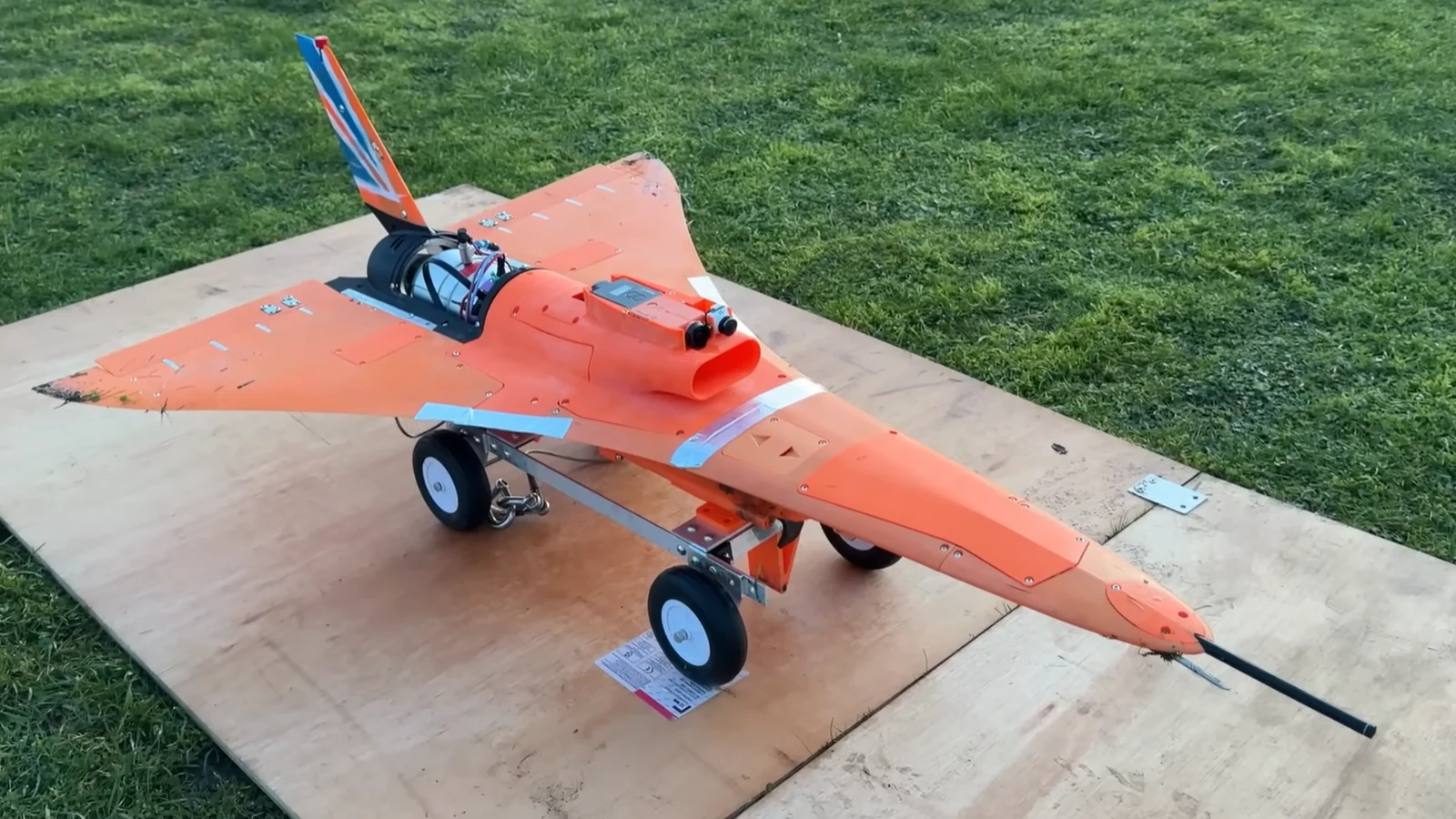
The Mach Initiative and the Kingchaser's Maiden Flight
A team of graduates from the University of Bath has achieved a significant milestone by completing the maiden flight of their custom aircraft, as detailed in reports from Tom's Hardware. The project, known as The Mach Initiative, seeks to challenge the long-standing Guinness World Record for the fastest jet-powered model aircraft, a record held for nine years by German pilot Neils Herbrich. The team's ultimate vehicle, the Kingchaser, incorporates standard 3D printing materials alongside advanced reinforcements like carbon-fiber rods and aluminum.
Evolution From the Kinglet to the Kingfisher
The development of the high-speed aircraft did not happen overnight. The engineers started with an initial miniature prototype named the Kinglet, which was constructed using a combination of PLA, PET-CF, and PETG. To keep initial iteration safe and cost-effective, the team opted for an Electric Ducted Fan instead of a true jet turbine. Utilizing a modular design, the Kinglet allowed the builders to rapidly prototype sections and swap out broken components without fabricating an entirely new body.
Once performance goals were met with the smaller electric prototype, the team moved on to build the Kingfisher. Measuring just under a meter, the Kingfisher was propelled by a Jetcat P60 miniature jet turbine engine capable of 63 N · m of thrust, allowing it to hit a top speed of 205 mph. While this specific engine was not powerful enough to break the record, it successfully proved that the team could achieve stable flight using a jet engine.

Refining Materials for the Record-Breaking Kingchaser
Building an aircraft intended to reach Mach 0.8 required extensive structural overhauls. The engineers initially designed a Kingfisher MK2 to house a much larger 150Nm jet engine, but ultimately decided to scale up the design by 20 percent to create the Kingchaser. Weighing 20 pounds, the Kingchaser continues to use standard PETG for its primary external construction. However, due to uneven heating and warping issues encountered when annealing larger engine housings, the team transitioned to PPS-CF for the housing material.
To withstand extreme thermal and physical stresses, the PPS-CF housing on the Kingchaser is skinned with several layers of carbon fiber. Furthermore, the internal aluminum skeleton used in earlier iterations was replaced with lightweight carbon-fiber rods, reducing overall weight and minimizing the need for custom CNC-machined parts. Titanium exhaust sheets and aluminum tape were also applied to shield the 3D-printed body from the intense heat generated by the turbine.
Avionics, Controls, and Future Record Attempts
High-speed aerodynamics demand robust onboard electronics and precise control mechanisms. The Kingchaser features a fully instrumented avionics system overseen by a dedicated flight control and telemetry member. An FPV system is also integrated to assist with piloting the aircraft at high velocities. To overcome the immense aerodynamic forces acting on the control surfaces during flight, the team installed high-torque servos capable of 70 kg-cm on the elevons.
While an official date for the world record attempt has not yet been announced, enthusiasts can follow the engineering journey through regular build logs published by the creators. Footage of the project and its ongoing milestones can be found via the official YouTube channel maintained by the developers.
Sources
- Tom's HardwareWorld’s first 3D-printed remote control aircraft with a jet turbine takes flight, aims for Mach 0.8 to beat world record for fastest model aircraft
Continue chronologically


Related stories
Tom's Hardware Details Vera CPUs and Agentic AI Benchmarks
Explore the latest Tom's Hardware coverage including Nvidia Vera CPUs on Oracle clusters, agentic AI benchmarks, and LLM primers.

Deepseek Unveils V4.1 Flash 1017 AI Model
Deepseek has upgraded its V4.1 Flash open-weight AI model, delivering lower running costs and high efficiency alongside notable hallucination challenges.

Chip Fab Engineering Game Goes Viral in Taiwan
A new 3D web-based simulation game depicting life as a semiconductor wafer factory worker has gone viral in Taiwan, drawing mixed reviews for its stress.

Nvidia GPU Prices Spike in Japan, Surpassing US Rates
Nvidia RTX 50-series GPU prices have surged at a Japanese retailer, showing significant markups compared to Amazon US listings amid supply pressures.