What Forward Deployed Engineering Means at OpenAI
OpenAI details the mission and methodologies behind its Forward Deployed Engineering team, focusing on how engineers bridge the gap between advanced models and complex real-world enterprise deployments.
 Radwan AbdulhadiEditor and technology writer
Closing the Deployment Gap
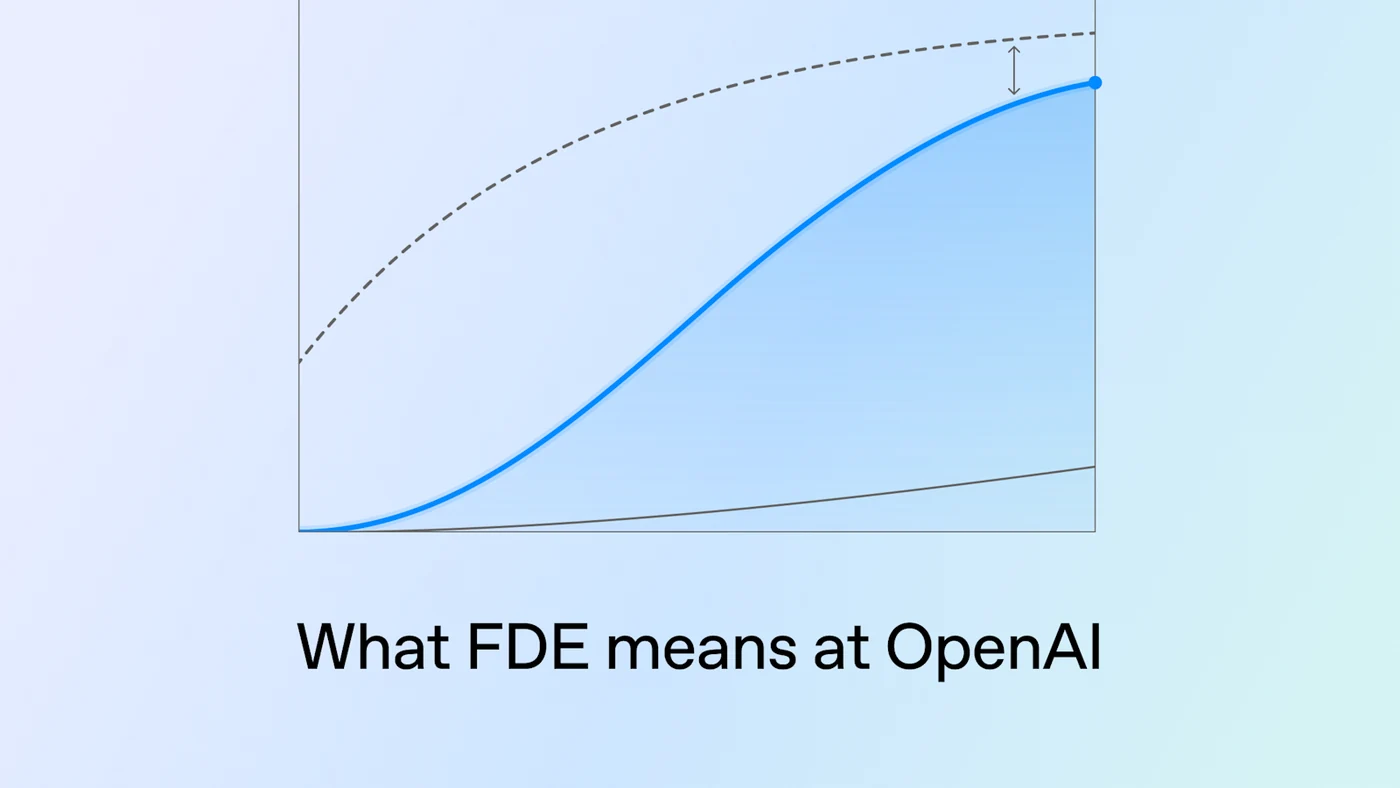
OpenAI has published an extensive look into its Forward Deployed Engineering organization, outlining how the team tackles complex enterprise challenges to deliver measurable impact. According to Colin Jarvis, Head of Forward Deployed Engineering, the team was founded in early 2025 to close what OpenAI calls the deployment gap—the distance between what models appear capable of on paper and what users can reliably apply in production.
Model capabilities have frequently advanced faster than the supporting systems and processes required to put them into daily use. While a model may perform well on a standard benchmark, it often encounters unique variables and constraints in real-world environments. FDEs work directly with organizations to build reliable, repeatable solutions while feeding concrete problems back to OpenAI's research and product groups.
Real-World Industrial Applications
Deploying advanced artificial intelligence in traditional industries often presents wide-open challenges without an established playbook. For example, the 200-year-old agriculture business John Deere faced the challenge of scaling personalized agronomic advice for farmers using its precision weed-control technology.
By deploying OpenAI APIs, John Deere integrated natural language capabilities to help farmers configure equipment, plan agricultural seasons, and optimize their daily operations. This collaboration exemplifies how FDE engagements help organizations translate cutting-edge AI capabilities into practical, production-grade value.
Tackling Complex Semiconductor Verification
In mid-2025, a dedicated group of OpenAI FDEs embedded with a large semiconductor customer to transform their chip verification process into an AI-native workflow. Because verification can account for approximately 70% of a project's total effort in the industry, the team built custom evaluation harnesses and directed test generation strategies.
Despite having joined OpenAI just days prior and possessing no prior chip design background, the engineers studied hardware design alongside the customer's team. Within months, the initiative achieved measurable production outcomes, including roughly 48% time saved through AI-based directed test generation and a 22% median performance improvement through kernel optimization.
Scaling Through Centralized Primitives
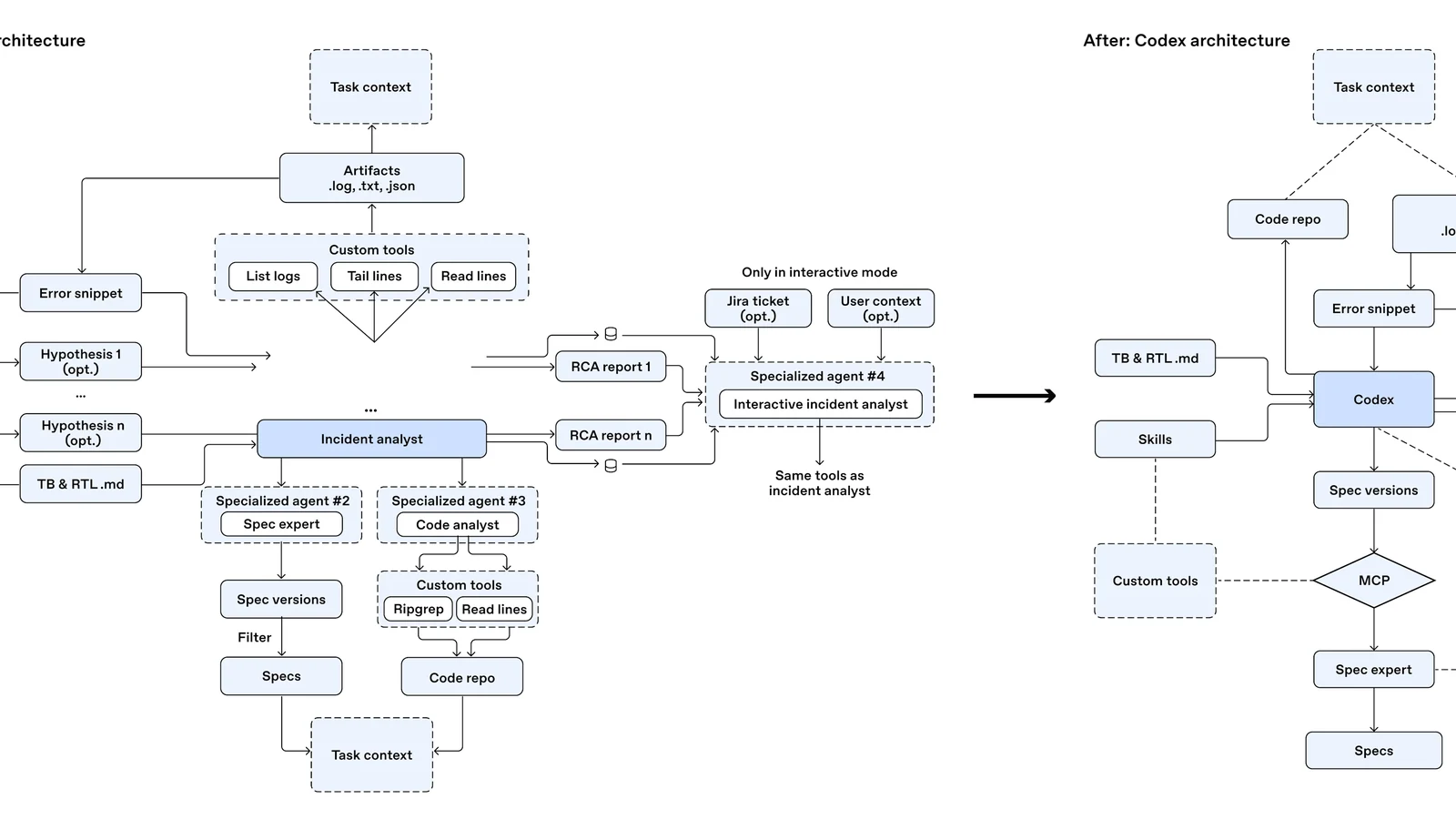
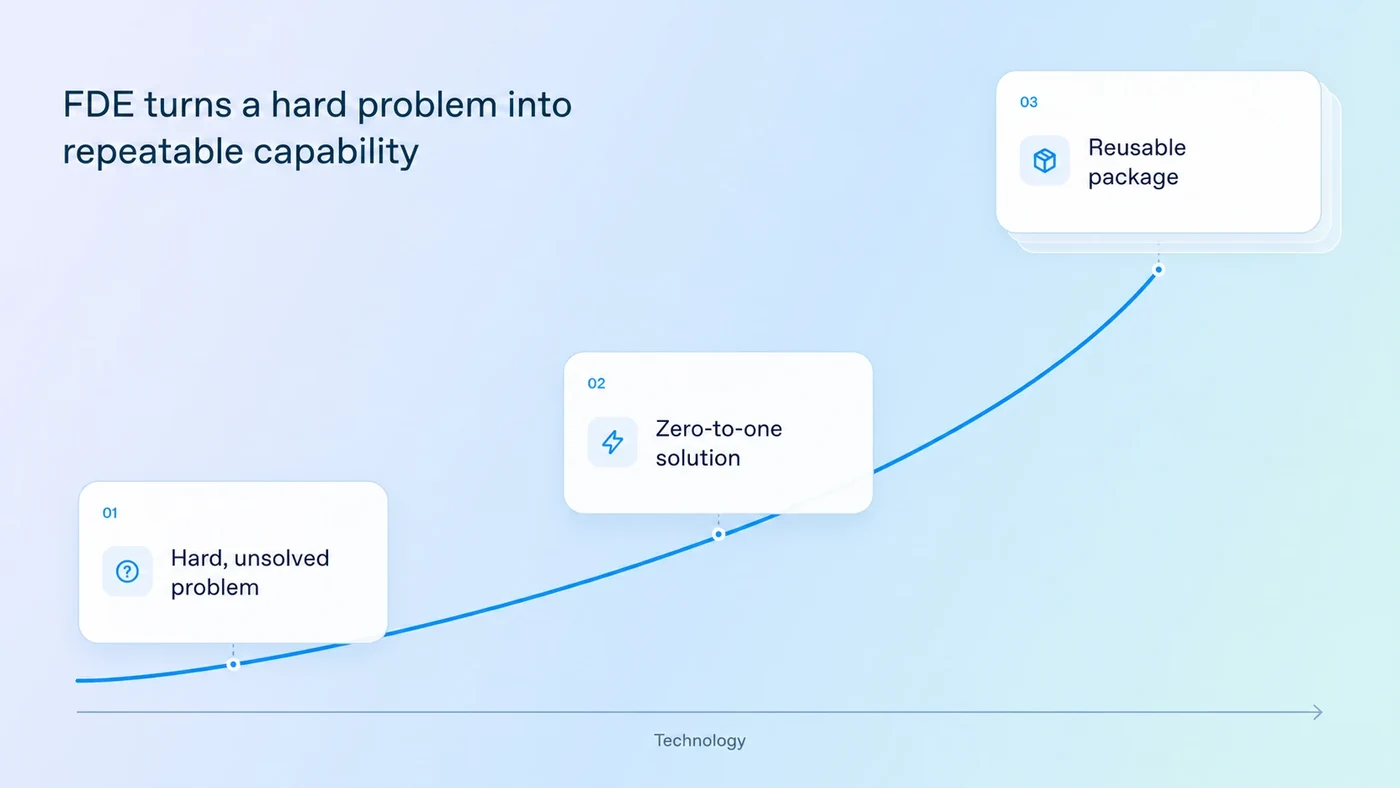
As coding assistants and models like Codex have grown more capable, the FDE team has shifted how it builds and scales custom applications. Instead of maintaining separate terminal user interfaces and command-line interfaces for individual use cases, engineers have migrated workflows onto common harnesses centered around Codex.
This architectural shift has allowed the team to remove a vast majority of custom glue code from projects, bundling key functionalities into shared skills and plugins. By standardizing these integrations, OpenAI can deploy updates centrally, making it significantly easier to extend successful workflows from one team or organization to another.
Sources
- OpenAI NewsWhat FDE means at OpenAI
Continue chronologically

Related entity coverage
Related stories
Uber rolls out ChatGPT Work to 30,000 employees
Uber is expanding ChatGPT Work to more than 30,000 employees, giving teams tools to research, analyze data and complete workflows.
Oracle turns days of work into minutes with AI
Oracle says ChatGPT Work and Codex are helping recruiters, business users and engineers turn specialist work into repeatable workflows.
Heimstaden Transforms Real Estate Management With OpenAI
European real estate operator Heimstaden is transforming property management, cutting costs, and empowering employees using OpenAI technology.
OpenAI Prepares New Security Sprint With Cathedral Systems
OpenAI announces its next internal security sprint in partnership with Cathedral Systems to test and strengthen its AI defenses and systems.