
Amazon Announces New AgentCore Runtime for Bedrock Agents
Amazon has unveiled an enhanced runtime for its AgentCore platform, specifically engineered to support the growing demands of production-grade autonomous agents.
 Radwan AbdulhadiEditor and technology writer
Evolving Infrastructure for Modern AI Agents
As AI agents transition from simple experimental chatbots to sophisticated, long-running systems capable of managing complex workflows, the infrastructure supporting them must scale accordingly. Amazon has announced a significant update to the AgentCore runtime, a core capability of Amazon Bedrock, to better accommodate these professional-grade requirements. According to the official [AWS Machine Learning Blog](https://aws.amazon.com/blogs/machine-learning/the-new-agentcore-runtime-elastic-optimized-and-consistently-fast-starts/), the new runtime environment focuses on delivering increased speed, flexibility, and cost efficiency for production agents that perform tasks ranging from coding and claim processing to ambient, event-driven automation.
Enhanced Memory Management and Cost Efficiency
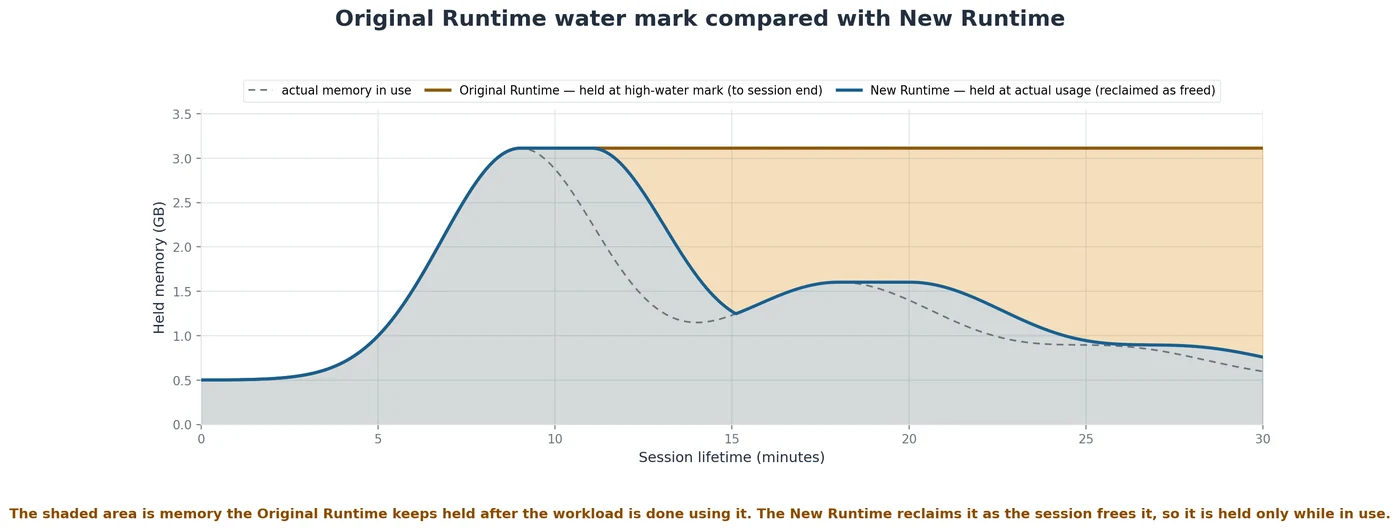
One of the primary challenges identified by developers has been the cost of memory allocation in long-running sessions. Previously, agents retained memory until the end of a session, often resulting in billing based on peak usage rather than actual requirements. The enhanced runtime changes this model by reclaiming memory as sessions release it or as it becomes cold. This refinement ensures that developers are billed for their actual resource consumption throughout the agent's lifecycle, rather than paying for idle capacity.
To help developers integrate these improvements into their projects, the company provides guidance through the [AgentCore Developer Guide](https://docs.aws.amazon.com/bedrock-agentcore/latest/devguide/runtime-how-it-works.html#runtime-platform-versions), which details how these architectural changes translate to managed compute environments. By decoupling billable usage from static capacity, Amazon aims to make it more economical to maintain idle agents while ensuring that active workloads remain responsive and performant.
Achieving Consistent Startup Performance
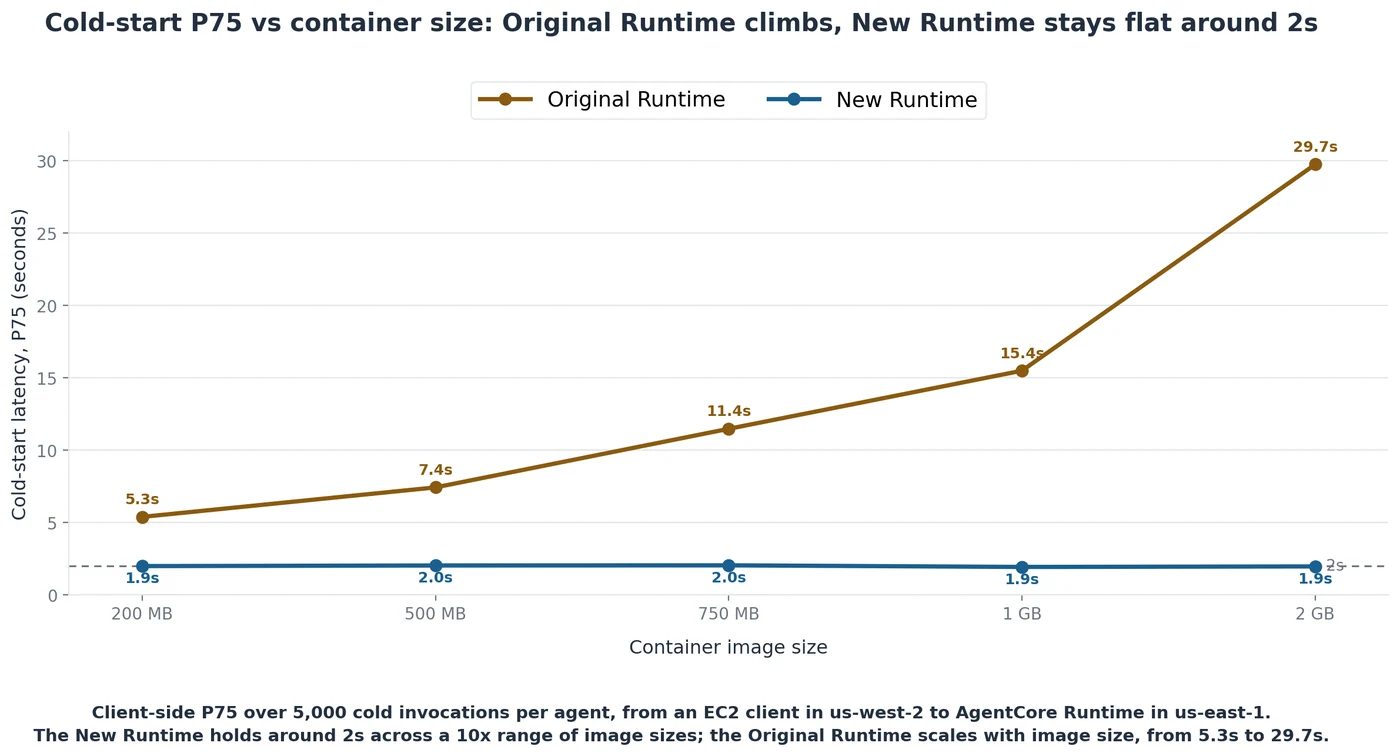
Predictable startup times are essential for maintaining user experience, particularly when agents need to resume quickly after a pause. Historically, startup latency varied significantly depending on factors like container image size and concurrency. The new AgentCore runtime addresses this by preparing environments, snapshotting them, and restoring that snapshot for each new instance. This process bypasses the traditional boot-and-initialize sequence for every cold start, resulting in consistent, fast performance across the board.
For teams looking to benchmark these performance gains, Amazon provides an [accompanying load test example](https://github.com/awslabs/agentcore-samples/tree/main/01-features/02-host-your-agent/01-runtime/05-measure-your-runtime) to help developers quantify the impact of the runtime on their specific applications. This testing transparency allows teams to see how the platform handles various workloads without needing to build complex infrastructure workarounds.
Adapting to the Future of Autonomous Systems
The nature of AI agents is shifting from interactive models that finish in seconds to ambient, event-triggered systems that run autonomously for hours. The original AgentCore runtime established a foundation of serverless, session-isolated, and pay-per-use computing. This latest update expands that vision to cover the full spectrum of agent types, ensuring that the infrastructure remains transparent to the developer. By abstracting the complexity of memory management and startup optimization, Amazon is positioning its platform to handle the next generation of enterprise AI applications that reside behind everyday features and automated systems.
Sources
- AWS Machine Learning BlogThe new AgentCore runtime: Elastic, optimized, and consistently fast starts