Deep Insight Solves Five Multi-Agent Production Challenges
The AWS Solutions Architecture team has introduced Deep Insight, an open-source multi-agent system designed to help engineering teams move beyond basic AI prototypes and overcome five major production challenges.
 Radwan AbdulhadiEditor and technology writer
Moving AI Prototypes Beyond the Pilot Stage
While building a multi-agent AI prototype can take only days using modern open-source frameworks and cloud services, moving those systems into production frequently creates unexpected roadblocks. Teams often discover that agents fail to follow strict business logic, skip crucial validation steps, or miss important edge cases because agents make judgments based on context rather than following fixed instruction sequences. To tackle these hurdles, the AWS Solutions Architecture team built Deep Insight, an open-source multi-agent system designed for robust production environments, as detailed on the AWS Machine Learning Blog.
The Five Core Production Challenges
According to technical breakdowns, production environments demand solutions for five distinct system challenges: complex orchestration, per-agent model selection, reliable operation, secure code execution, and comprehensive monitoring. Because prompt engineering alone proves insufficient for managing complex agent behaviors, Deep Insight addresses these roadblocks by establishing a complete cognitive architecture and execution flow. This framework utilizes tools such as the Strands Agents SDK to govern collaboration and reason through specialized business tasks without relying purely on basic instructions.
Hierarchical Multi-Agent Architecture
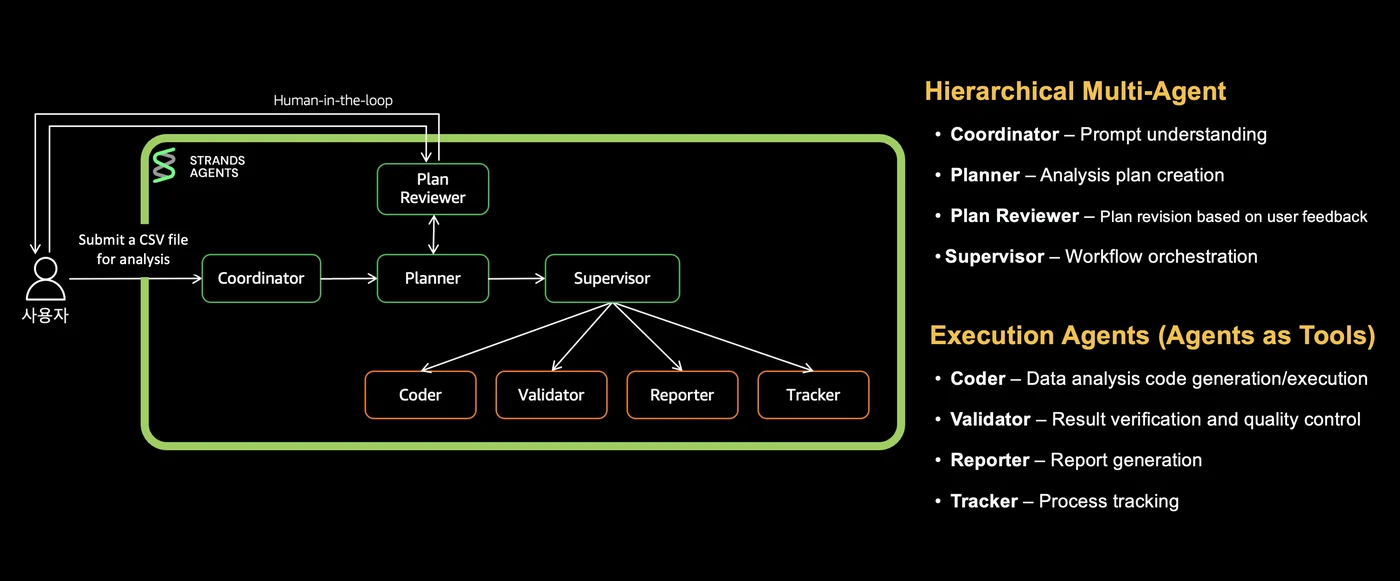
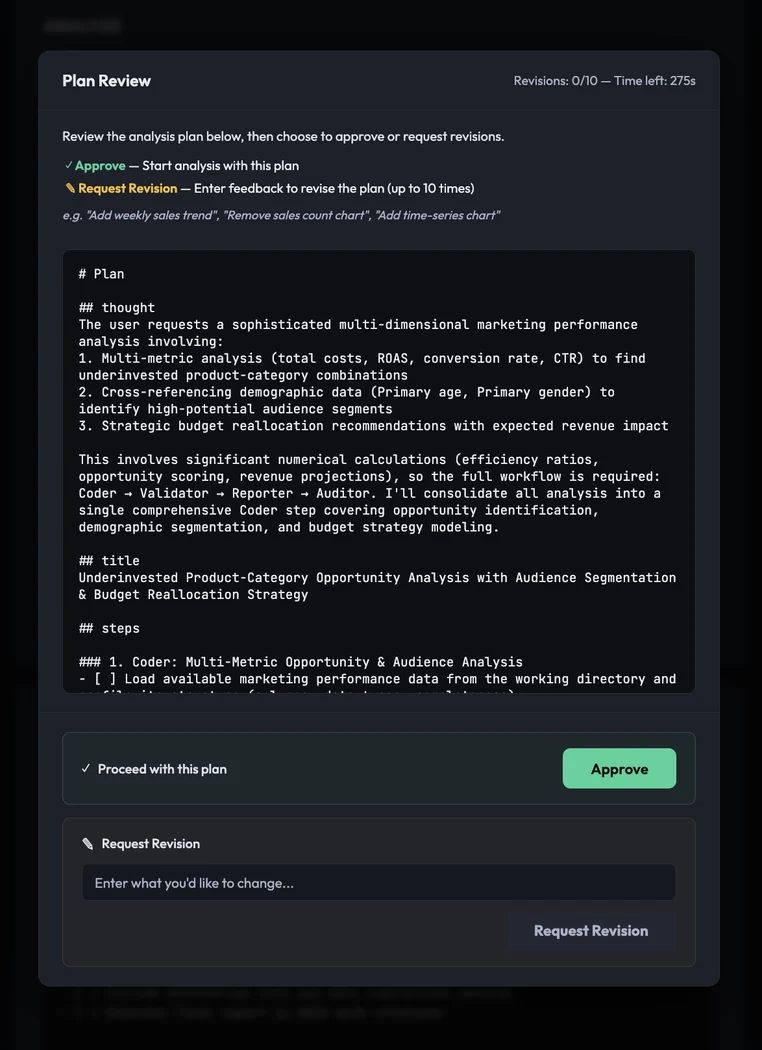
Deep Insight employs a structured hierarchy where specialized agents collaborate to transform complex data analysis into automated insights. Given a CSV file and a natural-language prompt, a team of roles—including a Coordinator, Planner, Supervisor, Coder, Validator, Reporter, and Tracker—works together to load data, run analysis, generate charts, verify calculations, and produce a professional report complete with citations. The underlying orchestration relies on Amazon Bedrock to support advanced reasoning and flexible model selection across the entire agent workflow.
Flexible Deployment and Infrastructure Options
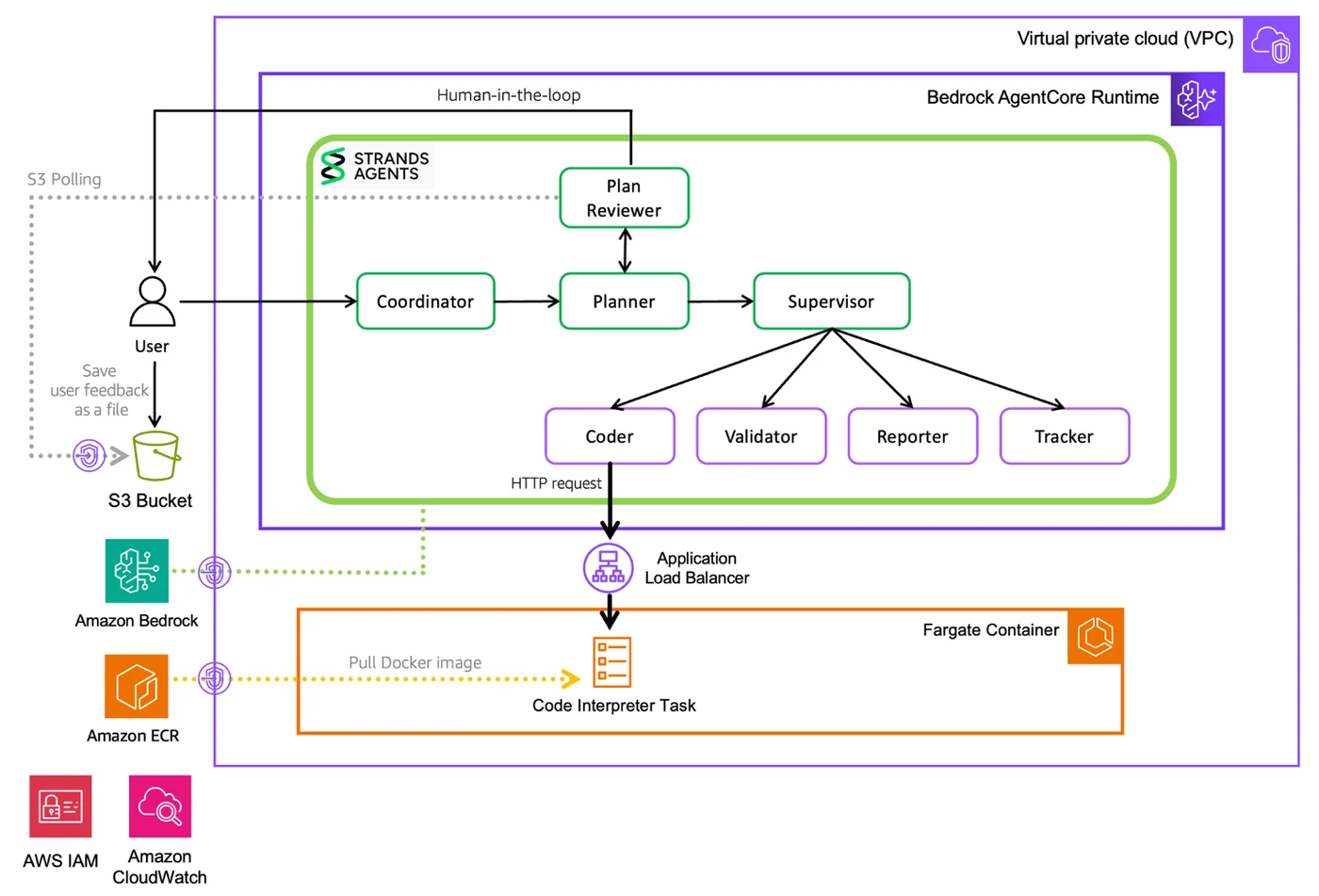
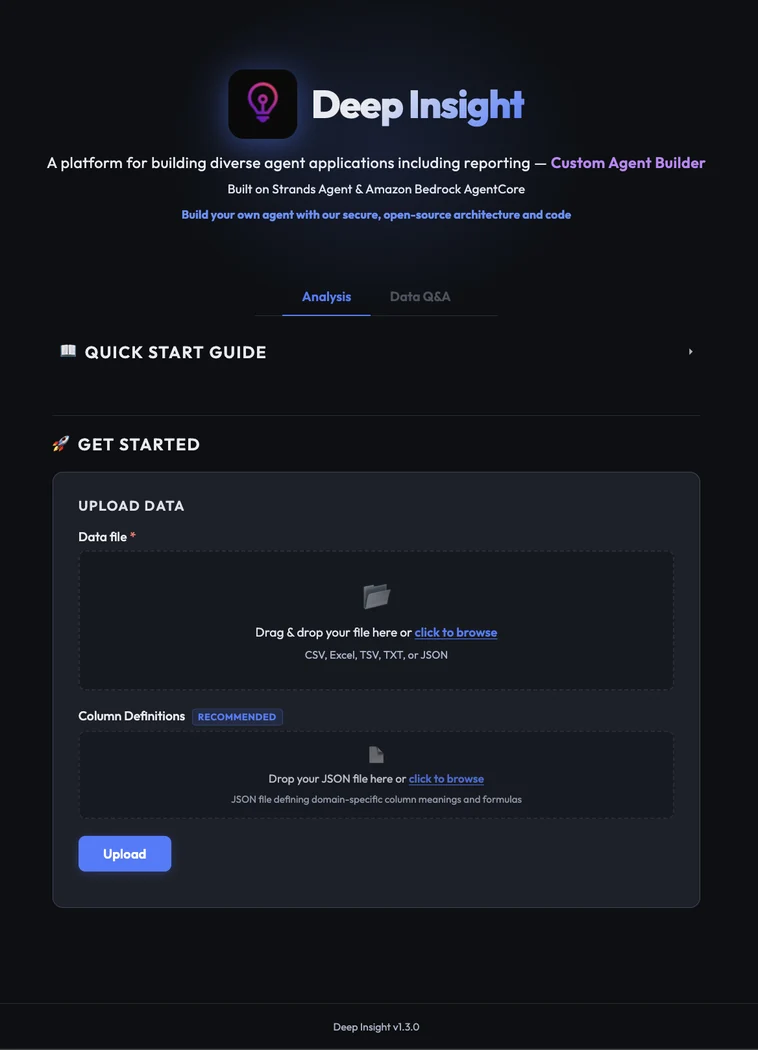
To accommodate different stages of the development lifecycle, the project is made available on GitHub and offers three deployment pathways. Developers can utilize the Self-Hosted version for local command-line iteration or take advantage of the Managed AgentCore version for scalable cloud operations. Powered by Amazon Bedrock AgentCore, the managed setup runs inside a private virtual private cloud with isolated user environments.
Secure Code Execution and Operational Scaling
Production deployments require strict security, particularly when agents write and execute data analysis code. Deep Insight handles this securely by isolating user sessions and hosting a custom code interpreter on AWS Fargate. Incoming traffic and web requests are efficiently routed through an Application Load Balancer, ensuring reliable performance and robust operational health monitoring as multi-agent systems scale from simple pilots into mission-critical business applications.
Sources
- AWS Machine Learning Blog5 production challenges in multi-agent systems and how Deep Insight solved them
Continue chronologically
Related entity coverage
Related stories
Build Multi-Agent Pipelines with Amazon Bedrock AgentCore
Learn how to build a multi-agent music production pipeline on Amazon Bedrock AgentCore Runtime Instances using shared sessions and GPU infrastructure.
AWS Introduces Agentic Conversational Video Intelligence
Amazon Web Services details a new agentic conversational video intelligence solution using Amazon Bedrock, Rekognition, and Transcribe.
Closing the AI Knowledge and Capability Gap in Business
Discover how a structured six-week program turns non-technical professionals into confident AI builders using tools like Amazon Bedrock.
Building Agentic Retrieval on Amazon Bedrock with AWS CDK
Learn how to build enterprise agentic retrieval on a Managed Amazon Bedrock Knowledge Base using the AWS CDK and Amazon Bedrock AgentCore.