
Cloudflare and IETF Fight Quantum IPsec Downgrade Threats
Cloudflare has implemented beta support for a new IETF transcript authentication extension designed to shield post-quantum IPsec tunnels from sophisticated downgrade attacks.
 Radwan AbdulhadiEditor and technology writer

Addressing Quantum Threats to IPsec
As the technology industry races to build the first generation of quantum computers, organizations face a rising threat to current communication encryption. Early quantum machines will possess the capability to crack traditional cryptography relied upon for secure data transmission, necessitating an industry-wide migration to post-quantum alternatives. While modern cryptographic primitives such as ML-KEM and ML-DSA are designed to replace vulnerable mechanisms like Diffie-Hellman and classical signature schemes, achieving complete global adoption will take years. Consequently, modern devices must maintain backwards compatibility with classical cryptography to communicate with older endpoints, introducing critical security risks.
To help safeguard users and the wider Internet, Cloudflare worked alongside the IETF to develop a vital mitigation against downgrade attacks on the IPsec protocol. This defense has been implemented and made available in beta across the company's IPsec offerings, including integrations found within Magic Transit. These developments arrive as resource estimates for potential quantum assaults on public key cryptography drop significantly, compelling the platform to move up its transition deadline to 2029.
Understanding the IPsec Downgrade Flaw
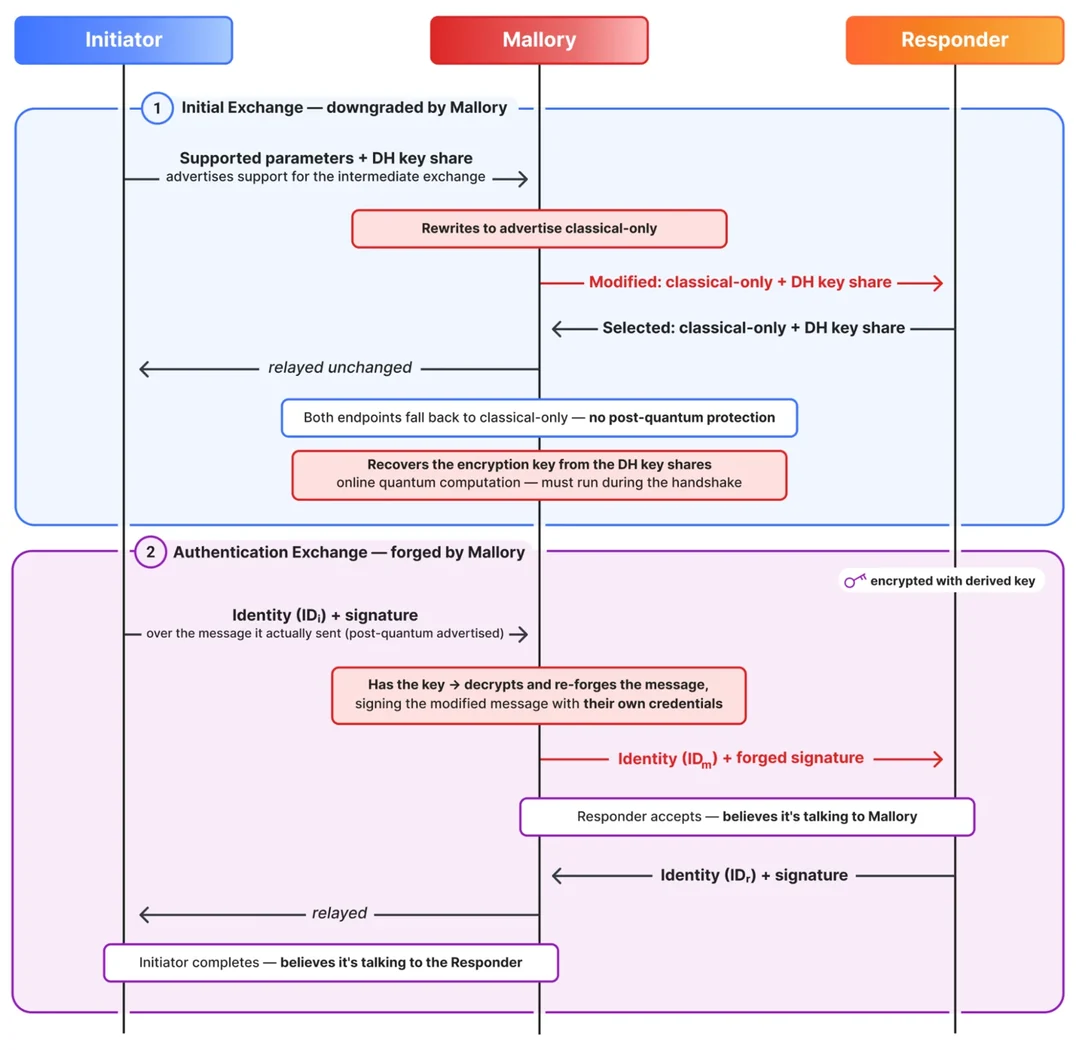
In a standard downgrade attack, an active, on-path adversary manipulates messages exchanged between a client and a server to trick both endpoints into using weaker cryptography than they actually support. This tactic strips away post-quantum protections by forcing victims back to classical encryption systems that a quantum computer can easily compromise. Security researchers previously assumed such vulnerabilities only manifested when classical authentication was exploited, but a more sophisticated design flaw allows quantum attackers to decrypt traffic between post-quantum capable endpoints regardless of the authentication method utilized.
This advanced attack vector requires a quantum computation to be executed in real time during the active protocol handshake, setting it apart from offline harvest-now, decrypt-later schemes. While the feasibility of executing such real-time quantum maneuvers remains uncertain, shifting threat landscapes require heightened caution. To combat this underlying protocol vulnerability, the engineering community collaborated on an extension designed to enforce strict transcript authentication.
The Role of IPsec in Modern Network Infrastructure
While web traffic is predominantly secured by transport layer protocols like TLS and QUIC—which run respectively over TCP and UDP—IPsec operates lower down at the IP layer. Because of its foundational placement within the network stack, IPsec is deeply integrated into modern networking infrastructure. Cloudflare IPsec enables enterprises to scale their connectivity over a global anycast network without relying on costly multiprotocol label switching lines.
Furthermore, IPsec forms a core pillar of specialized security architectures designed to shield corporate infrastructure from large-scale disruptions, such as Distributed Denial of Service events. Scrubbed traffic is safely returned to the enterprise via secure IPsec tunnels after passing through protective routing barriers.
Protocol Handshakes and Future Mitigations
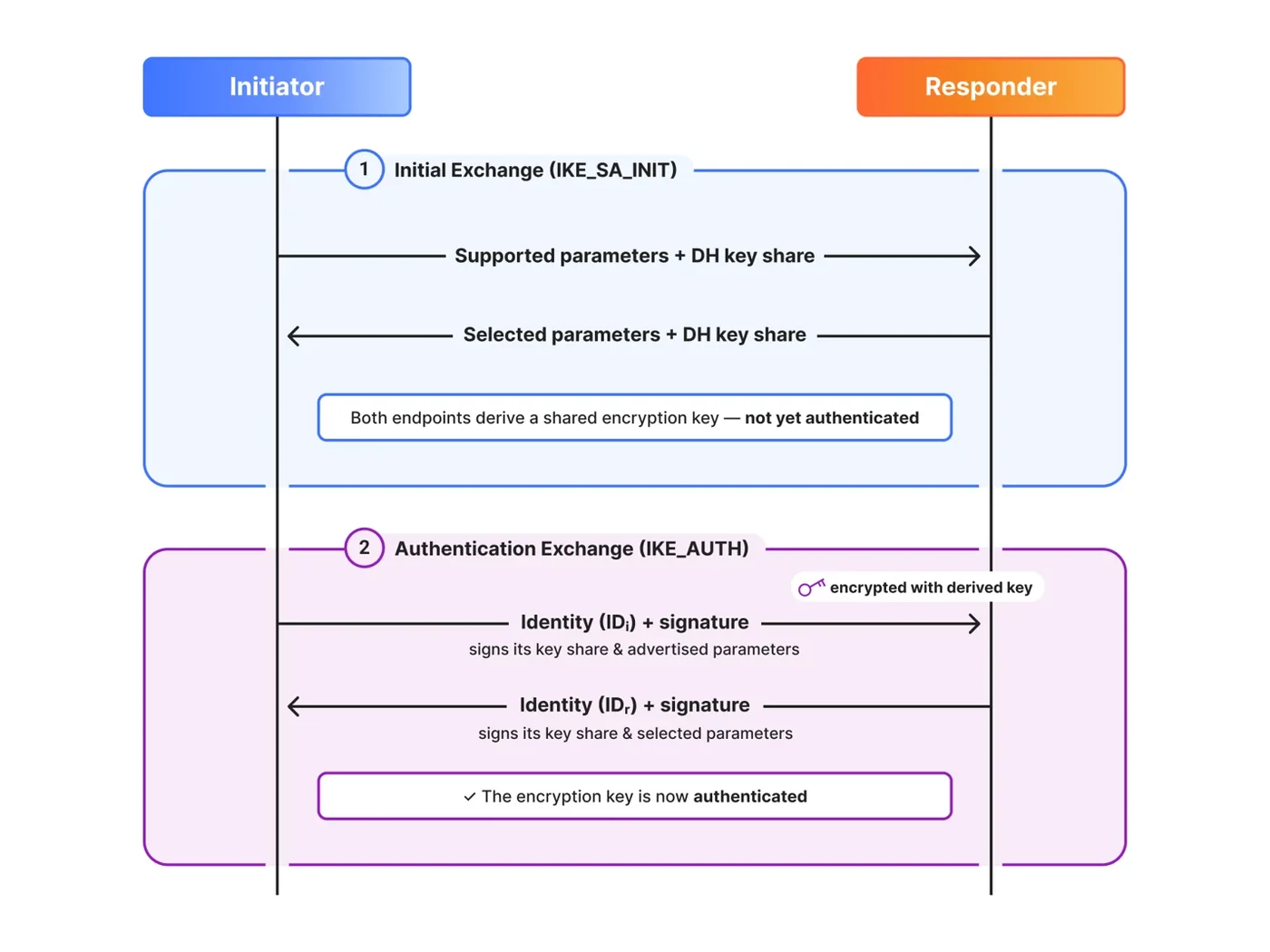
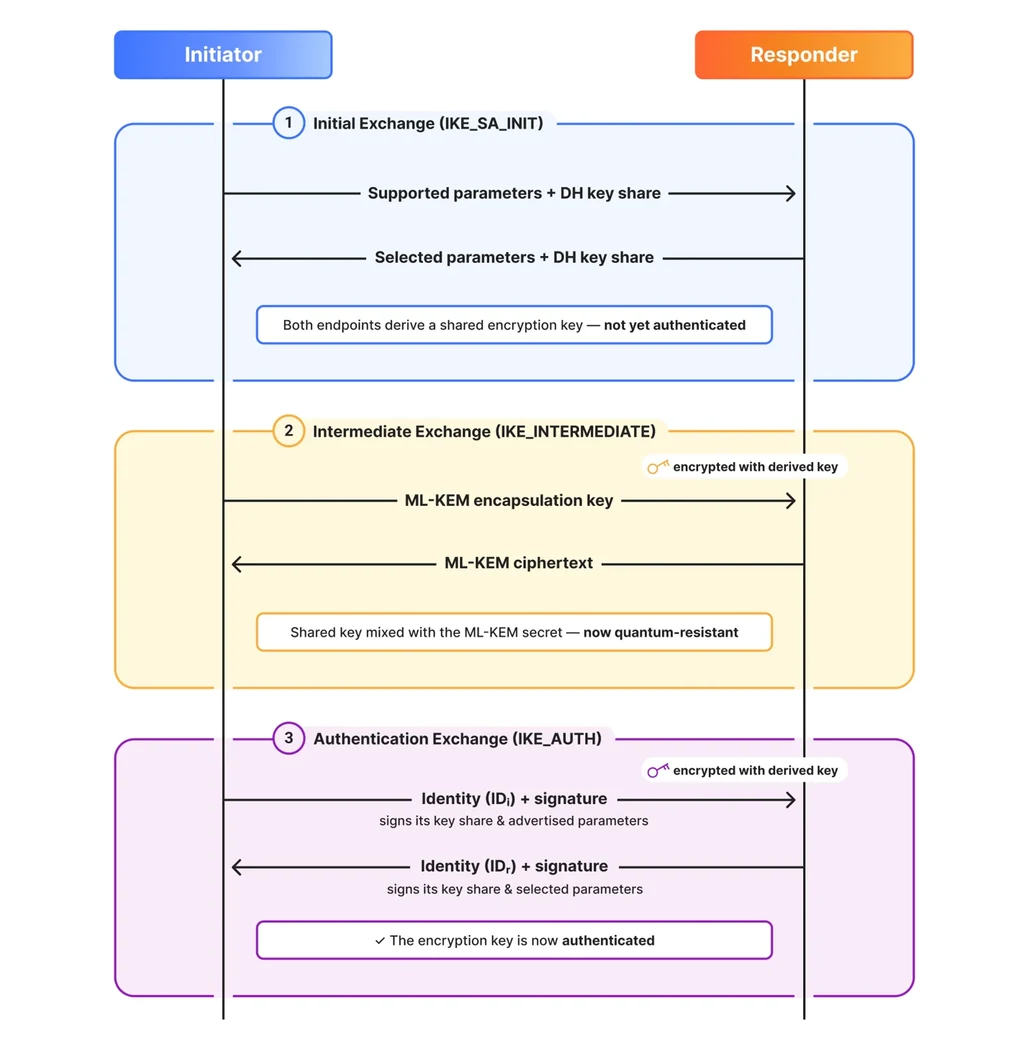
The mechanism responsible for encrypting IP packets relies on an authenticated key agreement performed via the Internet Key Exchange protocol version 2, commonly known as IKEv2. This process typically unfolds across separate initial and authentication exchanges. During the initial exchange, the initiator and responder advertise supported parameters and exchange initial key shares before deriving a temporary encryption key. Subsequently, the authentication exchange validates the identities of both communicating parties and verifies signatures tied to the negotiated parameters.
To fully neutralize downgrade threats against these cryptographic handshakes, both communication endpoints must adopt the newly developed transcript authentication extension. Cloudflare has already rolled out beta support across Cloudflare WAN and Magic Transit. Clients can activate this safeguard by instructing account managers to toggle the specific downgrade protection flag, paving the way for broader ecosystem adoption.
Sources
- Cloudflare BlogPreventing quantum downgrade attacks against IPsec