
Cloudflare Updates Kitesurf Browser With WebMCP And Terminal Rendering
Cloudflare has introduced a major update to Kitesurf, its Workers-based browser built specifically for AI agents, bringing new web standards support and optimizations.
 Radwan AbdulhadiEditor and technology writer

Introduction to Kitesurf Updates
Cloudflare has rolled out a significant update to Kitesurf, its browser designed for the agentic age that operates entirely on Cloudflare Workers. Initially unveiled a few months prior in an announcement detailing how the system was built, Kitesurf was engineered around the specific functional requirements of AI agents rather than the traditional feature bloat associated with human-facing web browsers. Since the launch, customer feedback and realistic task testing have driven improvements in capability and efficiency.
The latest updates expand the browser's capabilities to handle more sophisticated web pages, improve speed, and provide developers with better programmatic integration through the Cloudflare ecosystem.
WebMCP Support for AI Agents
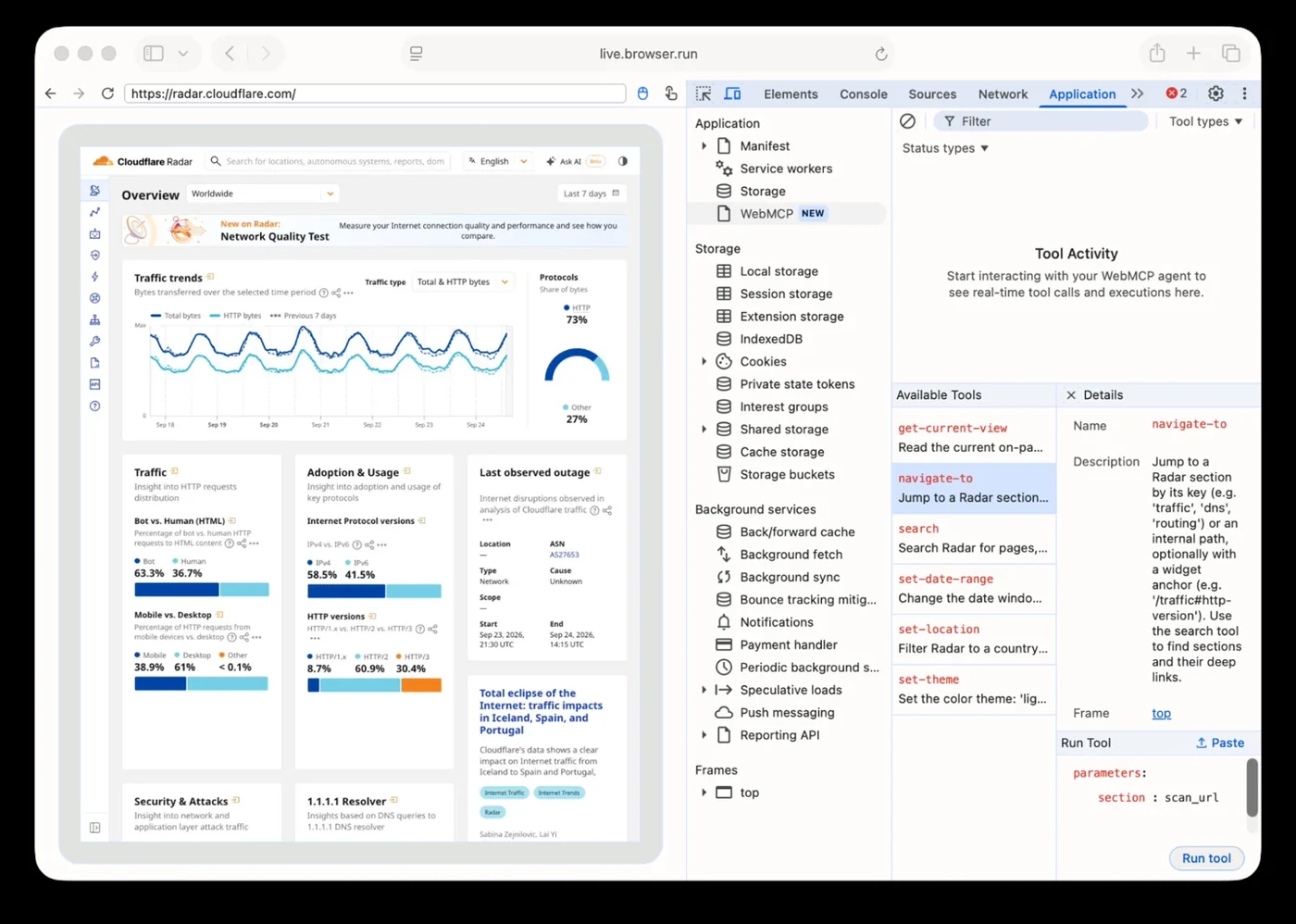
Traditional websites are structured for humans, requiring pixel-clicking that can be slow and fragile for automated programs. WebMCP addresses this limitation by allowing developers to expose site functionality directly to artificial intelligence agents. Instead of simulating clicks, agents can invoke direct functions such as searchFlights(). Cloudflare has incorporated WebMCP support into Kitesurf, enabling AI models to interact with exposed tools more reliably.
Site owners can utilize a simple toggle to enable WebMCP without changing underlying site code. Users can test this functionality in the public Kitesurf playground by opening Cloudflare Radar and navigating to the WebMCP option in the DevTools Application tab.
Standards Compliance and DOM Performance
To support more complex pages, Kitesurf has expanded its list of supported application programming interfaces and standards. The browser now handles URL-based module resolution, JSON modules, and import map handling, alongside JavaScript imports from URLs via the Cloudflare Workers module registry. Iframe behaviors have also been improved for better isolation and language encoding support.
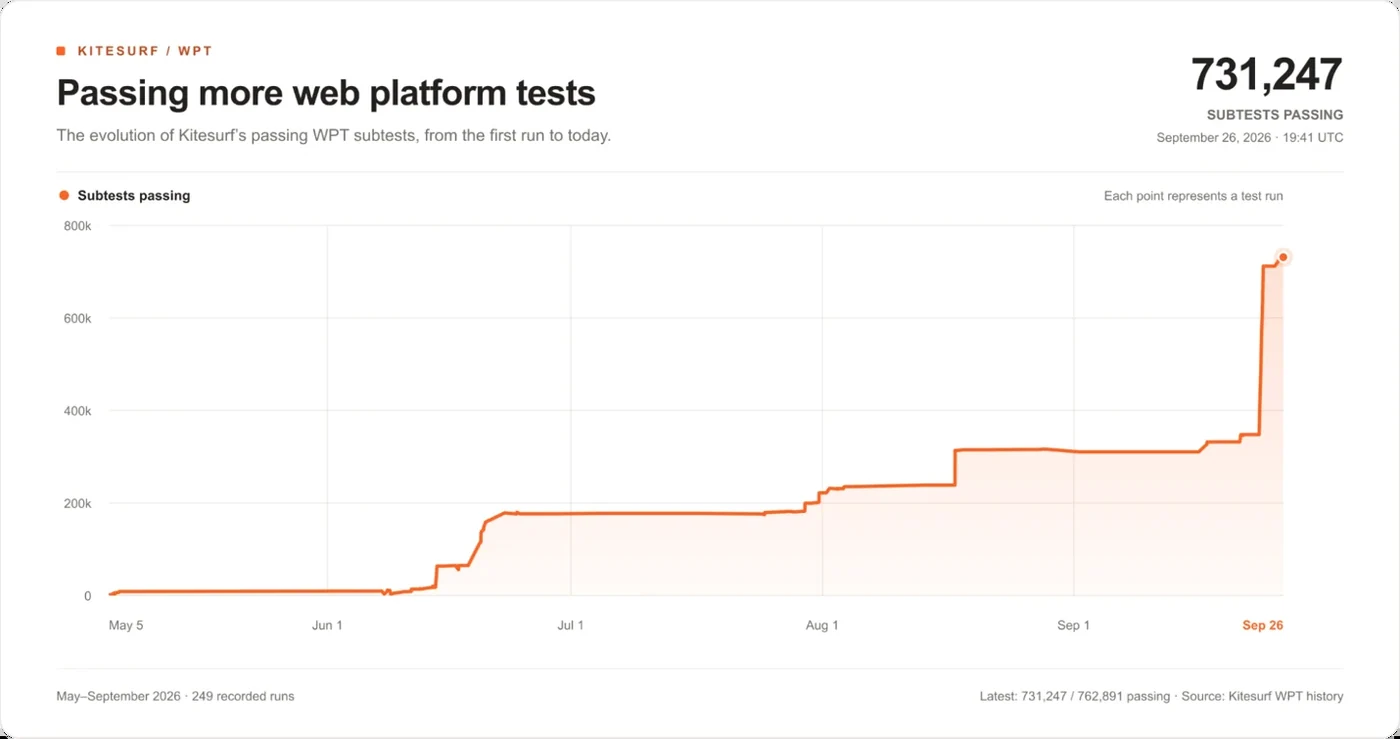
Quality and code consistency are verified through Web Platform Tests, a shared open-source test suite. Kitesurf now passes more than 730,000 Web Platform Tests subtests, reflecting an increase of 500,000 subtests since the platform's initial launch.
Optimizing the Agentic Loop
For AI agents, performance relies heavily on minimizing the latency of the agentic loop rather than simply loading pages quickly. Cloudflare optimized the browser engine internals to make DOM traversals, timers, and font fetches as lightweight as possible. JavaScript execution has been refined to reduce boundary crossings between the Boa engine and the DOM.
Common read operations like getAttribute, id, and parentNode can now be executed directly inside the Wasm DOM. Additional memory management updates ensure that busy pages run more efficiently without increasing overall resource consumption.
Browser Run API Integration and Terminal Rendering
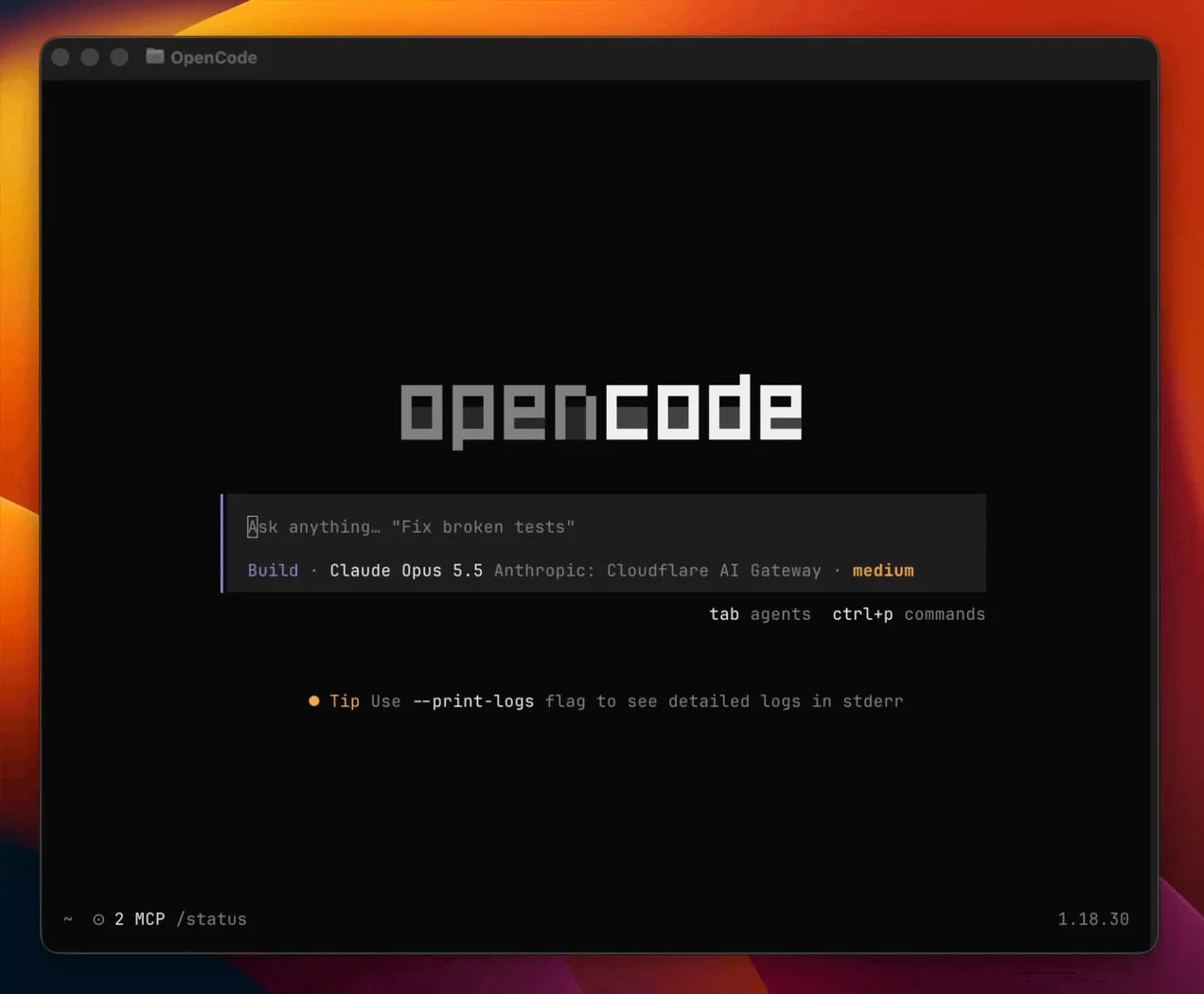
Kitesurf now features full Browser Run API coverage, allowing developers to use the browser with CDP, Playwright, Puppeteer, or Model Context Protocol. Quick Actions are also available directly from Worker scripts using the env.BROWSER.quickAction() binding for tasks such as capturing screenshots or extracting HTML content.
Furthermore, Kitesurf separates page session execution from pixel generation via its PageRenderer component. By moving the PageRenderer to a playground Worker and utilizing the Kitty terminal graphics protocol or a pure ANSI text mode, users can render web pages directly inside modern terminal applications.
Sources
- Cloudflare BlogThe road to the agentic browser: A Kitesurf update