CD Player Drive Shortage Threatens Long-Term Repairability
Even as physical media and new CD players experience a resurgence on the market, an ongoing shortage of optical drive components is threatening the long-term repairability of modern audio hardware.
 Radwan AbdulhadiEditor and technology writer
The Resurgence of Physical Media Meets a Component Crunch
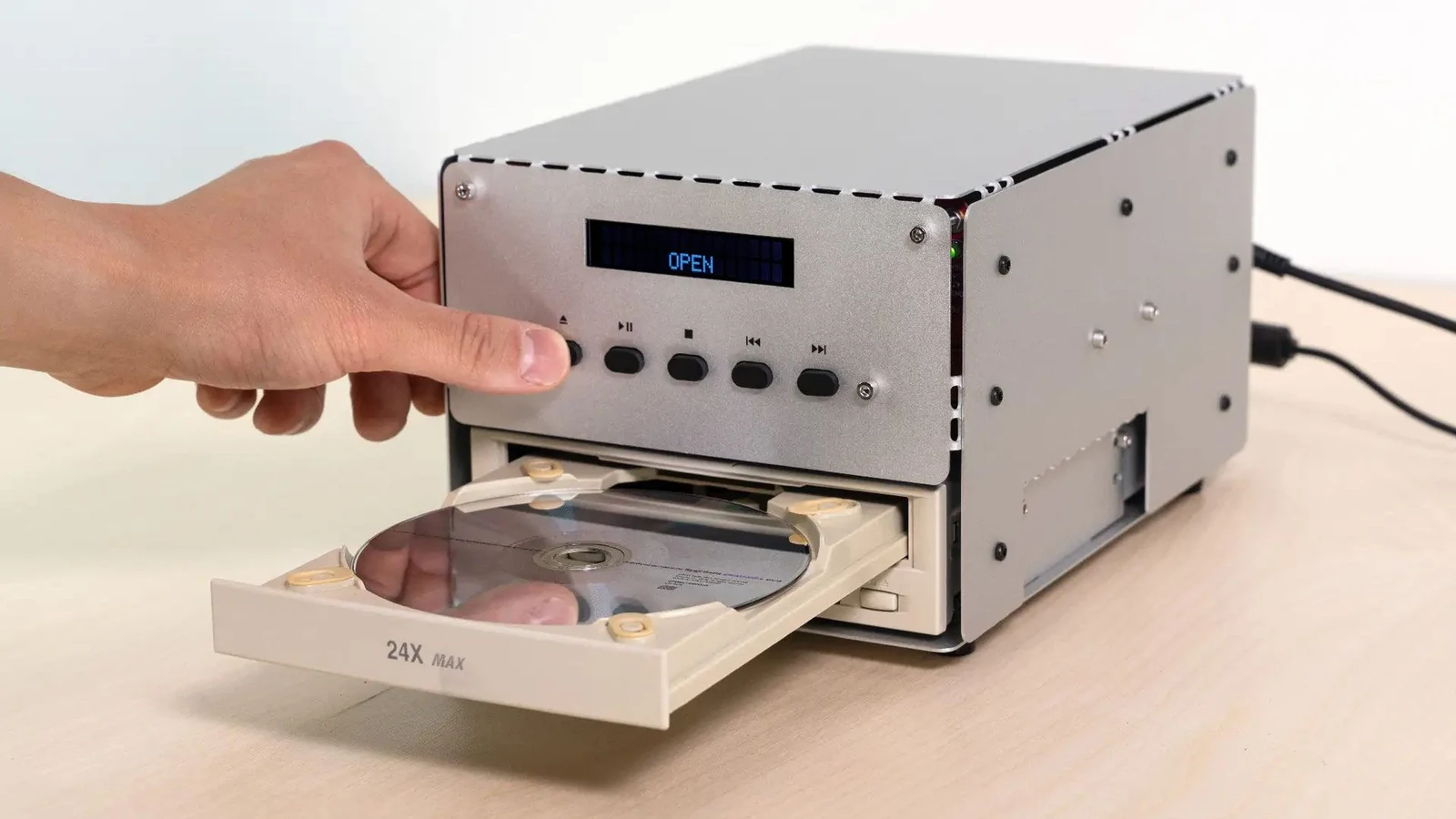
The consumer audio landscape has recently witnessed renewed interest in retro formats, as optical media sees a resurgence with growing sales of physical music. However, this hardware revival is colliding with a severe manufacturing bottleneck. While new audio devices continue to be introduced, a shrinking base of optical drive and component suppliers has ended production for several critical parts. This decline threatens to leave newly manufactured hardware unfixable over time, raising serious concerns regarding the maintenance and longevity of contemporary audio gear.
Recent industry tracking highlights the scope of current device rollouts. According to data from Headphonesty cited by Tom's Hardware, out of eight recently evaluated models, four originate from Musical Fidelity, two from Marantz, and one each from Arcam and NAD. Despite these active market launches, the underlying supply chain supporting them is rapidly eroding, creating vulnerabilities for both manufacturers and consumers who invest in high-end audio playback equipment.
Sourcing Strategies and Manufacturer Dependencies
Different audio brands rely on varied supply strategies to secure the necessary hardware for their players. Musical Fidelity reportedly sources its key parts from SUOS-HiFi, utilizing SUOS disc mechanisms for three of its new models, while its fourth model employs a SUOS-sourced servo alongside a tray-loading mechanism from an unnamed third-party manufacturer. Meanwhile, Marantz reportedly develops its drives in-house, though uncertainty remains regarding whether actual production is outsourced to an external partner.
The remaining manufacturers have largely kept their specific optical drive supply chains confidential, declining to reveal publicly who manufactures their components. This secrecy underscores how tightly guarded component sourcing has become as the pool of qualified builders contracts across the global market.
High-Profile Production Halts and Inventory Shortages
The fragility of these supply chains has already forced major industry players to scale back or terminate production entirely. PS Audio was compelled to end production of its PMG Super Audio CD Transport after D&M, the parent company of Marantz, ceased external orders for optical drives. Although PS Audio purchased D&M's entire remaining stock of drives, the reserve proved insufficient to sustain long-term manufacturing operations.
A similar fate befell Naim and its Uniti Star player. Although Naim did not publicly name its original optical drive supplier, the company had to seek alternative manufacturing partners when its original supplier stopped production. Unfortunately, Naim was actively evaluating a replacement manufacturer when that second company also ceased production of the required components. While both PS Audio and Naim managed to retain small inventories of optical drives, these remaining units are strictly reserved for repairs and warranty replacements rather than new builds.
The Challenge of Long-Term Hardware Servicing
These disruptions underscore the inherent risks of depending on isolated external manufacturers for mission-critical hardware components. Even when audio brands actively seek alternative sources, the highly specialized nature of optical drives means that very few companies retain the engineering capability to produce them, despite recent growth in consumer demand.
Industry observers note that long-term sourcing stability remains the core problem for hardware maintainability. A manufacturer can easily purchase a tray loader today, only to find itself entirely stranded in five years when that exact model is discontinued by its maker. While consumables such as drive belts and mechanical gears present routine maintenance challenges, a complete absence of replacement laser lenses or specialized pickup assemblies renders a player unfixable over time.
In-House Design as a Potential Safeguard
The most viable long-term solution for audio equipment makers involves designing proprietary parts in-house, mirroring the approach taken by Marantz. By retaining control over internal design specifications, a company can theoretically transition production to a new manufacturing partner if an existing supplier goes out of business, or even construct the components internally.
However, executing an in-house design strategy presents significant financial and technical barriers. As PS Audio CEO Paul McGowan noted, developing a proprietary optical disc reader falls entirely beyond the engineering and operational capabilities of many boutique audio companies, leaving them vulnerable to ongoing market shifts and component shortages.
Sources
- Tom's HardwareNew CD players keep launching, but a drive shortage could make them unfixable
Continue chronologically

Related stories
Optical Drive Shortage Halts High-End CD Player Production by PS Audio and Naim
Supply chain collapse for optical drives forces PS Audio and Naim to stop production of premium CD players, doubling component costs amid rising physical media demand.
Tom's Hardware Details Vera CPUs and Agentic AI Benchmarks
Explore the latest Tom's Hardware coverage including Nvidia Vera CPUs on Oracle clusters, agentic AI benchmarks, and LLM primers.
Deepseek Unveils V4.1 Flash 1017 AI Model
Deepseek has upgraded its V4.1 Flash open-weight AI model, delivering lower running costs and high efficiency alongside notable hallucination challenges.

Chip Fab Engineering Game Goes Viral in Taiwan
A new 3D web-based simulation game depicting life as a semiconductor wafer factory worker has gone viral in Taiwan, drawing mixed reviews for its stress.