
Microsoft outlines five principles for AI in education
Microsoft says AI can expand access to instruction and reduce administrative work, but argues that education requires safeguards, human oversight and tools designed to support learning rather than replace it.
 Radwan AbdulhadiEditor and technology writer
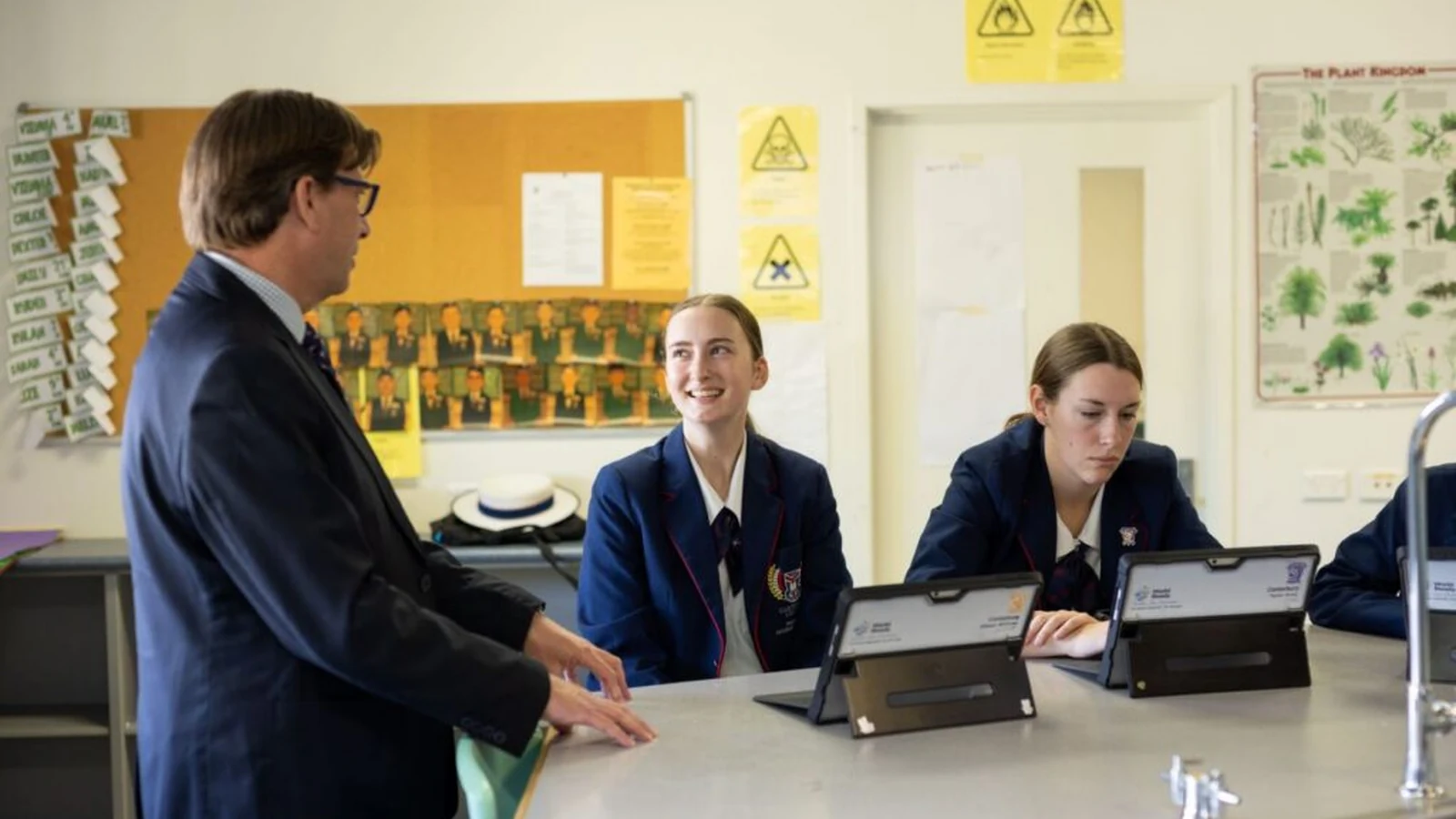
A five-part approach to AI in education
Microsoft has published a five-principle framework for artificial intelligence in education, saying the technology must be introduced with greater care because its long-term effect on learning remains uncertain. The company says AI can personalize learning, reduce administrative workloads, accelerate research and broaden access to high-quality instruction, while also creating significant risks.
The framework calls for safety, privacy, security and transparency by design; continued control and leadership by educators; AI that supports learning without replacing student thinking; stronger education systems from learning through discovery; and preparation for an AI-powered future. Microsoft presented the principles as a holistic approach shaped by its five decades of work with educators, students, families and education leaders.
Privacy and safety as a foundation
Microsoft says education AI systems should include safeguards that protect student privacy, improve safety, reduce risks such as bias and provide meaningful transparency to students, educators and parents. The company argues that schools should not have to choose between technological innovation and trust.
As part of that approach, Microsoft says it recently signed an agreement with the American Federation of Teachers and introduced a Privacy & Safety Standard for Schools covering Microsoft Education products. According to the company, the agreement is the first time a major technology company and one of the largest teachers’ unions in the United States have jointly defined expectations for trusted AI in those products.
Microsoft says the standard limits how its education products can use student and educator data, requires human oversight for consequential decisions, provides transparency for families and holds the company accountable when it falls short. It also states that schools retain ownership of the knowledge and ideas they create. Microsoft is inviting other technology companies to adopt similar protections.
Keeping educators at the center
The company says AI should augment educators’ expertise rather than replace professional judgment. In its view, teachers and school leaders should help shape AI systems and receive the training and support required to use them responsibly and effectively.
Microsoft points to Ashley Hernandez, a special education teacher at a school in the Bronx, as an example. The company says Hernandez uses Copilot to develop differentiated, sensory-aware materials for students with complex communication and medical needs. Microsoft says the technology helps her adapt learning experiences more efficiently, leaving more time for direct work with students, while her experience also contributes feedback to the development of the tools.
Microsoft’s Education Insiders Program gives educators and school leaders access to private product previews and feedback sessions. The company says this input helps improve products before release. Its Teach in Microsoft 365 Copilot experience is designed around instructional workflows, including adapting materials for different learners, building lessons aligned with standards and reducing planning time. Microsoft says the aim is to reduce administrative work rather than automate teaching.
AI should support thinking, not replace it
Microsoft says education AI should be grounded in learning science and designed to encourage healthy engagement, critical thinking, student well-being and stronger learning outcomes. The company’s recent research, it says, identifies cognitive offloading as a major risk: students may appear to learn while avoiding the mental work needed to retain knowledge.
Microsoft argues that many widely used AI tools were built to prioritize speed rather than understanding. In response, some institutions have blocked or restricted access, even as students continue using AI independently. The company says purpose-built learning experiences are needed if schools are to use AI while maintaining trust.
The company also emphasizes the educational value of struggle. It says difficulty can build durable understanding, and that AI which removes too much of that difficulty may shift the thinking process from the learner to the machine. Microsoft says its education AI experiences are designed to be age-appropriate, including Copilot Chat access that is off by default for K-12 students, with administrator controls for age-based enablement.
Training educators and measuring results
Microsoft says educators need practical training, communities of practice and credentials to teach AI effectively and responsibly. Through Microsoft Elevate for Educators, the company is connecting educators with training resources and learning pathways. Microsoft says more than 17 million people completed an in-demand AI skills credential over the last year, while the program also provides materials for introducing generative AI to students safely.
The company cites customer-reported outcomes to support its education strategy. Microsoft says Brisbane Catholic Education achieved a 275% increase in learner agency among at-risk cohorts. It also says Miami Dade College recorded a 15% increase in student pass rates and a 12% reduction in course dropout rates after deploying Microsoft 365 Copilot.
Microsoft says these examples support its broader position that technology can strengthen education when it is developed with educators, governed transparently and focused on human learning. The company’s final principle is that every student should be prepared for an AI-powered future, while the broader framework acknowledges that education remains a human partnership among educators, students and families.
Sources
- Microsoft BlogMicrosoft’s commitment for AI in education