Automating Cross-Account Amazon Quick Promotion
A new automated approach addresses the manual challenges of promoting Amazon Quick resources between development and production AWS accounts.
 Radwan AbdulhadiEditor and technology writer
The Challenge of Cross-Account Promotion
Amazon Quick functions as Amazon’s agentic AI companion built for work, allowing teams to build agents that reason over data, call action connectors, and execute multi-step tasks. However, moving these resources—including chat agents, action connectors, knowledge bases, flows, and spaces—from a development AWS account to a production account has historically been a manual and error-prone chore.
Enterprise environments typically segregate development, quality assurance, and production into separate AWS accounts. Previously, when teams validated resources in a development account, no native one-click promotion method existed, forcing engineers to manually recreate agents, re-attach action connectors, re-grant permissions, and reprovision underlying storage buckets.
Programmable Resource Architecture
Fortunately, Amazon Quick resources are fully programmable. Managed through the Amazon Quick API, which is part of the Amazon Quick Sight API surface, these components support full lifecycle management including create, read, update, delete, and list operations.
This programmable surface enables governed promotion. By reading resource configurations and permissions via the API, administrators can reapply them in target accounts with exact fidelity, executing repeatable workflows that only add or update resources without issuing destructive delete operations.
Quick Resource Migrator Overview
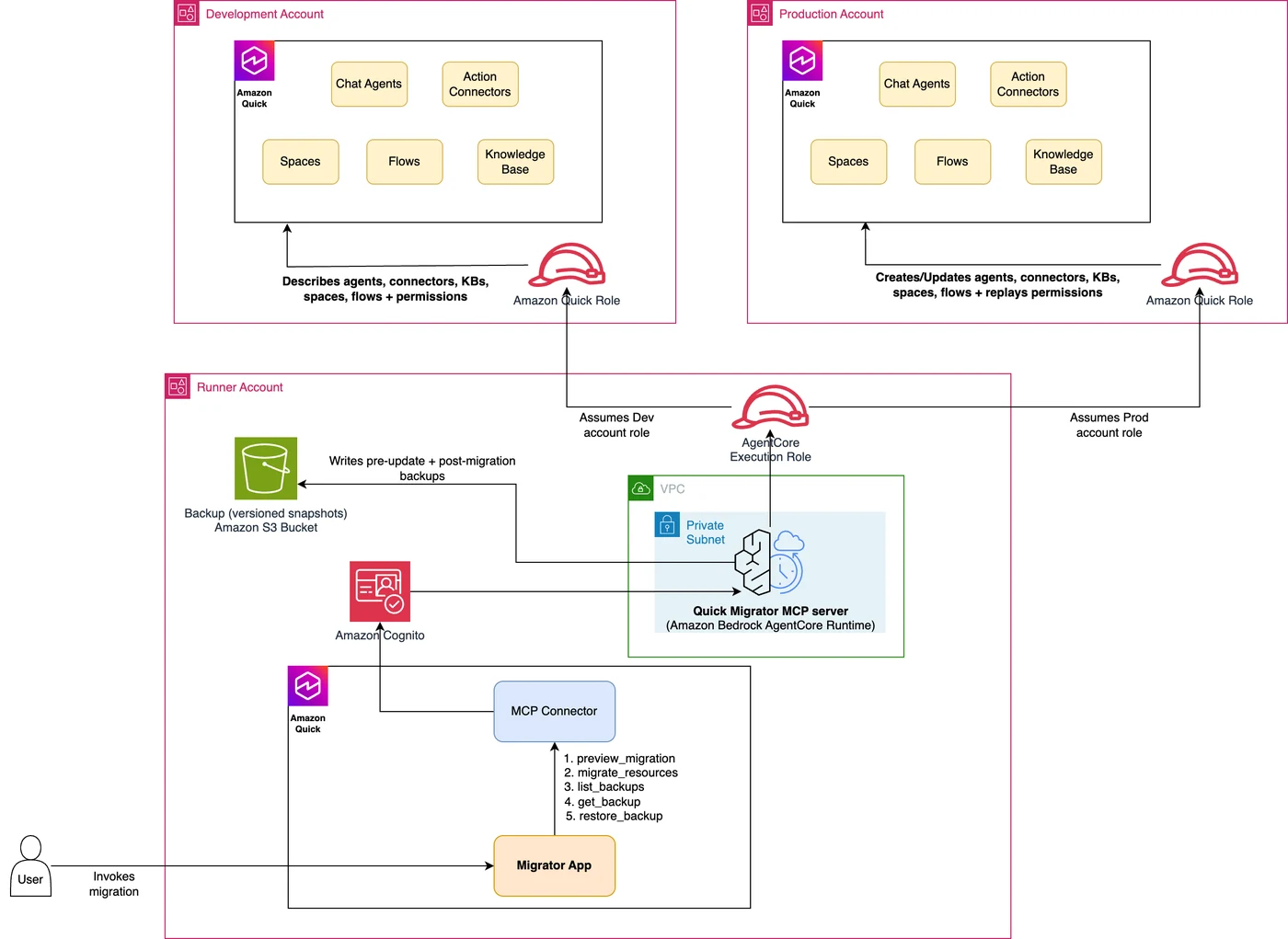
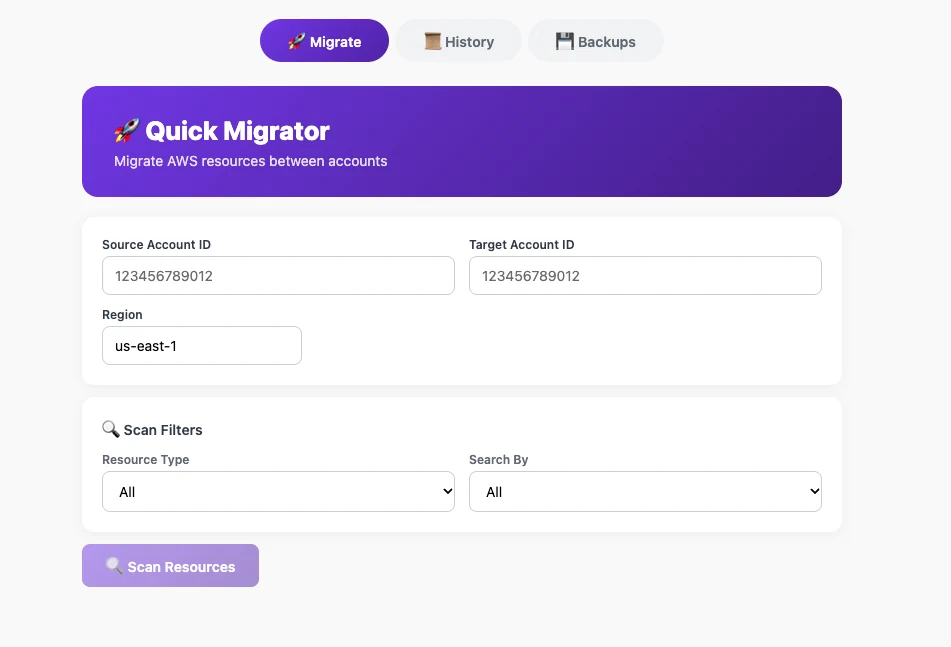
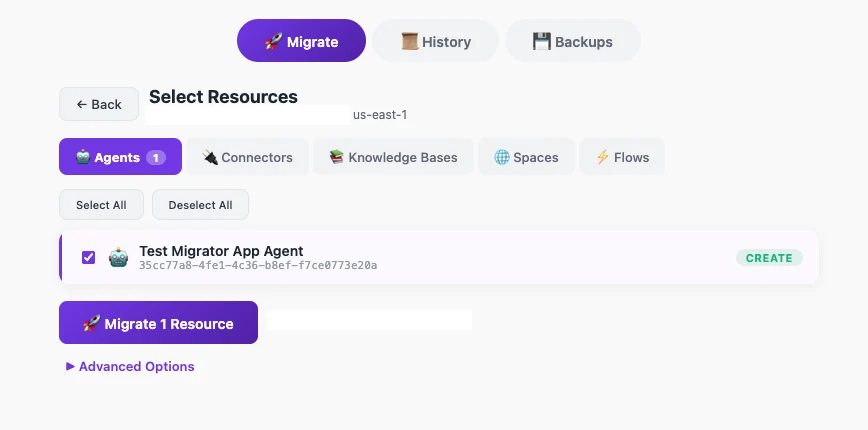
The Quick Resource Migrator is a sample Model Context Protocol (MCP) server hosted on the Amazon Bedrock AgentCore runtime. It automates cross-account promotion in a single tool call, operating in a resource-driven manner where users can select specific resource types by ID, name, or choose all available items.
Developers seeking to implement this solution can examine the implementation details and full source code provided within the official aws-samples repository.
Resource Types and Selection Models
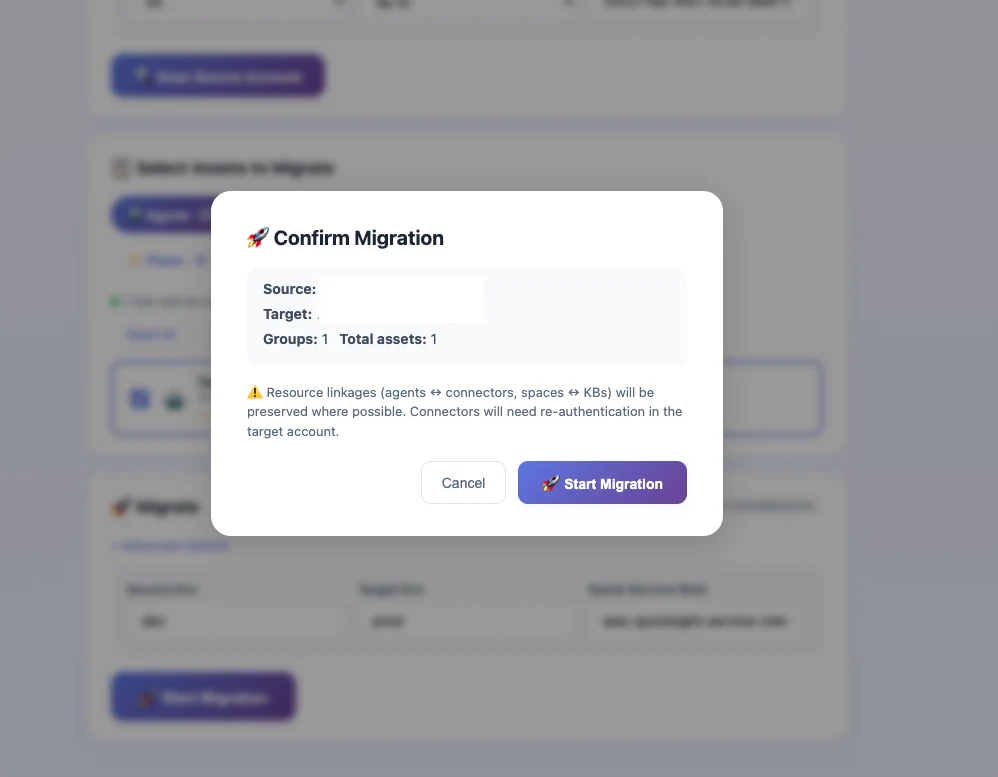
The migrator handles various resource categories uniquely. Chat agents are recreated with their custom instructions, tone, starter prompts, and welcome messages, with action connectors remapped to the target account. Action connectors are built using placeholder credentials due to security protocols, requiring re-authentication in the target environment.
Knowledge bases involve registering the resource in the target account, recreating data sources, and copying permissions. For Amazon S3-backed knowledge bases, the migrator provisions the target bucket and associated bucket policy while leaving the underlying S3 objects in place. Additionally, spaces bring their linked resources across seamlessly when migrated.
Security, Idempotency, and Backups
To ensure enterprise-grade security and governance, the server operates on a three-account model. A central runner account hosts the MCP server on Amazon Bedrock AgentCore runtime, utilizing AWS Security Token Service (AWS STS) to assume a read-only role in the source account and a read-write role in the target account.
Furthermore, every update is protected by a versioned snapshot written to Amazon S3 before changes occur, ensuring that updates are fully auditable and capable of being rolled back using dedicated recovery tools if necessary.
Sources
- AWS Machine Learning BlogMaking Amazon Quick enterprise-ready: Automated, auditable cross-account resource promotion
Continue chronologically
Related entity coverage
Related stories
Sweep Thousands of Leases Using Amazon Quick and Adjudicated Query
Learn how the Adjudicated Query pattern pairs Amazon Quick with a deterministic rules engine to sweep thousands of leases for compliance.
AWS details prompt engineering basics for Amazon Quick
AWS outlines foundational prompt engineering principles and frameworks like CRISPE to optimize AI responses in Amazon Quick for enterprise users.
AWS Details Component Patterns for Amazon Quick Prompting
Discover component-specific prompt engineering patterns and pitfalls for Amazon Quick Research, Quick Flows, Quick Sight, and chat agents.
Migrating Multi-Model AI Agents to Amazon Bedrock AgentCore
AWS introduces a streamlined path to migrate multi-model AI agents from self-managed ECS to Amazon Bedrock AgentCore, reducing operational complexity.