
AWS Launches Amazon SageMaker HyperPod Inference Gateway
The new Kubernetes-native add-on leverages real-time GPU signals to optimize request routing, aiming to eliminate inefficiencies in large language model serving.
 Radwan AbdulhadiEditor and technology writer
Optimizing Large Language Model Infrastructure
AWS has officially unveiled the Amazon SageMaker HyperPod Inference Gateway, a new tool designed to address the inefficiencies inherent in running large language models (LLMs) on GPU clusters. As detailed in the official [AWS Machine Learning Blog](https://aws.amazon.com/blogs/machine-learning/introducing-amazon-sagemaker-hyperpod-inference-gateway/), traditional Kubernetes load balancers often struggle with LLM workloads because they lack visibility into the internal state of the GPUs processing the requests.
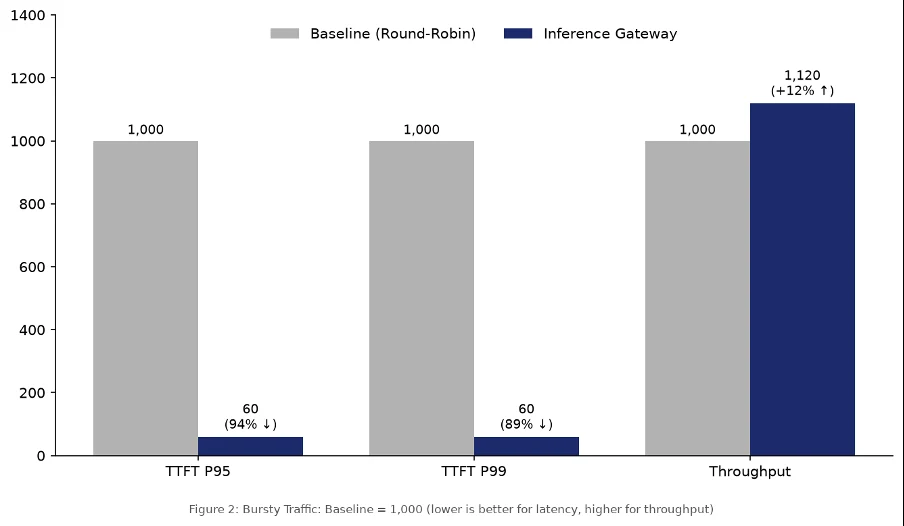
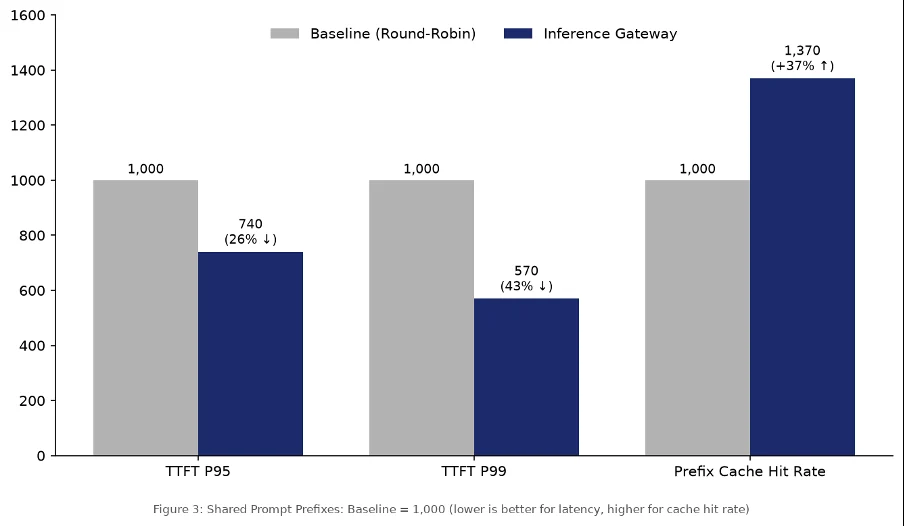
Standard routing algorithms, such as round-robin or least-connections, do not account for critical factors like saturated key-value (KV) caches or the presence of specific LoRA adapters in memory. This lack of awareness can lead to performance bottlenecks where requests are sent to busy pods while other resources remain underutilized, causing first-token latency to spike during periods of high traffic.
GPU-Aware Routing Architecture
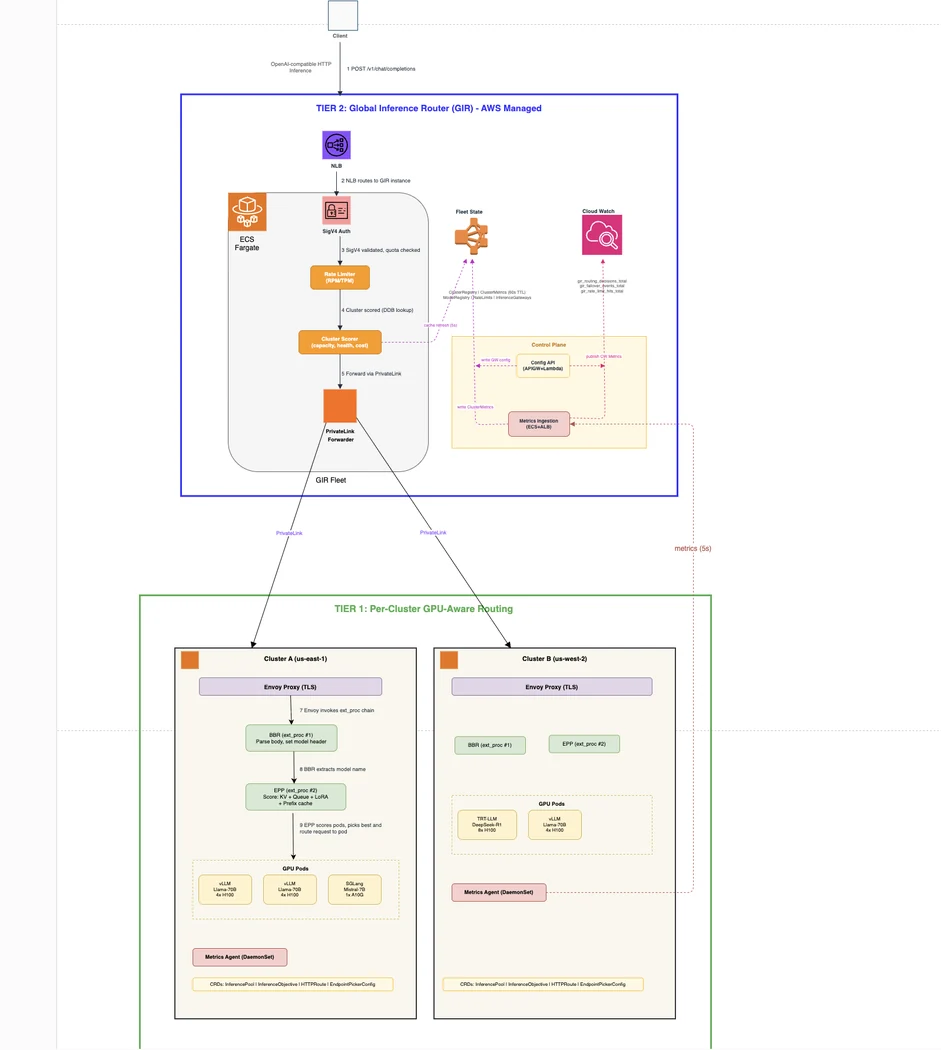
The Inference Gateway operates as a Kubernetes-native, GPU-aware routing system that deploys as a managed add-on for Amazon EKS. According to the team behind the product, it functions as an intelligence layer that observes the real-time status of the underlying hardware to make informed routing decisions. This technology is a significant advancement in [Artificial Intelligence](https://aws.amazon.com/blogs/machine-learning/) infrastructure, enabling more predictable performance for generative AI applications.
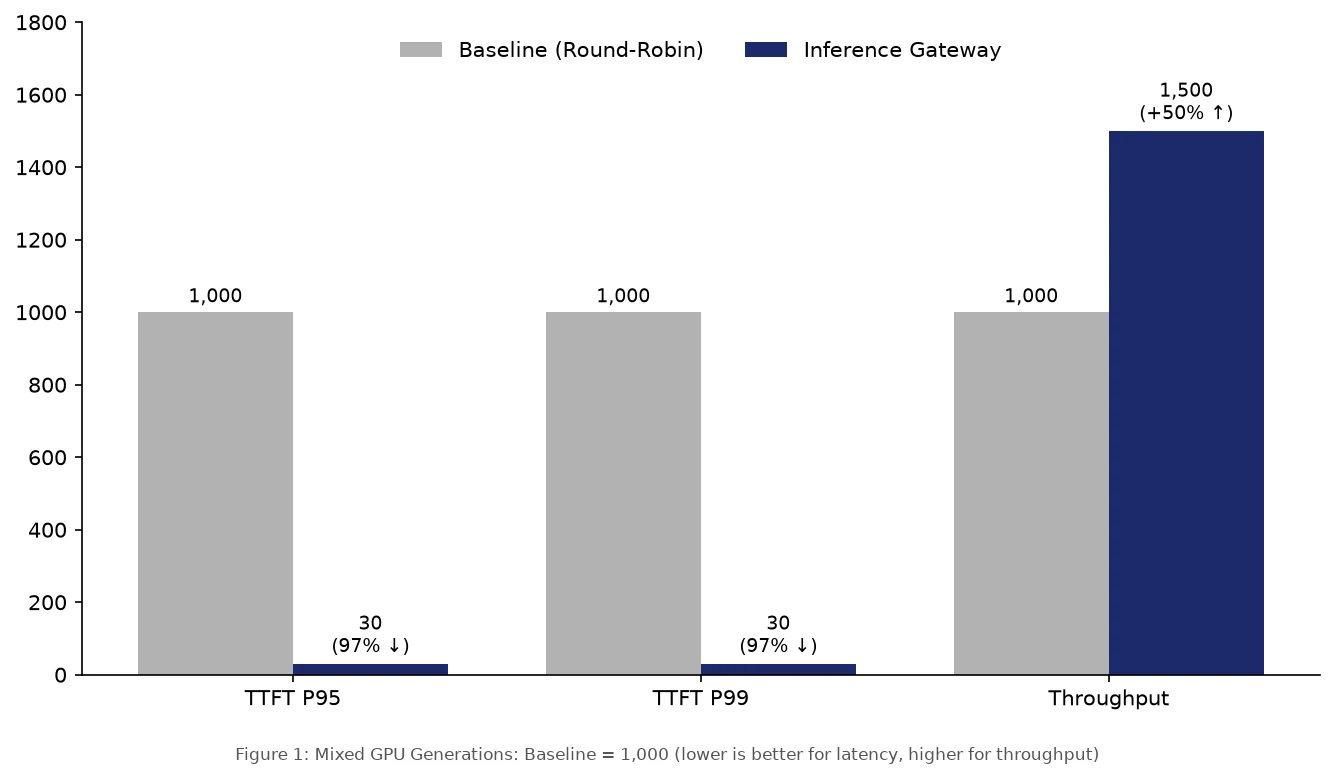
By utilizing real-time metrics—including KV cache utilization, queue depth, LoRA adapter residency, and prefix cache hit rates—the gateway ensures that each incoming request is directed to the pod best suited to handle it. This capability allows for dramatic performance gains, with AWS reporting that first-token latency can be reduced by up to 82%. A notable example provided indicates that a user waiting 4.4 seconds for a response could see that time reduced to under 800 milliseconds.
Ease of Implementation
One of the primary benefits highlighted for the new gateway is its ease of integration. Developers do not need to modify their model servers or client applications to benefit from the improved routing. The gateway exposes a standard OpenAI-compatible endpoint, allowing existing client code to function without changes. Furthermore, the system eliminates the need for complex service meshes or sidecar configurations, as it manages routing logic entirely through Kubernetes-native primitives.
Configuration is handled via a declarative InferenceGatewayConfig resource. This allows users to define models and set routing weights based on their specific priorities, such as whether a workload requires throughput-optimized batch processing or low-latency conversational responses. Because it is a single add-on installation, teams can improve their infrastructure efficiency with minimal operational overhead.
Managing Multi-Model and Adapter-Heavy Workloads
The Inference Gateway is designed to be highly flexible, particularly for environments that host multiple models on a single cluster. Through its body-based routing feature, the gateway inspects the incoming request to identify the intended model and directs it to the appropriate model pool. This removes the necessity for manual routing logic within the application layer, simplifying the overall architecture for teams scaling diverse LLM portfolios.
For organizations using fine-tuned LoRA adapters, the gateway offers specific efficiency gains by routing requests to pods that have the required adapter already loaded into GPU memory. This approach effectively eliminates the latency associated with swapping adapters in and out of GPU memory, ensuring that resources are focused on active computation rather than management overhead. If an adapter is not present, the system intelligently selects the pod with the most capacity to perform the load quickly.
Future-Proofing with Global Inference Routing
While the current iteration of the Inference Gateway focuses on per-cluster performance, AWS has announced that a second tier—the Global Inference Router (GIR)—is currently in development. This forthcoming feature aims to coordinate traffic across multiple clusters and geographical regions. It will include support for cross-cluster failover, global rate limiting, and cost-aware traffic shaping, extending the intelligence of the gateway to a fleet-wide scale.
This tiered design ensures that as an organization scales its AI infrastructure, the routing system remains consistent and manageable. By building on Kubernetes-native standards and ensuring seamless integration with existing monitoring tools like Prometheus, CloudWatch, and Grafana, AWS is positioning the SageMaker HyperPod Inference Gateway as a foundational tool for enterprise-grade generative AI deployments.
Sources
- AWS Machine Learning BlogIntroducing Amazon SageMaker HyperPod Inference Gateway