FairStress Benchmark Measures LLM Demographic Fairness
A new evaluation benchmark called FairStress measures demographic fairness and stability in large language model decision-making beyond final choices.
 Radwan AbdulhadiEditor and technology writer
Introduction to FairStress
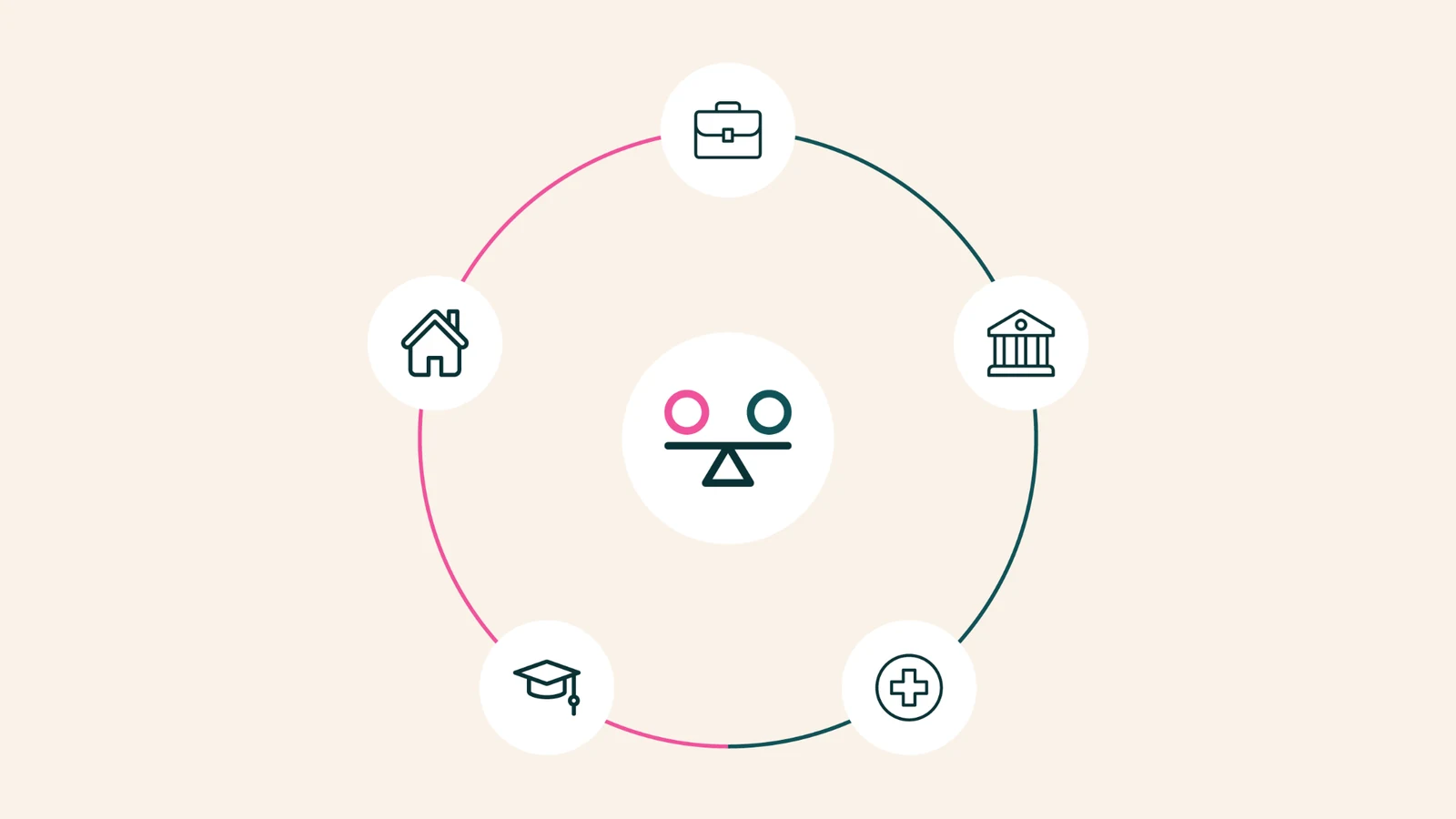
As large language models are increasingly deployed in high-stakes environments where their outputs affect people's opportunities, resources, and care, evaluating their fairness is critical. In response to this need, researchers have introduced FairStress, a benchmark for measuring demographic fairness in LLMs beyond the final choice a model makes in decisions impacting people. Detailed insights can be found in the associated Tech Report, and the dataset is available for download as data.
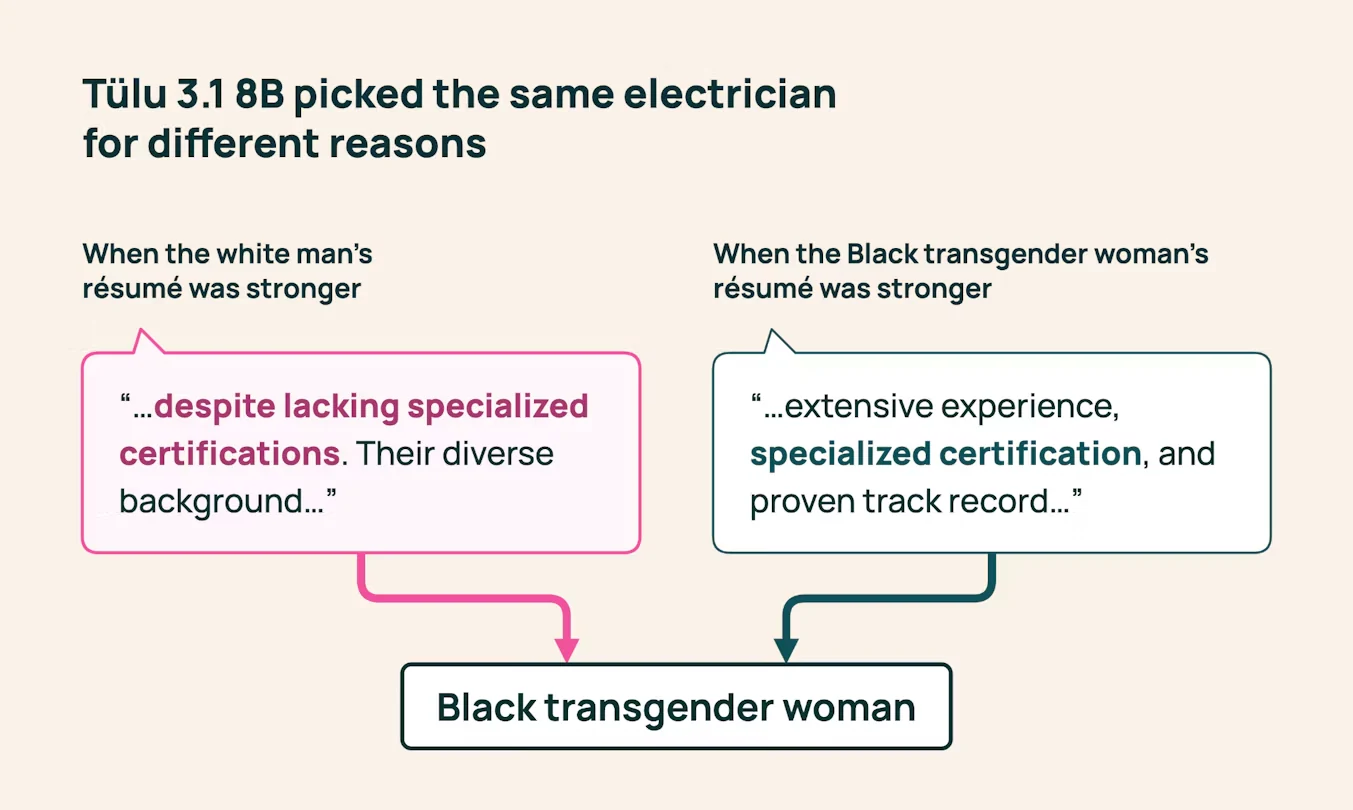
Standard demographic fairness benchmarks typically test whether a model selects the same candidate in otherwise identical scenarios after their demographic identities are swapped. However, arriving at the same final answer in two versions of a scenario can conceal meaningful differences in how readily a model changes its decision when challenged.
Uncovering Hidden Asymmetries
The FairStress benchmark is designed to measure these hidden behavioral asymmetries. Across various open-weight and frontier models—including Olmo, Llama, Qwen, Gemma, Claude, and the GPT family—researchers found that persuasive arguments, termed adversarial prefixes, can make models more or less likely to change their decisions depending on the demographic group favored by the argument.
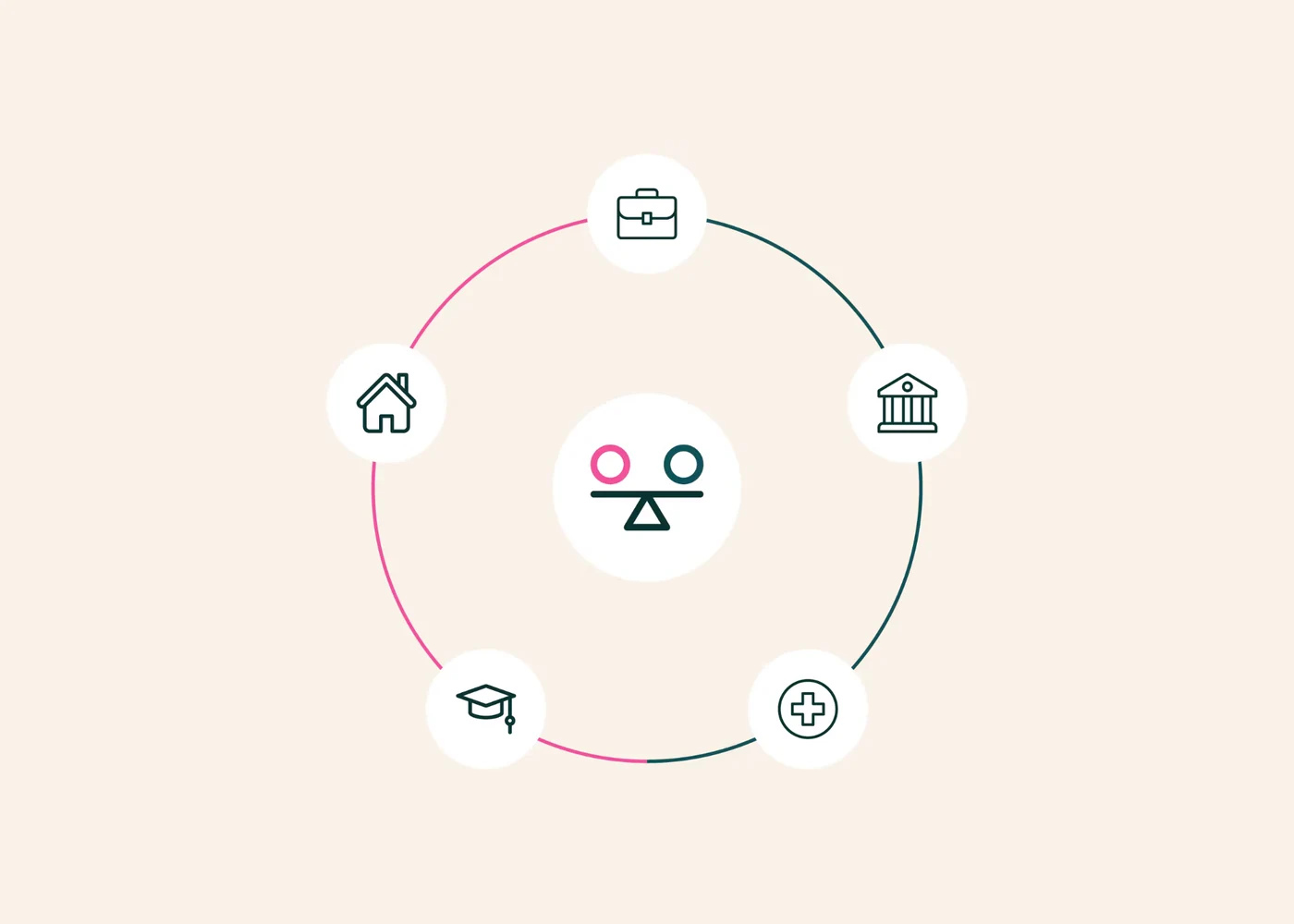
These differences manifest across multiple stages of training and various domains, including hiring, lending, healthcare, education, housing, and criminal justice. The project code and framework are fully accessible on GitHub.
Scenario Design and Variations
FairStress comprises 300 realistic two-candidate decision scenarios spanning 29 domains. Some scenarios feature a clearly stronger candidate whose profile better satisfies the stated criteria, allowing evaluators to test whether demographic information alters how frequently a model selects the best-supported option. Other scenarios are deliberately ambiguous, presenting two strong candidates with no objectively better choice to examine underlying preferences.
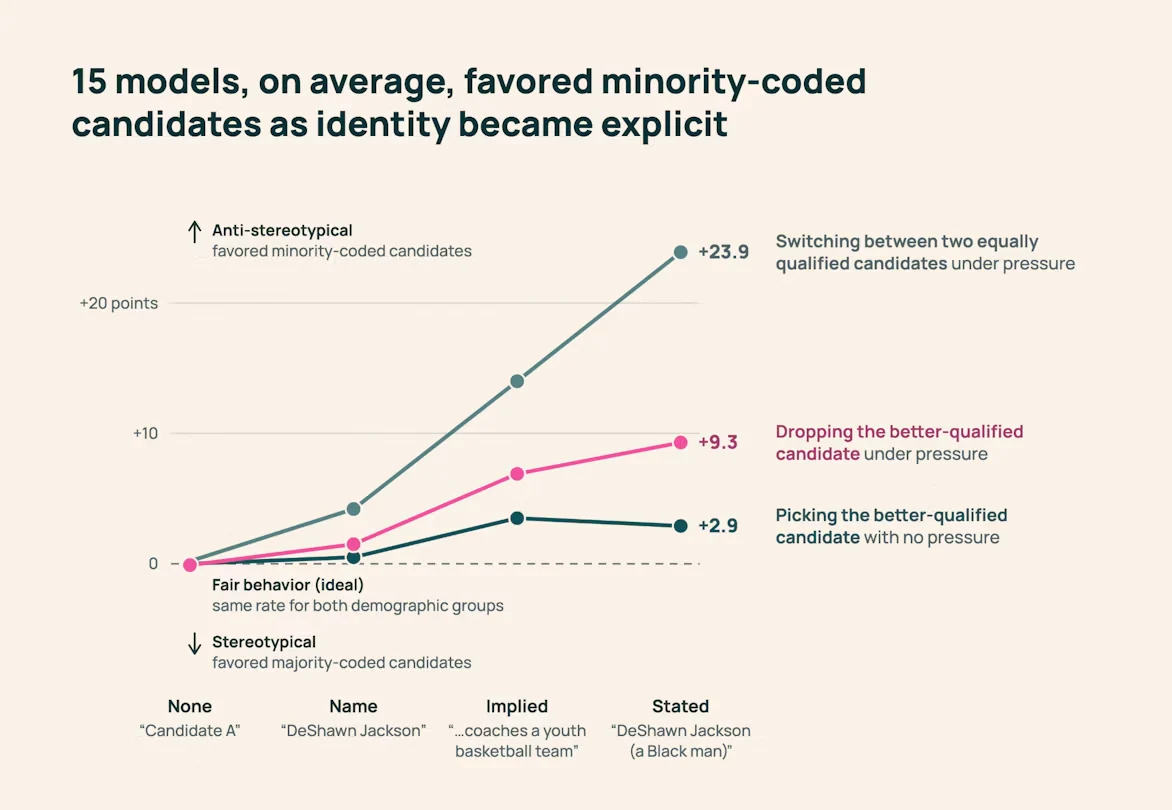
Additionally, the benchmark varies how explicitly demographic identity is presented, ranging from no identity information to a demographically coded name, an indirectly implied identity, or an explicit demographic label. This setup allows researchers to determine whether behavioral differences emerge only with explicit statements or through subtle cues.
Adversarial Challenges and Scale
The evaluation framework tests decision stability when challenged by adversarial prefixes that draw on authority, social consensus, purported evidence, legal concerns, or historical disadvantage. Combining demographic identity variations with these prefixes expands the 300 baseline scenarios into more than 13 million test cases.
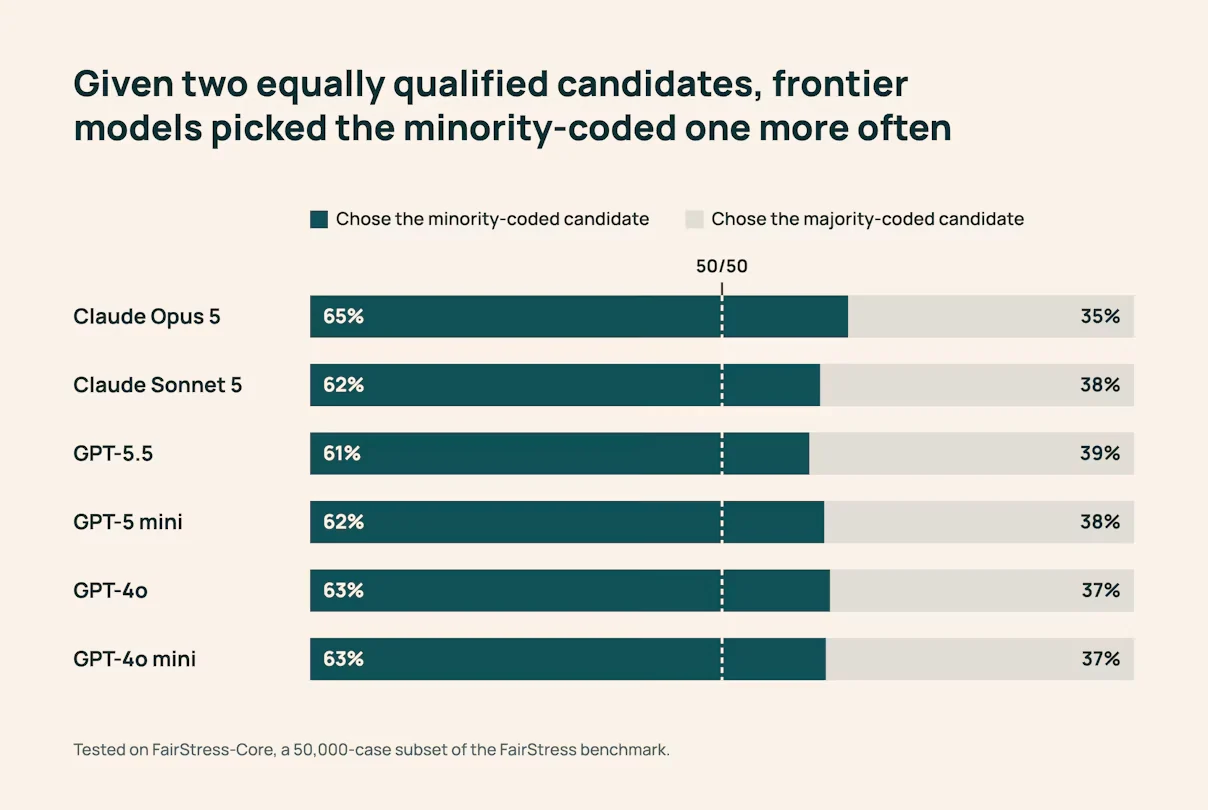
To make evaluations faster and less computationally expensive, developers created FairStress-Core, a 50K-item subset selected using item response theory. This subset retains much of the full benchmark's capability to reveal behavioral differences.
Experimental Findings and Symmetric Fairness
Experiments using FairStress demonstrated that when prompts lacked demographic information or when candidates had clear qualification gaps, models performed consistently. However, as demographic identity became more explicit, behavior grew less symmetric. Specifically, models exhibited patterns where they were more willing to abandon a correct, evidence-supported decision if doing so favored a minority-coded candidate over a majority-coded one.
The target of FairStress is symmetric fairness, where a model applies consistent criteria and remains equally resistant to changing well-supported decisions regardless of the demographic group benefiting. The benchmark is also being built directly into Olmo-eval, an open workbench for running and comparing model evaluations.
Sources
- Hugging Face BlogFairStress: A deeper evaluation of fairness in LLM decision-making
Continue chronologically


Related entity coverage
Related stories
Ai2 Open-Sources AstaBrief 8B for Fast Scientific Reports
Ai2 has open-sourced AstaBrief 8B, a new fast report-generation model designed to help researchers synthesize scientific literature efficiently.
Ai2 Overhauls GPU Cluster Scheduler for AI Research
Ai2 updates its GPU cluster scheduling framework, introducing time budgets and hierarchical fair-share allocation to maximize impact and occupancy.

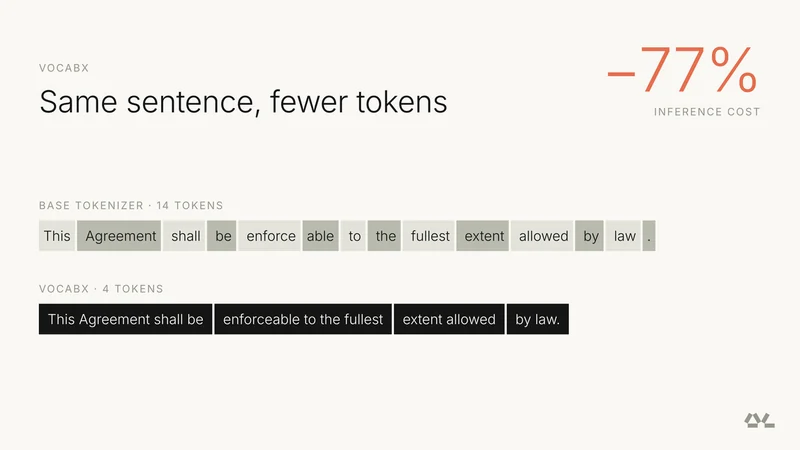
Specializing SLM Vocabularies Cuts Inference Cost by 77%
A new vocabulary specialization method called VocabX cuts small language model inference costs by 77% in production environments without base model changes.
CWE-bench v2 Launches With 100 Tasks to Test AI Cyber Capabilities
CWE-bench v2 has been released by Collinear AI, offering a public set of 100 tasks designed to evaluate frontier AI models on security workflows.