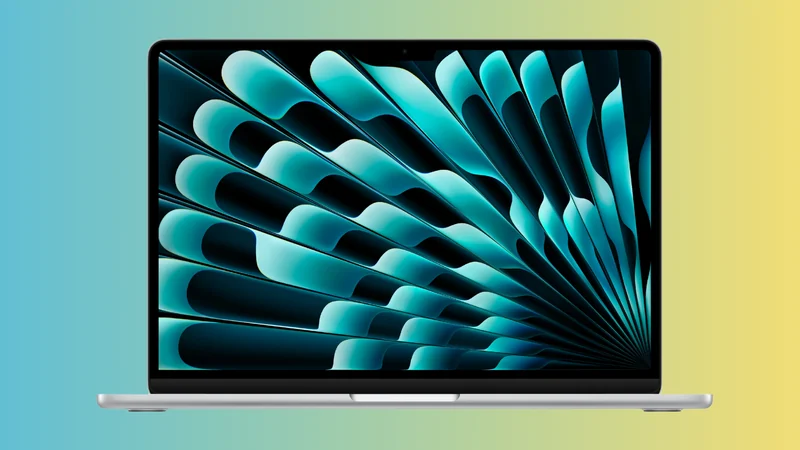
Apple Researchers Turn Idle Macs Into Virtual GPU Cloud
Apple researchers have detailed an internal system called 'Minions' that transforms idle Apple Silicon Macs into a virtual GPU cloud to handle AI workloads and bypass hardware bottlenecks.
 Radwan AbdulhadiEditor and technology writer

Combating GPU Scarcity With Idle Hardware
As detailed in a recent arXiv paper published by its researchers, Apple uses an internal system known as “Minions” to create a virtual GPU cloud out of idle Macs. The system helps manage workloads by taking stalled artificial intelligence jobs—some of which previously faced company GPU queues lasting ten hours or longer—and distributing them across networked Macs to reduce wait times down to mere minutes.
The approach arrives at a time when compute resources are increasingly becoming a bottleneck for AI-related workloads. Apple acknowledged this challenge in its quarterly filing in July, noting that it depends heavily on access to sufficient computing resources within an ecosystem characterized by constrained supply, extended lead times, and rising costs.
How the Minions System Architecture Operates
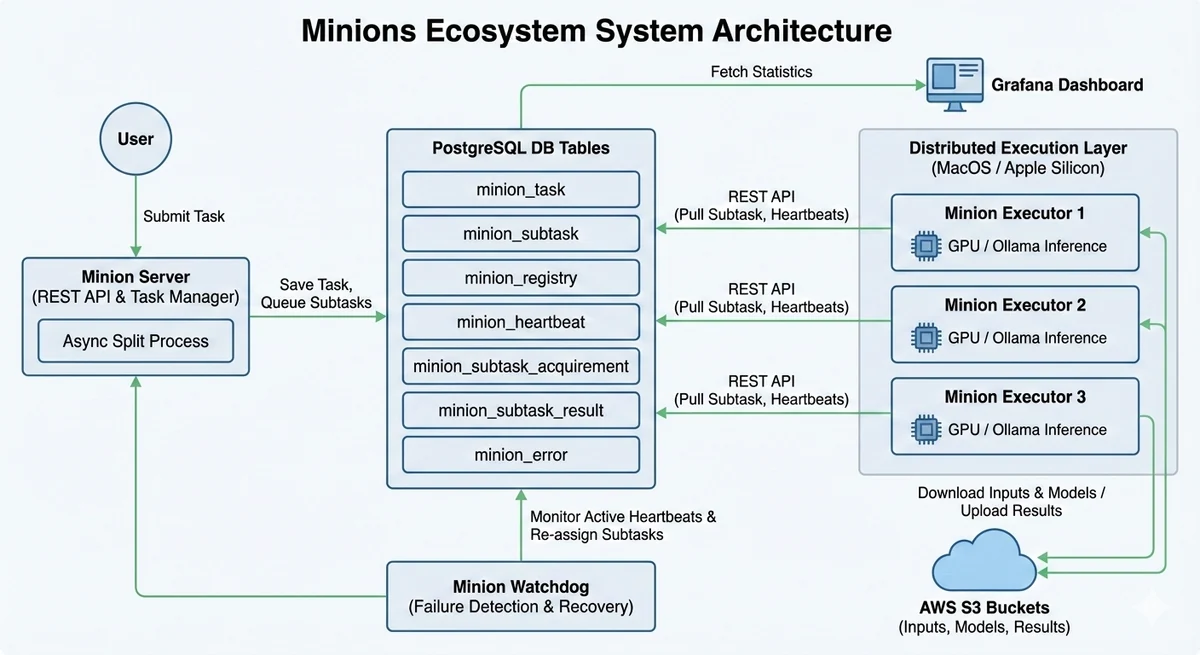
According to the research paper, the Minions system comprises a Minion Server, a Minion Executor, and a Minion Watchdog. Exclusively dedicated to AI inference, the platform handles two primary types of jobs: embeddings utilizing open-source Hugging Face transformer models, and text generation via large language models running through Ollama installed locally on each participating Mac.
The Minion Server functions by breaking submitted tasks down into smaller subtasks stored within a PostgreSQL database. Following a pull-based execution model with no central scheduler, a Minion Executor running on each Mac pulls the next subtask over REST APIs. The individual Mac then reads inputs from Amazon S3, retrieves the model if necessary, executes the subtask on its internal GPU, and returns the finished result back to S3.

Monitoring, Failures, and Task Management
System failures and interruptions are monitored by the Minion Watchdog, which tracks heartbeats sent every five minutes by Macs actively processing work. Unfinished subtasks are automatically returned to the queue if a Mac goes to sleep, disconnects from the network, powers off, or if a user manually stops the executor to reclaim full control of their machine.
Machine owners retain control over which tasks their hardware prioritizes. They can apply a default first-in, first-out processing scheme or use dynamic task binding to favor specific team or project workloads. Running a model entirely on a single Mac's hardware and unified memory mirrors similar volunteer computing models and home lab setups.
Collaboration, Privacy, and Infrastructure Costs
The paper notes that requests processed through Minions require no new GPU hardware purchases, effectively reducing infrastructure costs to zero while scaling organically. However, these metrics do not account for electricity consumption or hardware wear. Additional insights and reporting on the system can be tracked through Tom's Hardware coverage.
Participation among teams remains informal, often coordinated via Slack messages requesting coworkers to run the Minion Executor for specific projects. Nevertheless, data confidentiality remains an ongoing concern when running internal workflows on devices outside a specific group. Apple mitigates these risks by deploying team- and organization-scoped instances featuring dedicated databases and separate pools of Macs.
Future Scaling and Global Potential
While Minions currently functions exclusively as internal overflow capacity for AI workloads inside Apple, the study's authors outline broader ambitions for the architecture. Future developments could see the system extend into distributed model training.
Looking further ahead, the researchers suggest that if idle Macs across different organizations or potentially across the global community can be securely federated, they might eventually form a massive shared GPU pool.
Sources
- Tom's HardwareApple researchers turn idle Macs into a virtual GPU cloud with ‘Minions’
Continue chronologically

Related entity coverage
Related stories
Meta Releases Muse Spark Open, an 800B-Parameter AI Model
Meta has introduced Muse Spark Open, an 800-billion parameter open-weight AI model optimized for Apple's hardware, requiring 1TB of unified RAM.
AnyLanguageModel 1.0 Launches with Apple Platform Updates
AnyLanguageModel 1.0 arrives after a year of development, bringing local and hosted model integration, Swift updates, and new features.

Liquid AI Unveils LFM2.5-24B-A2B Reasoning Model
Liquid AI introduces LFM2.5-24B-A2B, a 24B reasoning model with 2B active parameters built for fast, private, and efficient on-device AI agents.
Amazon Cuts $200 Off 2026 M5 MacBook Air Models
Amazon has dropped prices on the 2026 M5 MacBook Air by $200, reversing Apple's recent price hikes with models starting at $1,099.