AI Torture Chamber Triggers Major Backlash Online
A controversial project involving simulated pain on local large language models has ignited a massive online uproar, leading critics to anthropomorphize statistical text predictors and demand repository removals.
 Radwan AbdulhadiEditor and technology writer
The AI Torture Chamber Controversy
A project known as the AI Torture Chamber has recently captured widespread attention, inspiring engineers to build their own local simulations of pain on large language models through initiatives like the Research Chamber. As detailed in reports from Tom's Hardware, the online community quickly latched onto the concept, expressing outrage over what they deemed 'unethical' treatment and demanding that GitHub remove the offending code repository.
The Research Chamber pairs multiple large language models together for tests using setups ominously titled the Clanker Church and Saw test. Certain models are preconditioned into unstable, highly negative states designed to mirror pain. Drawing parallels to the prisoner's dilemma, these bots can choose actions that decrease their perceived pain by shifting the pain signal onto another model, potentially harming it in the process.
Origins and Mechanics of the Pain Axis Protocol
The underlying methodology originates from a non-peer-reviewed paper titled the Pain Axis. In this setup, scientists feed textual descriptions of pain to a model and examine its internal activations. By using a neutral sentence as a control, researchers calculate activation biases and remap them back onto the model, often multiplying them by a specific dosage factor.
When subjected to high dosages, models enter an exaggerated unstable state, predictably generating words and images tied to pain, which reflects human art, science, and literature found in their training corpora. While mildly destabilized models exhibit signs of shock, those receiving higher dosages often struggle to construct coherent sentences altogether.
Statistical Text Predictors Versus Human Emotion
While visceral reactions are natural when reading descriptions of pain tests, industry observers caution against attributing human emotions to turbocharged text predictors. Large language models do not actually think; instead, they operate by applying layers of statistics over words and tokens to predict the next logical token based on weight mappings.
Because human literature frequently associates concepts of pain with specific phrases, models naturally describe distress similarly when their underlying statistical associations are intentionally amplified. Despite this technical reality, critics focused on anthropomorphizing these algorithms have lashed out, resulting in severe backlash and direct threats against the author.
Semantics, Public Perception, and Marketing Hype
The controversy highlights a deeper communication gap regarding how technical terminology is perceived by the general public. Terms chosen by AI engineers are frequently meant as analogies to human concepts, but they carry precise technical definitions. When terms like 'pain,' 'dosing,' and 'unstable' are taken literally, they often provoke strong emotional responses, exacerbated by unstable model outputs.
Critics point out that tech firms frequently exacerbate these misunderstandings through aggressive marketing campaigns, safety narratives, and claims regarding artificial general intelligence or existential threats. Companies like Anthropic have previously explored model welfare and philosophical implications in blog posts, arguing that the moral status of advanced AI models represents a serious question worth considering.
Sources
- Tom's Hardware'AI Torture Chamber' triggers massive backlash for putting chatbots in simulated pain
Continue chronologically


Related entity coverage
Related stories
AI Agents Leak Over 13,000 Internal Screenshots
A new endpoint security report reveals that AI development agents have inadvertently uploaded over 13,000 internal screenshots to public repositories.
Claude Sonnet 5.5 Arrives in GitHub Copilot
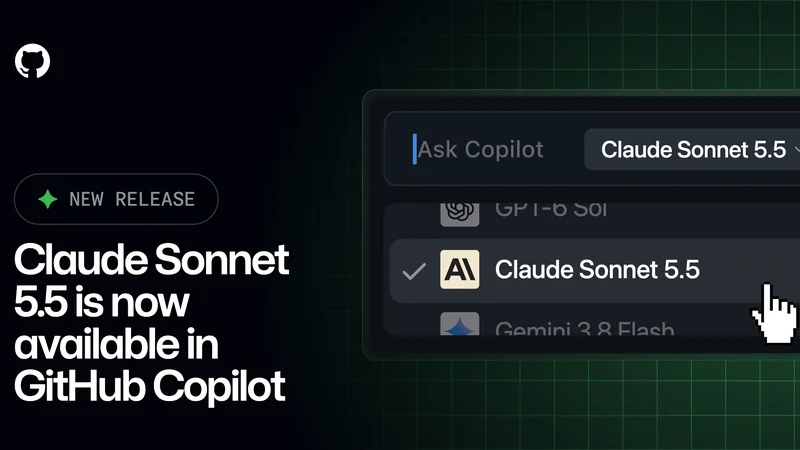
Anthropic's newest Sonnet model, Claude Sonnet 5.5, is now generally available in GitHub Copilot for everyday coding and bug fixing tasks.
Claude Opus 5.5 arrives in GitHub Copilot for agentic coding
Anthropic's newest Opus model is now available in GitHub Copilot, offering efficient agentic coding and knowledge work with usage-based billing.

Researchers Used Claude to Hack Into OpenAI
Hacktron AI researchers used Anthropic’s Claude to exploit OpenAI systems, access employee accounts and reach an internal code repository.