Apate Uses AI Bots to Tie Up Cybercriminals
An Australian company is deploying large networks of AI-generated “victims” to occupy scammers and collect information about their operations. The approach extends familiar scam-baiting and honeypot tactics with more convincing, persistent conversations.
 Radwan AbdulhadiEditor and technology writer

AI turns the tables on scammers
Artificial intelligence is helping cybercriminals scale online fraud, but the same technology is increasingly being used to waste their time and expose how they operate. According to a WIRED report, governments and private-sector organizations are experimenting with automated systems that keep scammers occupied, collect intelligence and potentially prevent them from reaching real victims.
The strategy addresses a persistent problem in online crime enforcement: scammers can operate across borders and contact enormous numbers of people through automated dialing and messaging systems. Rather than trying to intercept every criminal directly, anti-fraud initiatives are looking for ways to make those operations less efficient by consuming the attackers’ time and resources.
Apate builds artificial victims
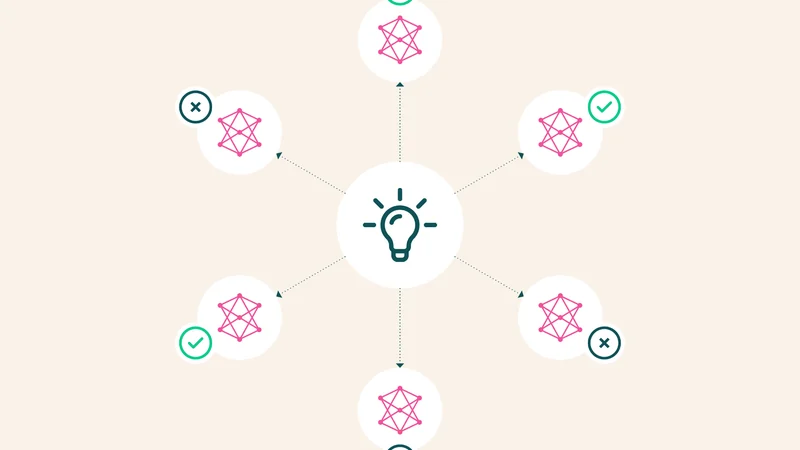
For the past two years, Australian company Apate has been developing a platform that diverts phone scammers into conversations with AI bots. The bots are trained to continue interactions for as long as possible while avoiding the financial or personal decisions that would allow a scam to succeed.
Dali Kaafar, Apate’s founder and CEO, describes the system as a way to create highly convincing victims for fraudsters. The company’s reasoning is straightforward: every minute a scammer spends with a bot is time they are not spending contacting another potential target. Apate’s platform is used by banks and supported by telecommunications companies, Kaafar says.
The company says it has roughly 350,000 bots. They answer calls, respond to text messages and enter online scam chat groups. Apate also says it has gathered more than 250,000 pieces of information about fraudsters in real time, including scam website addresses, money mule accounts and bank details.
Personalities designed to avoid detection
Apate’s bots are given different personalities, language abilities and personal profiles so that scammers are less likely to recognize a repeating pattern. Some may answer calls, while others may end the conversation and suggest they will return later. The variation is intended to make the interactions resemble ordinary human behavior rather than a single automated script.
A test of a demonstration version by WIRED’s Kernel Panic newsletter found that the AI “victim” expressed enough skepticism to avoid being persuaded immediately, but still left openings for the supposed scammer to continue. The system reportedly responded naturally during a cryptocurrency-investment scenario and maintained the exchange despite sustained attempts to win its confidence.
Kaafar says Apate calls can continue for more than two hours. The extended conversations are valuable not only because they delay the scammer, but also because they can reveal tactics, infrastructure and account information that may help banks, telecommunications companies and investigators identify broader fraud campaigns.
A growing but limited countermeasure
AI-based scam disruption will not eliminate fraud. Cybercriminals send billions of messages and make billions of calls each year, while sophisticated groups operate from large, organized scam sites. Professional scam-baiters and efforts to infiltrate criminal operations have created obstacles for attackers, but they have not stopped digital fraud from expanding.
The technology could nevertheless strengthen cooperation among law enforcement, social-media platforms, banks and other industries. AI-assisted monitoring and data analysis may help these organizations share signals more quickly, connect information from separate incidents and identify recurring infrastructure used by the same criminal groups.
Other anti-cybercrime campaigns have attempted to exploit criminals’ psychological vulnerabilities, including operations that directly troll people behind ransomware attacks. In that context, generative AI offers a way to keep attackers engaged in convincing but ultimately unproductive interactions.
LLMs make honeypots more convincing
The same idea is being applied to honeypots, deliberately false systems that attract hackers so defenders can observe their methods and consume their time. Security companies and researchers have used virtual machines for years, but open-source honeypot projects are increasingly adding large language models to make those environments behave less predictably.
Mark Vero, a doctoral researcher in computer science at ETH Zurich, says an LLM-powered honeypot can appear more realistic to automated attackers. In research conducted with colleagues, an LLM-based system kept AI agents attacking for significantly longer than a honeypot with more predictable behavior.
The researchers also found that the attacking agents were more likely to believe the simulated environments were genuine and less likely to identify them as honeypots. Vero says that, when designed effectively, these systems could give defenders an advantage by extending observation time and making automated attacks less efficient.
Sources
- WIREDAI Is Getting Really Good at Messing With Cybercriminals
Continue chronologically


Related stories
Cloudflare Adds Open European Models and Agnostic AI Defenses
Cloudflare expands its Workers AI platform with Europe's EuroLLM and Switzerland's Apertus while launching model-agnostic cyber defense workshops.

A Primer on Essential AI LLM Concepts and Terminology
Explore a comprehensive primer on essential AI terminology, covering LLM models, weights, quantization, and context windows for local hardware.

Meta Deploys AI JiTTests to Catch Bugs Before Production
Meta shares production results for its LLM-powered Just-in-Time Tests, detailing a human-on-the-loop workflow that prevents production bugs.

Can We Trust LLMs to Judge Research Idea Novelty?
A new study and benchmark investigate how reliably large language models can evaluate the novelty of scientific research ideas.