GitHub Introduces Push Attribution Commits in Preview
GitHub has announced a limited public preview for push attribution, designed to durably record authenticated user identities alongside traditional commit metadata.
 Radwan AbdulhadiEditor and technology writer
Enhancing Commit Metadata and Security
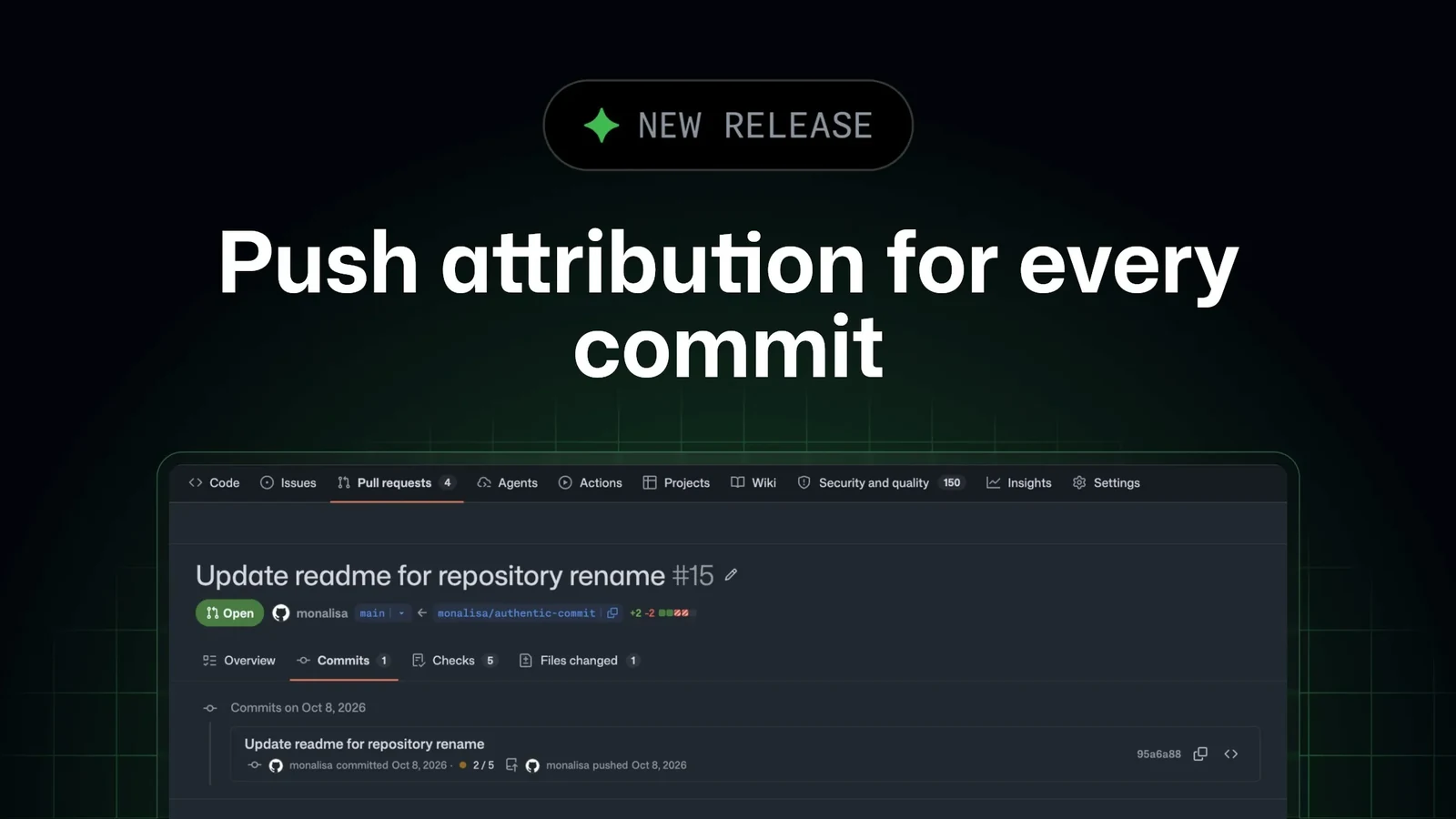
GitHub has rolled out a significant update to how it handles repository history, introducing push attribution to address long-standing vulnerabilities associated with commit metadata. According to the official [GitHub Changelog](https://github.blog/changelog/2026-10-12-push-attribution-public-preview/), the platform now durably records the authenticated user who pushed each individual commit. This newly captured pusher identity is surfaced directly in the user interface and application programming interface, sitting alongside the existing author and committer fields that developers are already familiar with. Further details are available from GitHub Changelog in the original source material.
Traditional Git workflows treat author and committer fields as simple strings supplied directly by the pushing client. Because these values are easily manipulated, anyone possessing write access to a given repository can configure them to display any name and email address of their choosing. This architectural openness historically allowed malicious actors who compromised a low-privilege account to forge commits that deceptively appeared to originate from a trusted project maintainer. Such spoofing techniques could easily evade superficial review policies and severely complicate retroactive security and audit trails.
While GitHub already performed authentication checks during the push phase, it previously lacked a permanent, per-commit association between the cryptographic push action and the visible metadata. By integrating durable pusher attribution directly alongside traditional author and committer records, the platform ensures that project teams always have access to a verified source of truth regarding who actually transmitted the code into the repository.
Closing Pathways for Commit Spoofing
The introduction of verified push attribution directly addresses the core mechanics of commit identity spoofing. Every single commit pushed to a repository now carries a permanent, authenticated pusher identity that remains entirely independent of whatever unverified strings the author and committer metadata might claim. This separation ensures that even if a malicious actor attempts to disguise their identity within the standard commit headers, the underlying server-side authentication data remains intact and transparent.
To help organizations capitalize on this new layer of verification, GitHub has introduced a specialized repository rule condition known as 'Committer must match pusher'. When enabled, this rule actively blocks any incoming pushes where the committer metadata fails to match at least one verified email address belonging to the authenticated user executing the push. By enforcing this alignment, maintainers can effectively close off one of the most common pathways used by attackers to impersonate trusted contributors and slip unauthorized code changes past standard branch protections.
Repository administrators looking to implement these stricter identity requirements can integrate the new condition directly into their existing repository configurations. For detailed instructions on how to set up these controls, maintainers can consult the documentation on [configuring push rulesets](https://docs.github.blog/changelog/) for guidance on managing advanced repository rules.
Streamlining Audits and Security Investigations
Beyond active prevention through rulesets, durable push attribution offers significant advantages for reactive security operations and forensic audits. Historically, security teams investigating suspicious activity had to rely heavily on author and committer strings that could easily be falsified, making root-cause analysis both time-consuming and prone to error. With verified pusher identities now visible wherever commits are displayed across the platform, investigators can quickly perform spot-checks and accelerate their analysis without second-guessing unverified metadata strings.
This visibility transforms how security professionals trace the provenance of problematic code. By cutting through misleading commit headers, teams can immediately identify the exact authenticated account responsible for transmitting a specific change into the codebase. This capability enhances overall platform governance and provides a much higher degree of confidence during compliance reviews and incident response procedures.
The integration of this feature into both the web interface and the API ensures that automated monitoring tools and internal security scripts can also leverage the authenticated pusher data. Organizations can build custom reporting and alerting mechanisms that monitor who is pushing code, independent of who the commit claims to be authored by, thereby strengthening their internal defense-in-depth strategies.
Availability and Enterprise Rollout
At present, push attribution is being rolled out in a limited public preview specifically tailored for GitHub Enterprise customers. Because enterprise environments often demand rigorous compliance, strict auditability, and advanced security controls, the preview allows these organizations to test the feature and provide valuable feedback to the development team before a wider general release.
Enterprise administrators and teams who are interested in participating in this limited public preview do not need to navigate complex self-service opt-in flows. Instead, interested parties are instructed to reach out directly to their designated account team to request access and begin evaluating the push attribution capabilities within their staging or production enterprise environments.
As GitHub continues to refine its ecosystem security tools—ranging from advanced code scanning enhancements to dedicated secret detection mechanisms—the addition of push attribution represents another step forward in securing the software supply chain at the foundational level of version control.
Sources
- GitHub ChangelogPush attribution for commits in limited public preview
Continue chronologically


Related entity coverage
Related stories
GitHub Enterprise Now Includes Access to GitHub Copilot
GitHub Enterprise now includes GitHub Copilot for every licensed user working with a GitHub or Microsoft account team, streamlining management.

GitHub makes Actions workflow protections generally available
GitHub has moved Actions workflow execution protections to general availability, adding file-level policies, insights and REST API management.
GitHub Enterprise Adds Credential Inventory Exports
GitHub Enterprise now allows owners to export comprehensive credential inventories, improving visibility and risk assessment during security incidents.

GitHub to Deprecate Selected Copilot Models on Oct. 19
GitHub says selected Copilot models will be deprecated across Chat, coding, agent and completion features on October 19, 2026.