GitHub Package Firewall Enters Public Preview for Enterprise
GitHub has announced the public preview of a new package firewall designed to combat the rising tide of malware attacks that exploit systems during package installation.
 Radwan AbdulhadiEditor and technology writer
Addressing Installation-Time Malware Risks
An increasing number of malware attacks target development environments by exploiting systems directly at package installation time. These malicious payloads can harvest credentials on developer workstations or continuous integration and continuous deployment (CI/CD) hosts without even needing to execute the package's actual code. To stem this tide of supply chain threats, GitHub is introducing a dedicated package firewall capability.
The new security feature is detailed further in the official [GitHub Changelog](https://github.blog/changelog/2026-10-20-github-package-firewall-in-public-preview/), outlining how the service aims to safeguard modern software development pipelines against sophisticated tampering and unauthorized data harvesting.
How the Package Firewall Operates
The package firewall sits strategically between endpoints—such as Actions runners or coding agents—and upstream package repositories. Instead of pointing directly at upstream package registries, endpoints must be configured to route their requests through the firewall.
Once configured, both metadata requests for package lists and actual package downloads flow through the firewall, which evaluates them against enterprise-defined policies. If a legitimate package happens to be blocked erroneously, users can request an exception using a workflow similar to other GitHub Advanced Security features.
Enterprise Policy Controls and Configuration
Before deploying the firewall across endpoints, administrators establish policy controls for their enterprise. The available controls include setting a configurable cooldown period, checking the GitHub Advisory Database for active malware or vulnerability alerts, and performing critical supply-chain checks such as monitoring for attestation downgrades.
Organizations looking to implement these safeguards can follow detailed guidance and step-by-step instructions available in the documentation for [Protecting endpoints with package firewall](https://docs.github.com/enterprise-cloud@latest/code-security/how-tos/secure-your-supply-chain/secure-your-dependencies/protecting-endpoints-with-package-firewall).
Availability, Scope, and Pricing
The package firewall is available today in public preview for all GitHub Enterprise Cloud customers, including those utilizing data-resident GitHub Enterprise Cloud. At this current stage, support is limited exclusively to npm packages while the platform scales up its underlying infrastructure.
During the public preview period, the service is provided completely free of charge. However, once the capability transitions to general availability, usage will be billed on a metered basis similar to existing Actions billing structures.
Community Engagement and Future Development
As GitHub continues to scale the infrastructure and develop additional features based on direct customer demand, developers and enterprise administrators are encouraged to share feedback and participate in ongoing conversations.
Interested users can join the broader conversation, report feedback, and connect with peers by visiting the [GitHub Community](https://github.com/orgs/community/discussions/210809) discussion board dedicated to the package firewall rollout.
Sources
- GitHub ChangelogGitHub package firewall in public preview
Continue chronologically

Related entity coverage
Related stories
Public Monitoring Adds Triage, Validity, API, and Webhooks
GitHub Enterprise Cloud adds new alert management capabilities to public monitoring, featuring automatic validity checks, REST APIs, and webhooks.
GitHub Actions Workflow Lockfiles Enter Public Preview
GitHub Actions workflow dependency lockfiles are now in public preview for GitHub Enterprise Cloud, offering enhanced security and consistency.
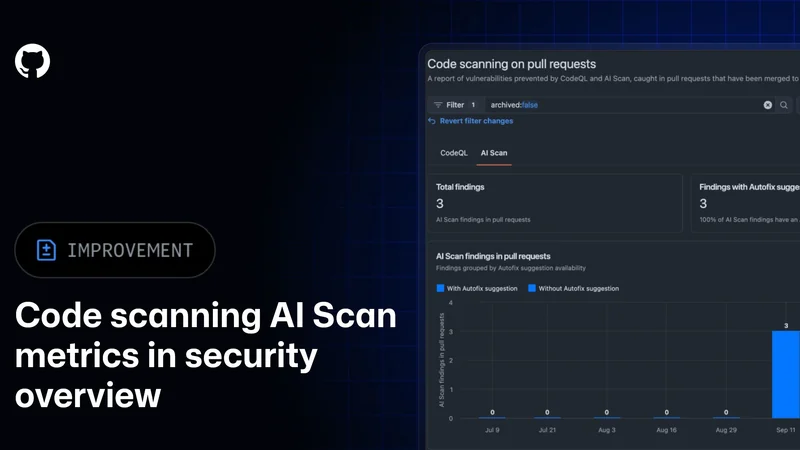
GitHub Adds AI Scan Metrics to Security Overview
GitHub is adding AI Scan metrics to its security overview, giving organization and enterprise administrators new data on findings and fixes.
GitHub Code Coverage Updates CI Uploads for New Branches
GitHub updates its Code Quality upload-code-coverage action so code coverage uploads no longer fail CI for new branches without open pull requests.