Amazon Expands Robotic Fleet and Scale in Warehouses
Amazon continues to expand its massive fleet of warehouse robots while balancing its position as one of the world's largest corporate employers.
 Radwan AbdulhadiEditor and technology writer
Scaling the World's Largest Robotic Fleet
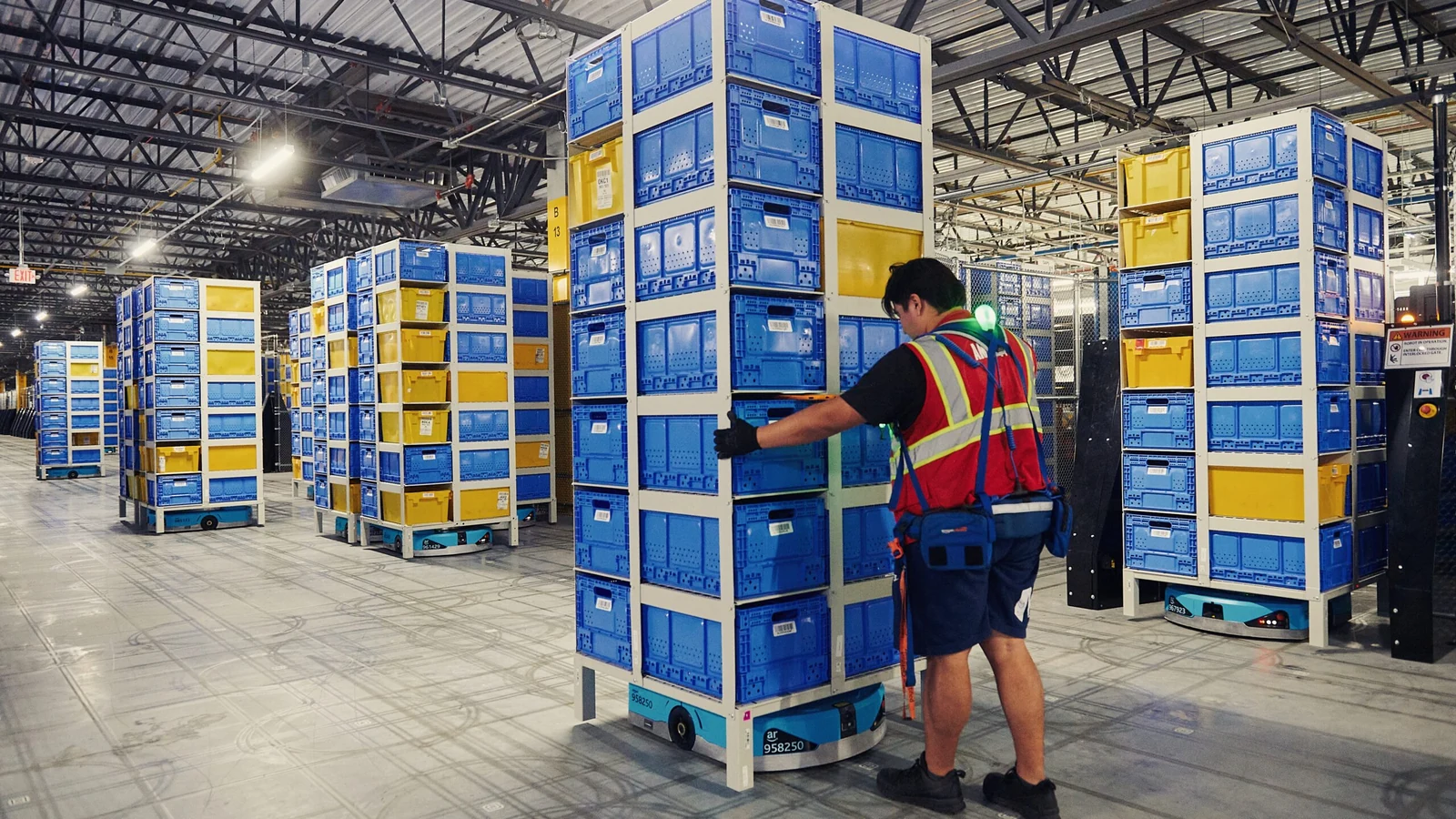
No organization in the world operates more robots than Amazon, which currently utilizes more than 1 million robotic systems working around the clock in its warehouses. This massive deployment helps power tens of millions of same-day and one-day package deliveries on a daily basis. As the company establishes new manufacturing facilities to build even more capable automated workers, it is poised to significantly grow its fleet in the coming years.
Despite utilizing such a vast number of machines, Amazon maintains a massive human workforce. According to its 2025 annual report, the corporation stands as the second-largest corporate employer in the world, supporting more than 1.5 million full-time and part-time human employees. Executives argue that automated systems ease the physical burden on staff by taking over the most demanding and fatiguing fulfillment center tasks.
The Evolution of Warehouse Automation
Amazon's push into modern logistics technology accelerated significantly following its decision to acquire the robotics company Kiva Systems. Kiva was an early pioneer in developing wheeled mobile robots designed to bring storage racks directly to workers, eliminating the need for employees to constantly walk around shelves to gather items manually.
Following the purchase, the firm was rebranded as Amazon Robotics and concentrated heavily on in-house manufacturing, primarily operating out of facilities in Massachusetts. The company later announced plans to expand its production capabilities by building additional manufacturing plants in Austin, Texas, and Greenwood, Indiana to support its growing operational demands.
Navigating Safety and Collaborative Workplaces
While executives maintain that automation improves workplace safety by handling hazardous assignments, independent researchers and labor groups note that AI-driven warehouse automation presents complex challenges for human workers. Unlike traditional industrial automation separated entirely from staff, modern collaborative robots operate in close physical proximity and can heavily influence the pace of daily work.
Data from the US Occupational Safety and Health Administration highlights that the injury and illness rate within the United States warehouse sector has historically remained more than double the average across all other industries. Industry experts point out that the warehousing sector continues to experience high turnover and notable workplace safety hurdles alongside rapid technological growth.
Mobile Robots and Swarm Management
The vast majority of Amazon's million-robot fleet continues to consist of wheeled mobile robots. Systems like the Sequoia setup coordinate swarms of machines to identify and store inventory significantly faster than traditional methods. Meanwhile, larger units such as Hercules and Titan roam designated facility aisles to retrieve fabric shelving pods and transport them to human workstations.
While traditional mobile units typically follow taped grid lines and remain inside restricted, fenced areas, newer additions like the autonomous mobile robot called Proteus feature advanced sensors designed to operate safely around human personnel in open workspaces. To prevent potential gridlock caused by dense swarms of mobile units traveling through narrow warehouse aisles, Amazon utilizes a suite of AI foundation models known as DeepFleet to predict and manage traffic congestion.
The Rise of Robotic Arms
In addition to mobile robots, Amazon has increasingly deployed advanced robotic arms capable of handling diverse products, sorting packages, and placing items onto carts or mobile drive units. Leadership notes that the total number of deployed robotic arms is actively scaling up into the thousands as the company continues to refine its automated sorting infrastructure.
Early development efforts included internal systems like Robin, which underwent testing to sort mailer envelopes and boxes from cluttered conveyor belt piles. By utilizing computer vision software and suction gripping mechanisms, these robotic arms analyze visual scenes, calculate optimal picking strategies, and efficiently manage fulfillment workflows alongside human staff.
Sources
- Ars TechnicaInside Amazon’s robotic arms race and what it means for the future of human work
Continue chronologically

Related stories
Pixel Watch 5 Hits All-Time Low Price on Amazon
The Google Pixel Watch 5 has hit its lowest price yet on Amazon ahead of Black Friday, with discounts across Wi-Fi and LTE configurations.

Boston Dynamics Appoints Former Amazon Exec Rohit Prasad as CEO
Boston Dynamics has named former Amazon executive Rohit Prasad as its new CEO, aiming to accelerate its physical AI strategy and productize intelligent machines.

Amazon Renames Kindle Unlimited to Kindle Plus and Expands Audiobooks
Amazon has officially rebranded Kindle Unlimited to Kindle Plus, keeping the $11.99 monthly price while expanding its audiobook library.

Samsung P9 512GB microSD Express Card On Sale for $99
Save $50 on the ultra-fast 512GB Samsung P9 microSD Express card at Amazon, offering a reliable and high-performance storage upgrade for the Nintendo Switch 2.