Danu Robotics Secures Late-Seed Funding to Scale Waste Sorting
Edinburgh-based startup Danu Robotics has raised $5 million in late-seed funding to commercialize its H.E.R.O. recycling robot, aiming to transform waste sorting across Europe and North America.
 Radwan AbdulhadiEditor and technology writer
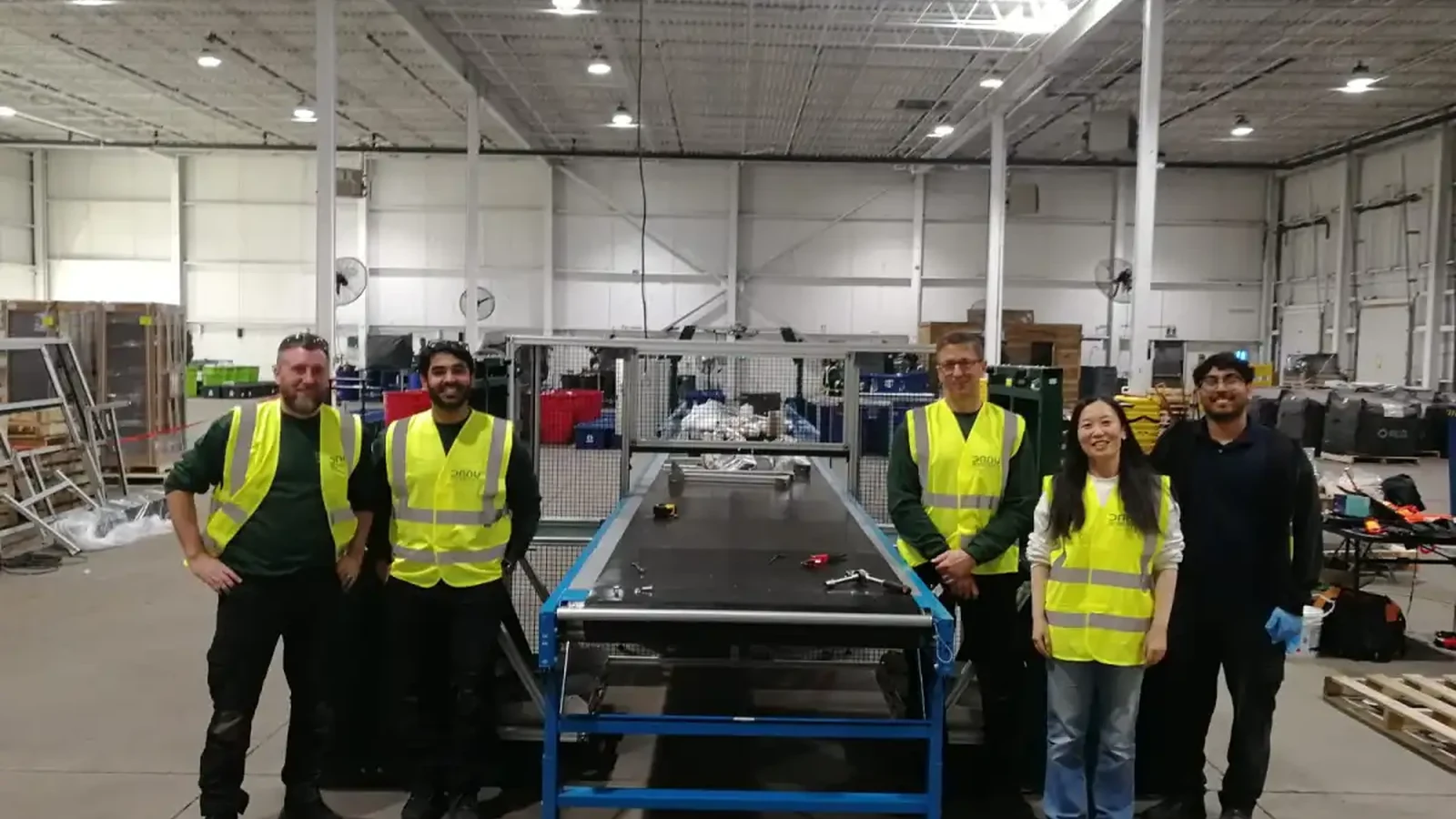
The Origin of Danu Robotics
For Danu Robotics founder Amy Ma, the inspiration to build a better waste-sorting system came after years of working as a software developer at a London bank. Despite the office's high-end environment, Ma was alarmed to discover that the building’s separate recycling bins were ultimately being emptied into the exact same trash containers.
As Ma investigated further, she realized the issue extended far beyond her workplace. The broader economics of the recycling industry frequently rely on human workers manually sorting through streams of mixed waste to extract different types of recyclable materials. Recognizing the inefficiency, Ma set out to create an automated solution in the hardware sector.
Introducing the H.E.R.O. Sorting Robot
After six years of development, Edinburgh, Scotland-based Danu Robotics is bringing its flagship product to market. The robot, named H.E.R.O., distinguishes itself from existing competitors by utilizing a pincer claw to pick up items instead of relying on a suction system. Furthermore, the company leverages artificial intelligence to continuously improve the underlying robot software.
The market for automated waste-sorting machines already includes established competitors like Glacier and RecycleEye, which typically employ suction-based arms. However, Danu believes its unique mechanical design and software approach will allow it to capture a share of the massive $20 billion market for recycling sorting across Europe and North America.
Funding and Commercial Traction
To support its commercial expansion, Danu Robotics has successfully raised $5 million in late-seed funding. The company is already seeing early commercial traction, holding letters of interest from two major customers alongside $500,000 in signed contracts. More than 200 customers are currently part of its active sales pipeline.
Ma argues that the underlying economics of recycling provide an immediate return on investment for centers that adopt working automated systems, as facilities generate revenue directly from the materials they successfully recover.
Economic Projections and Cost Efficiency
According to estimates shared by Ma, a working sorting site could earn an estimated $485,000 in additional revenue by integrating the robot onto its sorting line. This compares against an initial capital investment of $160,000 and estimated annual maintenance fees of $24,000.
By positioning its system as significantly cheaper and more efficient than traditional market alternatives, Danu aims to secure a firm foothold among industrial waste operators.
Future Expansion and Portable Use Cases
With commercial shipments underway, Danu's next engineering objective is to make the H.E.R.O. robot sturdier, smaller, and more versatile. Ma notes that once the hardware becomes sufficiently portable, it can operate outside of dedicated industrial waste facilities.
Future deployments could see the technology operating as a standalone waste management solution for public events, shopping centers, hospitals, and airports, allowing organizations to manage their packaging waste directly at the source.
Sources
- TechCrunchDanu Robotics’ fight to build a better recycling robot
Continue chronologically


Related stories
Repurposing Your Old PlayStation Instead of Throwing It Away
Discover practical ways to repurpose, sell, or donate your old PlayStation console, turning aging hardware into media centers, cash, or charitable donations.
Former Plaud Exec Raises $26M for AI App Ambi
Ambi has raised $26 million to build an ambient AI app that listens to users continuously across iPhone, Mac, and Apple Watch.
Why microSD Express cards matter for the Nintendo Switch 2
Discover why the Nintendo Switch 2 requires a microSD Express card for expandable storage and how to choose the right capacity for your game library.
Microsoft Launches Campaign to Trade In Unused Xbox Consoles
Microsoft is emailing Xbox owners with opportunities to trade in unused Series X and S consoles for store credit amid ongoing hardware shortages.